By Gift Briton
As weather extremes deepen across Kenya, faith leaders are emerging as a powerful force in community-level climate action. They are stepping beyond spiritual guidance to confront a crisis that is pushing the very communities they shepherd toward hunger.
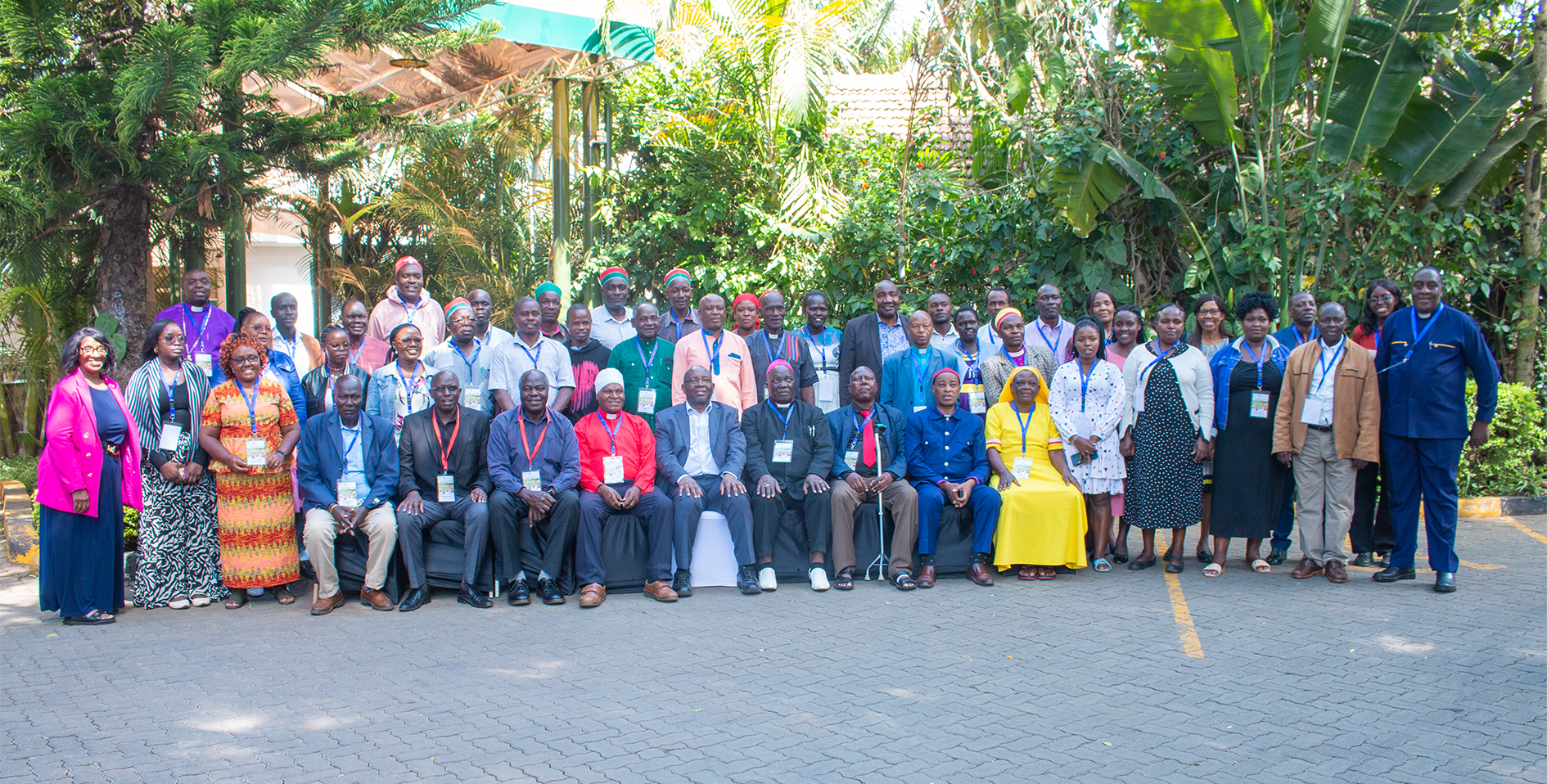
At a national consultation in Kenya’s capital, Nairobi, senior leaders of the Organisation of African Instituted Churches (OAIC-Kenya) declared climate resilience for smallholder farmers a central priority area of their ministry.
Representing more than four million congregants across 23 counties, they pledged to mobilise their influence, resources and moral authority to push for stronger agricultural policies, hold both county and national governments accountable, and support grassroots adaptation efforts.
“Kenya’s adoption of climate-smart practices is still far below what is needed. Crop diversification is at 12%, irrigation at eight percent and soil conservation at only six percent. These low numbers indicate that farmers need more support, education, and better resourcing,” Rev. Nicta Lubaale, General Secretary of the OAIC-Kenya, told Science Africa.
The low uptake reflects a widening gap between climate policy and realities facing over 70% of Kenyans who depend on agriculture for their livelihoods. Although the government has developed climate-smart agriculture frameworks, extension services, improved seeds, and early-warning systems remain out of reach for many farmers.

Lubaale said the consultation, which brought together faith leaders, researchers and farmer representatives, ensures that clergy understand relevant policies and can help translate them into action.
“Our role as OAIC is to build the capacity of churches and farmer organisations to guide communities on decisions such as what to plant, how to conserve soil, how to manage livestock, and how to adopt practices that restore ecosystems while improving productivity,” he added.
Drawing on evidence from Kenya Agricultural and Livestock Research Organisation (KALRO) and county assessments presented during the consultation meeting, OAIC leaders committed to scaling up farmer training, promoting climate-smart practices and using their vast networks to advocate for equitable financing and more responsive service delivery.
“Climate shocks are escalating faster than smallholder farmers can adapt. Extension officers aren’t reaching communities. Seed systems are broken. Early-warning information never arrives. Faith leaders are uniquely positioned to bridge this gap because we have reach, trust, and we’re already in these communities,” he said.
The OAIC has supported smallholder agriculture in Africa for more than three decades, but Lubaale said worsening impacts of climate change have pushed the organisation to intensify its efforts.
“We are investing in demonstration farms, value-chain support, better post-harvest handling and nutrition-sensitive agriculture. In Kenya alone, we have reached over 40,000 smallholder households and aim to scale this to more than 400,000,” he noted.
Kenya’s food system is growing increasingly vulnerable. More than two-thirds of the population depends on agriculture, yet the sector remains heavily reliant on rainfall. Farmers report erratic weather, pest outbreaks, seed shortages, rising costs of fertiliser, degraded soils and limited access to extension services.
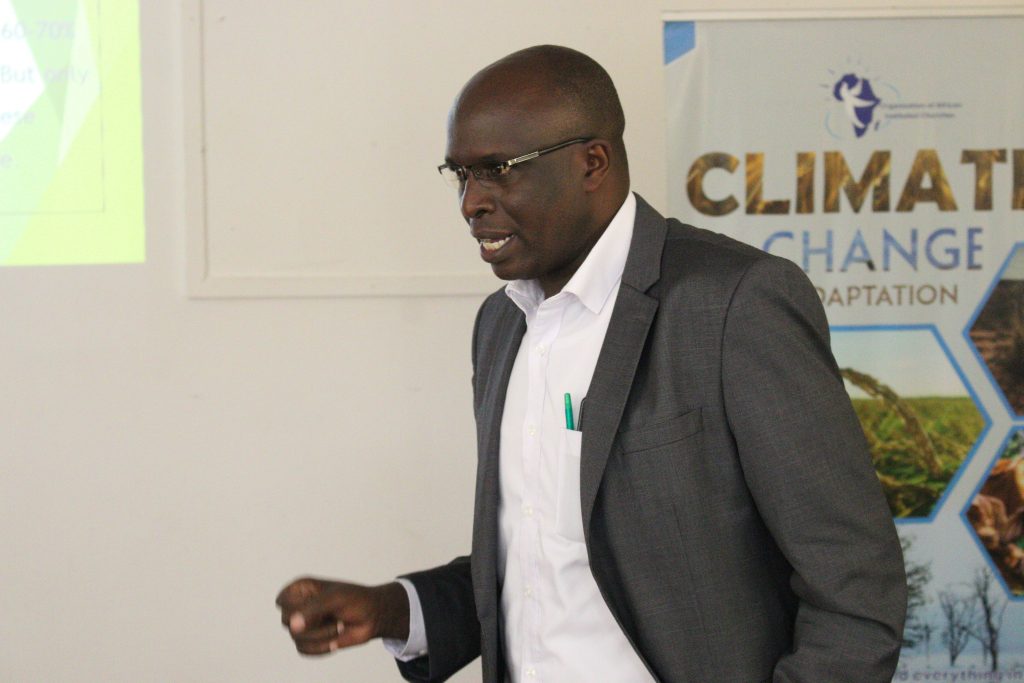
These challenges were echoed by Dr. Charles Langat, a research scientist with KALRO, who said that while effective adaptation strategies exist, they are not reaching most farmers.
“Many farmers rely almost entirely on rain-fed agriculture, which leaves them extremely vulnerable,” he said. “Input costs are rising, water shortages persist, and market access remains a serious barrier. We have technologies, including early-maturing and drought-tolerant seed varieties, but limited financing and weak extension systems slow their adoption.”
He added that faith leaders, who command deep trust and regular interaction with communities, are well placed to disseminate climate-smart information and encourage farmers to adopt practices such as intercropping, soil conservation and water harvesting.
Throughout the consultation, leaders framed climate-resilient agriculture not only as an economic necessity but also as a moral duty. As pastoral figures who regularly encounter hunger, debt and declining productivity, they argued that ignoring the crisis would undermine the dignity and well-being of rural households.
Drawing on evidence from the presentations made during the event, the faith leaders highlighted gaps requiring urgent attention, including early-warning systems that fail to reach farmers, delays in the distribution of subsidised inputs, weak veterinary and extension services, inadequate water infrastructure and limited inclusion of women, youth and persons with disabilities in agricultural decision-making.
The meeting concluded with a communiqué outlining concrete commitments by faith leaders to strengthen their understanding of climate-resilient agriculture, establish demonstration farms, expand youth agribusiness initiatives, conserve seeds and advocate for equitable budgeting and improved public service delivery in agriculture.
They also called on national and county governments to work more closely with faith institutions, strengthen early-warning systems, improve seed availability, expand small-scale irrigation, rehabilitate rural roads and ensure that agricultural policies align with the daily realities of smallholder farmers.
For communities already grappling with volatile seasons, these collaborations may mark a shift towards more grounded people-centred adaptation practices where policy, science and lived experience finally meet at the farmgate.