By Milliam Murigi
Kenya needs to overhaul its traditional mortgage lending model to make home ownership accessible to millions of informal workers who earn regular incomes but lack formal employment records.
The call comes as Kenya faces a housing deficit of more than two million units, with demand for an additional 200,000 homes every year, putting pressure on the government and private sector to find new ways of financing affordable housing.
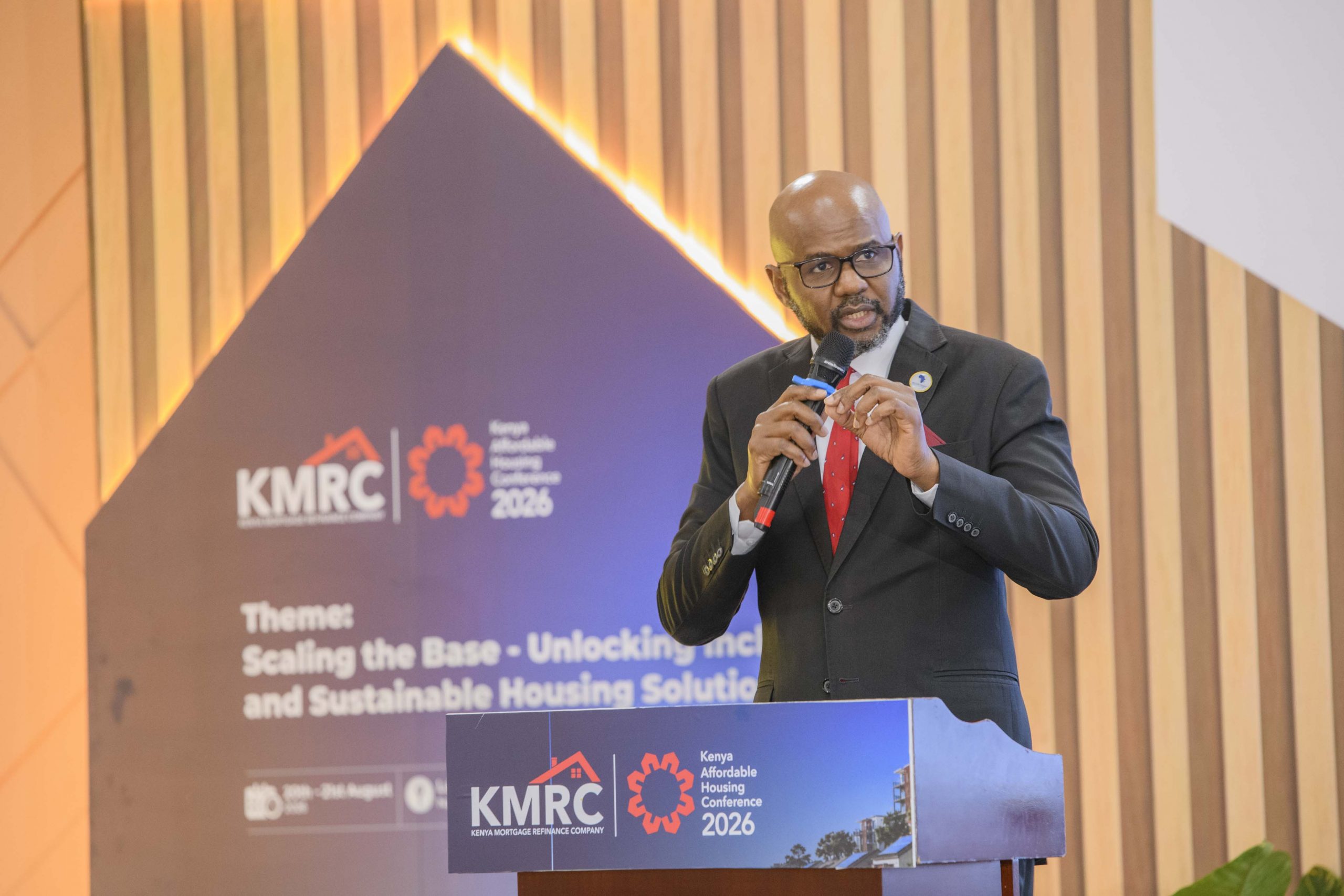
Speaking at the Kenya Affordable Housing Conference, Thierno Habb Hann, Shelter Afrique Development Bank CEO said that conventional mortgage systems were largely designed around formal employment, documented incomes, reliable land records and long-term funding conditions that exclude a large section of Kenya’s population.
“80 per cent of the market is actually informal, earning informal income. Such borrowers cannot be assessed in the same way as people with formal employment and regular payslips,” he said.
According to him, mortgage lenders should develop alternative underwriting criteria to assess the ability of informal workers to repay loans. Such models could draw on credit scores, transaction histories and other financial data to evaluate a borrower’s income and repayment capacity.
The approach would mirror reforms that have taken place in small and medium enterprise (SME) lending, where financial institutions moved away from assessing small businesses using the same criteria applied to large corporations.
“If Kenya was to reach low-income households, a similar shift is now necessary in housing finance,” he added.
Speaking at the same event, Charles Hinga, Principal Secretary for Housing and Urban Development, also called for the development of a standardized affordable housing mortgage, with common requirements covering eligibility, underwriting, documentation, valuation and servicing.
Such standardization, Hinga said, could make it easier for mortgages to be pooled and refinanced and eventually attract more long-term domestic institutional capital into housing.
He also proposed a common affordability framework that recognizes how non-salaried Kenyans actually earn and spend, including the use of mobile-money records, SACCO savings, rental histories, utility payments and business transactions in determining creditworthiness.
With more than 1.29 million Kenyans registered on Boma Yangu, Hinga said the platform could also be integrated with lenders so that prospective homeowners can move more seamlessly from registration and prequalification to allocation, financing and eventually acquisition of title.
“The goal is to move Kenya from approximately 30,000 mortgages towards one million by building not only houses, but the market that places Kenyans inside them,” he said.
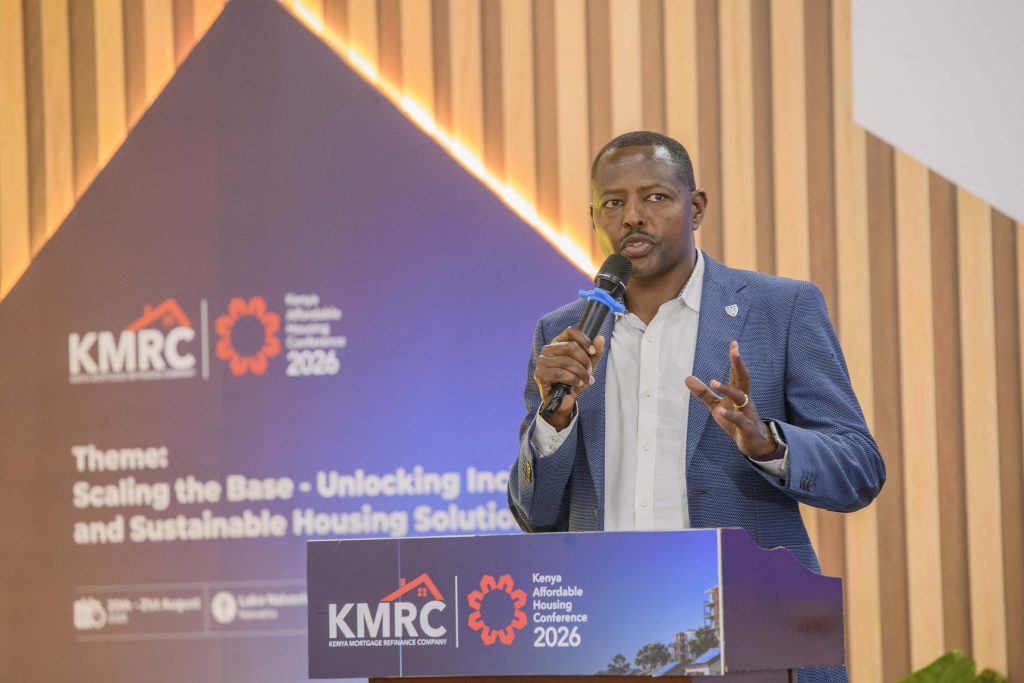
On his side, Johnstone Oltetia, Kenya Mortgage Refinance Company (KMRC) Chief Executive Officer and Managing Director, said affordable housing could not be addressed by a single institution or government agency, calling for stronger collaboration between policymakers, financiers, developers, regulators, investors and communities.
He said Kenya now needs to move beyond discussions about the importance of affordable housing and focus on how to deliver homes at scale.
“The question before us is no longer whether affordable housing is important. That debate is settled. The question is how do we scale faster?” Oltetia said.
He said the sector needed to move from pilot projects to mass delivery while unlocking more private capital and developing housing finance products that work for low- and middle-income households.
Oltetia said the progress made in affordable housing finance, including the emergence of new financing models, growing investor interest and increased adoption of green finance and climate-resilient housing practices, needed to translate into measurable improvements for Kenyan households.
He called for stronger partnerships between government, financial institutions, developers, investors and development partners, with each stakeholder committing to specific actions that can accelerate housing delivery.
However, according to Thierno, the housing finance challenge goes beyond access to credit. The high cost of borrowing remains a major obstacle, with high interest and inflation rates making long-term housing loans expensive for households.
He called for greater use of blended finance, where cheaper funding from development partners and international sources is combined with more expensive domestic capital. This, he said, could help reduce the cost of financing and make mortgages more affordable.
Financial institutions, meanwhile, say expanding mortgage access cannot be addressed separately from the cost of developing homes. Remarks by Caroline Wanjeri, KCB Kenya Director of Mortgage Business, delivered on her behalf by George Laboso, Senior Manager, Affordable Housing at KCB Bank, pointed to constrained investment finance, rising construction costs and the limited supply of serviced land as pressures that ultimately affect what homebuyers pay.
KCB said the role of financial institutions is consequently evolving beyond simply financing a completed house.
“We are looking at the entire housing journey while seeking to make these solutions more accessible and responsive to evolving customer needs,” Wanjeri said.
The bank also called for greater use of alternative building materials to lower construction costs, alongside housing developments that incorporate energy efficiency, sustainable materials and climate-resilient infrastructure.
According to KCB, affordability should also take into account whether developments are connected to transport, water, sanitation and other essential services, costs that have a direct bearing on what households ultimately spend to live in their homes.