By Grace Awuor Otieno
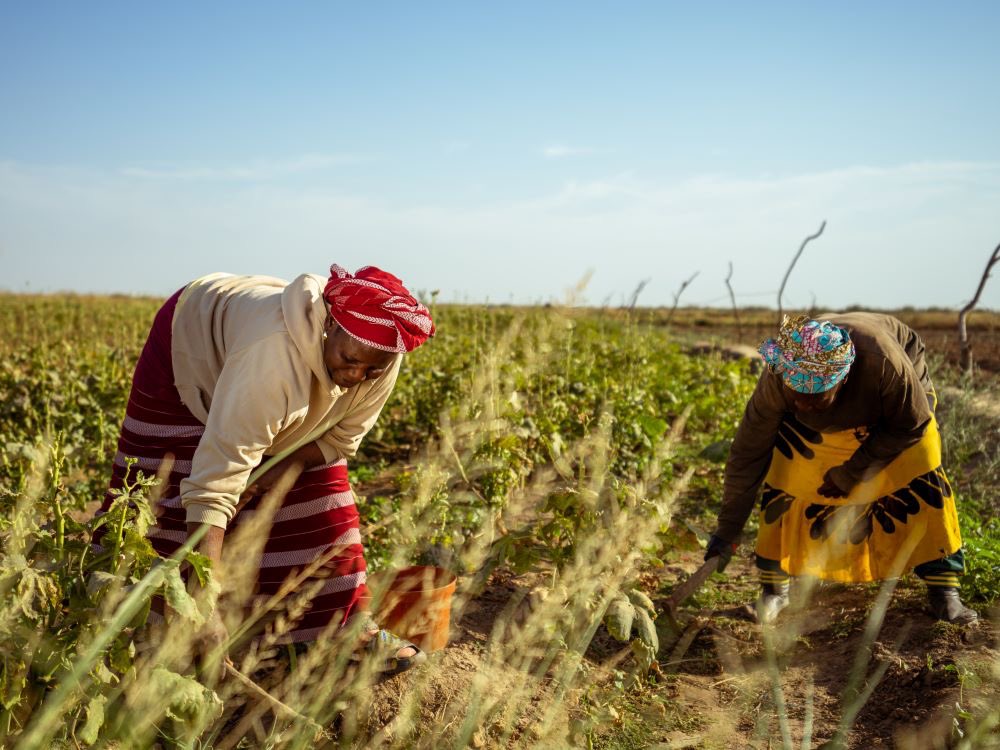
For women in Burkina Faso, restoring land has meant far more than recovering degraded fields. It has meant spending less time carrying heavy loads, mastering new agricultural skills, and building a sustainable business their daughters can inherit.
The 35 members of the AMAKENE cooperative, once carried heavy buckets of organic fertilizer on their heads across long distances to reach their fields. That physical burden changed in 2024 when the Integrated Resilience Programme provided the cooperative with essential agricultural equipment, including a tricycle that drastically eased the transport of materials.
Beyond equipment, the initiative delivered training in cooperative management, modern farming techniques, and income diversification. By 2025, the women had expanded their operations to process local crops into enriched flour, generating new income streams while directly improving nutrition across their community.
“Our daughters now see women leading businesses, managing finances, and contributing to community development,” said Florence Banou, the 55-year-old leader of the AMAKENE cooperative.
This experience illustrates how the Great Green Wall Accelerator is actively evolving beyond its original perception as a simple tree-planting barrier to a dynamic regional movement. It pairs landscape recovery with sustainable livelihoods, climate resilience, and economic empowerment across Africa’s drylands, even as communities navigate ongoing security challenges and climate shocks across the Sahel.
A new five-year evaluation report by the United Nations Convention to Combat Desertification (UNCCD), outlines how the initiative has coordinated efforts among governments, international partners, and local communities between 2021 and 2025.
Established following the 2021 One Planet Summit, the Accelerator was designed to streamline regional implementation across the Sahel. Over the past five years, it has established unified monitoring systems, reinforced national governance, and tracked over $19 billion in commitments to help channel global funding toward community-centered resilience.
Yasmine Fouad, Under-Secretary-General and Executive Secretary of the UNCCD, emphasized that land restoration must be understood through its human impact.
“Restoring land means strengthening food systems,” Fouad noted. “It means creating opportunities for young people. It means empowering women, improving water security, supporting sustainable livelihoods, and reducing communities’ vulnerability to drought”.
This holistic model is visible in major partner operations across the region including the World Food Programme (WFP) which has played a pivotal role in this transformation.
Between 2021 and 2025, WFP’s resilience initiatives supported over 1,110 community agricultural sites across eight countries, creating 2.75 million seasonal and short-term job opportunities through community works. These efforts rehabilitated 3,050 water and fishponds and restored more than 325,350 hectares of degraded land.
Additionally, the agency backed 167,380 women-led initiatives, primarily focused on establishing homestead vegetable gardens to improve local household nutrition giving families easier, reliable access to fresh food.
Similarly, the Green Climate Fund (GCF) has driven significant landscape and community recovery. The GCF investments strengthened climate resilience for 28 million community members through improved land management, early-warning systems, and water-secure infrastructure.
At the same time, its targeted programmes restored over 58,950 hectares of unproductive land using agroforestry and advanced soil conservation measures, helping rural families safeguard their farms against recurring droughts and unpredictable weather.
The Agence Française de Développement (AFD) has also played a big role by centering its contributions on sustainable agricultural practices, through direct support for agroecological farming and watershed management, enabling 1.5 million hectares to benefit from sustainable land management programmes in 2024 alone. These practices have allowed local farming communities to boost crop yields naturally while preserving vital soil nutrients for future generations.
Clean energy access has also emerged as a driver of economic independence. In several project sites, solar-powered water pumping systems created clean energy for irrigation, contributing to 2,315 MWh of clean energy produced and opening technical fields traditionally reserved for men.
Behind these field-level impacts, the Accelerator has quietly built the institutional scaffolding required to keep a multi-nation initiative on track. Central to this effort is a new Harmonized Results Management Framework, which replaces a patchwork of historical tracking systems with a single standard across participating nations.
By measuring progress strictly through five core metrics; jobs created, hectares restored, clean energy produced, carbon sequestered, and total beneficiaries; the framework gives regional leaders their first clear line of sight into real-world impact.
To ensure those metrics translate into ground-level action, multi-stakeholder coalitions have now been formed across nine of the 11 core Great Green Wall nations, with only Eritrea and Ethiopia currently excluded. These coalitions bring together national ministries of finance, planning, and environment to eliminate bureaucratic friction and coordinate local execution.
Transparency and cross-border cooperation are driven through two major operational hubs. In Ouagadougou, Burkina Faso, the Accelerator launched the GGW Observatory; a real-time digital platform mapping donor funding allocations and geospatial land data as work unfolds.
Alongside it, a new Transboundary Water Task Force has begun overseeing the fragile, shared land and water ecosystems that cross national borders, ensuring environmental policy doesn’t stop at the frontier.
While social and livelihood metrics have advanced rapidly with job creation reaching 46% of its target, physical land restoration remains the initiative’s toughest hurdle, currently standing at 1.66 million hectares (1.66% of the 100 million hectare targeted by 2030).
Additionally, a key priority for the Accelerator moving forward is closing the disbursement gap to ensure financial commitments from international partners overcome administrative bottlenecks and reach field implementation faster.
As the Accelerator enters its next phase, the ultimate metric of success remains tied to local transformation. Every restored hectare ultimately represents a farmer returning to productive soil, a young person securing a local job, and a community building long-term climate resilience.