By Sharon Atieno
South Africa has unveiled the first-in-human clinical trial of an HIV vaccine specifically targeting strains in Southern Africa.
The Eastern and Southern Africa region carries the biggest burden of HIV with 21.1 million people living with the disease. The region also accounted for nearly half (37%) of new global HIV infections in 2024, according to UNAIDS.
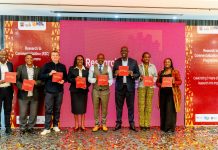
The BRinging Innovation to cLinical and Laboratory research to end HIV In Africa through New vaccine Technology (BRILLIANT) 011 trial is being conducted by the South African Medical Research Council (SAMRC) in partnership with the Desmond Tutu HIV Foundation (DTHF) and the Wits Health Consortium, marking a major milestone in African-led HIV vaccine research.
It is testing two new vaccine components — BG505 GT1.1 and 426c.Mod.Core-C4b. These immunogens are the result of international scientific collaboration involving the International AIDS Vaccine Initiative (IAVI), the Fred Hutchinson Cancer Center, the Scripps Consortium for HIV/AIDS Vaccine Development and Amsterdam University Medical Centers.
The BRILLIANT 011 trial is designed to explore new strategies for triggering broadly neutralising antibody responses, one of the most complex and critical challenges in HIV vaccine development.
It is conducted under the BRILLIANT Consortium, a groundbreaking initiative launched in 2024. The consortium unites leading researchers from South Africa, Nigeria, Uganda, Kenya, Tanzania, Zimbabwe, Zambia and Mozambique, and is notable for being predominantly led by African women scientists, with the SAMRC leading this first study.
Prof Glenda Gray, SAMRC sponsor representative, says being able to lead fundamental research on the continent enables African scientists to contribute to HIV science that has the potential to leapfrog innovation in this area.
“Advances in HIV vaccine research and development place our team in a pivotal position to map immune responses to these novel vaccines to guide further development of this regimen,” she says.
According to Prof. Penny Moore, South African Research Chair of Virus-Host Dynamics, Witwatersrand University, this trial is only possible thanks to unprecedented collaboration with international partners.
“It will not only advance HIV vaccine design on the continent, but also massively increase immunology expertise in South Africa, preparing us for other pathogens and outbreaks,” Prof. Moore said.
Meanwhile, UNAIDS has welcomed the United States legislative approval of a $6 billion spending package to tackle the disease. This follows a year of sharp aid cuts.
The package allocates: $4.6 billion to bilateral HIV support through the America First Global Health Strategy, $1.25 billion to the Global Fund to Fight AIDS, Tuberculosis and Malaria, and $45 million to UNAIDS.
The law advances the America First Global Health Strategy, which emphasises the achievement of UNAIDS’ 95-95-95 targets as an integral part of ending AIDS as a public health threat by 2030 and accelerates the strategic shift towards country ownership and self-reliant HIV responses.
The targets are 95% of people living with HIV know their status, 95% of people living with HIV who know their status are on antiretroviral therapy (ART), and 95% of people on ART have a suppressed viral load- too low to infect others.
Globally, an estimated 87% of all people living with HIV knew their HIV status, 89% of people who knew their HIV-positive status were receiving antiretroviral therapy, and 94% of people on treatment had a suppressed viral load.
As of 2024, only seven countries have achieved this target, while 18 are on track to achieve it.
“This US investment will provide lifesaving support for millions of people in partner countries and help to ensure that the global HIV response remains efficient, data-driven and delivers results,” said Winnie Byanyima, Executive Director of UNAIDS.
For more than two decades, US investments have been the leading driver of the global HIV response, saving millions of lives and supporting countries’ efforts to end their AIDS epidemics
The UN body is committed to leveraging the funding to provide data and rigorous technical and strategic support to countries and communities most affected by HIV and for the implementation of the America First Global Health Strategy, working closely with the US Government, the Global Fund, partner governments and communities.