By Duncan Mboyah
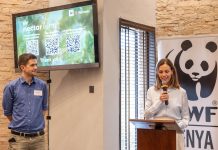
Kenya launched a national carbon registry, a digital system designed to register, track, and authorize carbon projects and carbon credits.
Dr. Deborah Barasa, cabinet secretary in the Ministry of Environment, Climate Change and Forestry said that the registry has been designed to meet international standards while responding to Kenya’s national circumstances.
Dr. Barasa said that the Kenya National Carbon Registry (KNCR) is a landmark achievement in Kenya’s climate governance framework and a significant step in strengthening the country’s participation in the international carbon markets.
“As we operationalize the registry, we are sending a clear signal to investors and the international community that Kenya is ready to participate in carbon markets with integrity, transparency, and credibility,” Dr. Barasa said during the launch in Kenya’s capital of Nairobi.
Dr. Barasa noted that Kenya is open for high-integrity, high-value climate investment for carbon trading.
The official noted that Kenya is committed to establishing transparent, credible, and accountable systems that enable the east African nation to fully harness opportunities presented under Article 6 of the Paris Agreement.
“From today, Kenya is no longer a spectator in international carbon markets. We step forward as architects of our own climate destiny”, she added.
Dr. Barasa observed that for many years, Kenya’s carbon market resembled an unmapped frontier even though communities worked tirelessly to protect ecosystems though they lacked a trusted national ledger.
The official added that Kenya will continue to provide strong policy leadership to ensure that carbon market investments contribute meaningfully to national development priorities, enhance resilience, create green jobs, and support community livelihoods.
She urged project developers, investors, and stakeholders to utilize the registry responsibly and to partner with Kenya in unlocking the full potential of carbon markets as a catalyst for sustainable development.
Henriette Geiger, Ambassador of the European Union to Kenya noted that with the launch, carbon has become a nature export for Kenya.
Amb. Geiger said that emphasis should be put on the Arid and Semi-Arid parts of Kenya as a way of managing drought to help communities living in those areas to improve their livelihoods.
Amb. Geiger said that emphasis should be put on the Arid and Semi-Arid parts of Kenya as a way of managing drought to help communities living in those areas to improve their livelihoods.
She urged Kenya to establish engagements with the international community to invest in the market.
Eng. Festus Ng’eno, principal secretary for the State Department for Environment and Climate Change noted that Kenya is moving past conservation for its own sake to a model where natural capital is the anchor of the country’s prosperity.
He said that Kenya is building an industry that fuels growth across every sector and positioning the country as a premier investment destination.
Before completing the registry, Kenya amended the climate change act, gazette carbon markets Regulations and appointed the Designated National Authority (DNA).