By Milliam Murigi
The Government of Kenya has been urged to set ambitious refill and reuse targets to curb the growing crisis of single-use plastics and accelerate the country’s transition toward sustainable packaging systems that protect the environment while unlocking new economic opportunities.
Environmental advocates argue that Kenya stands at a critical turning point, where bold policy action could significantly reduce pollution, support green entrepreneurship, and improve public health outcomes for millions of citizens.
“Refill and reuse systems are not new to Africa. They are rooted in our culture and have existed since time immemorial. What is new is the invasion of single-use plastics pushed by corporations prioritizing profit over people and planet. Governments must invest in refill infrastructure and set clear targets that make reuse the norm, not the exception,” said Hellen Kahaso Dena, Project Lead for the Pan African Plastics Project, Greenpeace Africa.
Dena was speaking during the launch of the inaugural Refill and Reuse Festival at the National Museums of Kenya in Nairobi. She noted that enhancing refill and reuse models has the potential to create thousands of jobs while reducing the hidden costs of plastic pollution that continue to burden governments and taxpayers.
According to her, plastic waste management continues to drain public resources, yet long-term solutions remain within reach if governments and industry adopt systemic changes.
“Kenya must resist corporate pressure to maintain the status quo and instead embrace innovative, community-led models that prioritize sustainability,” she added.
Dena further emphasized that the economic cost of plastic pollution goes far beyond what is visible to the public. According to her, throwaway culture is expensive. Countries spend billions of dollars to clean up drainage systems, build incinerators, clean rivers, and cover health expenses linked to plastic pollution.
Investing in refill and reuse alternatives is not only an environmental necessity but also a cost-saving strategy that can strengthen public services and improve quality of life.
The two-day Refill and Reuse Festival brought together local communities, civil society organizations, policymakers, manufacturers, and innovators to showcase the wide range of refill and reuse options currently available in Kenya.
The event also created space for policy discussions on the opportunities and challenges of mainstreaming sustainable alternatives to single-use plastics, highlighting the need for coordinated action across sectors.

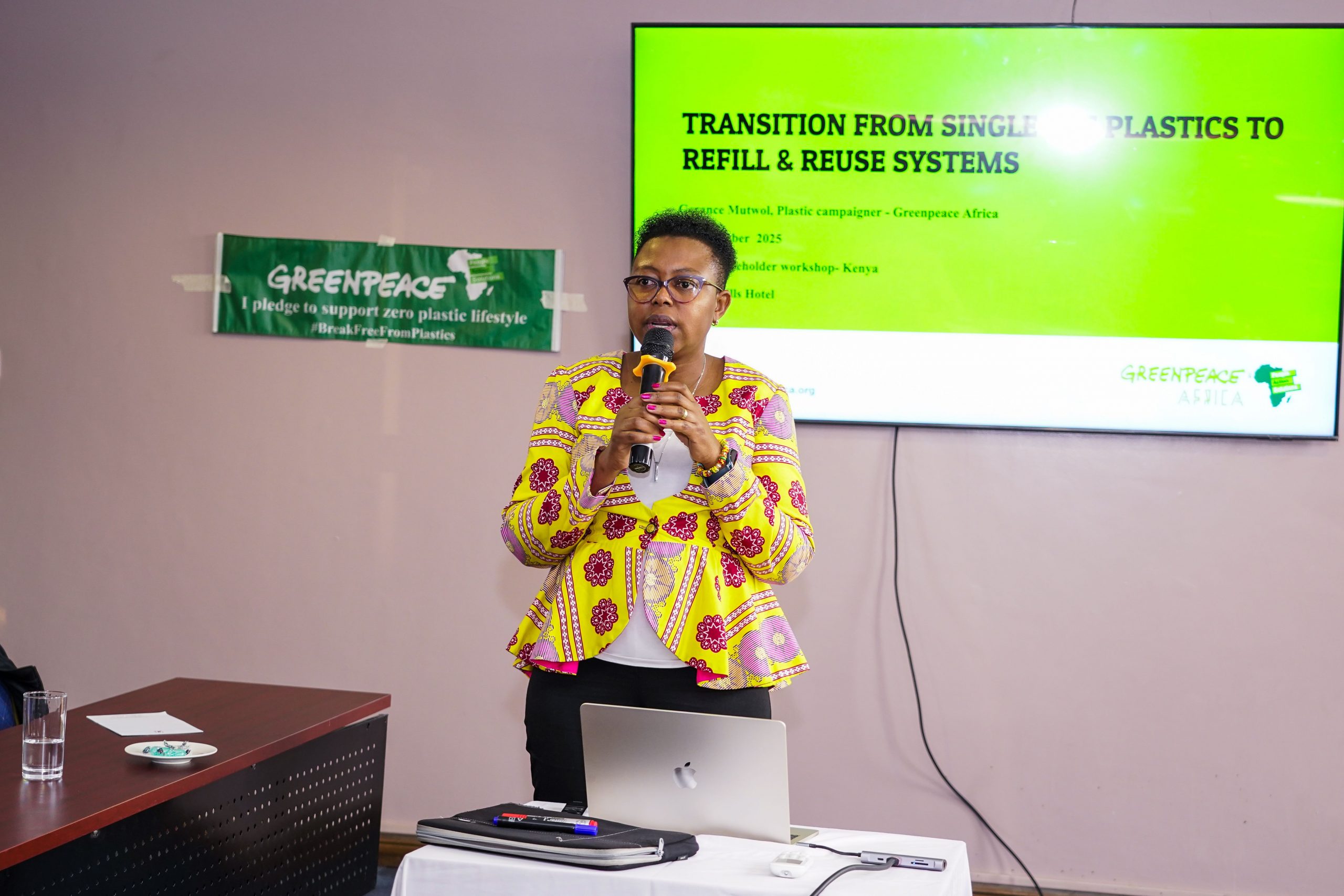
On his part, Gerance Mutwol, Plastics Campaigner at Greenpeace Africa, criticized the overemphasis on recycling, arguing that it has become a convenient distraction that allows corporations to continue producing increasing volumes of plastic while shifting responsibility to consumers and governments.
“Recycling is a distraction that allows corporations to keep producing more plastic while shifting responsibility to consumers and governments. Plastics persist in the environment throughout their lifecycle, leaching harmful chemicals into our soil, water, and bodies,” said Mutwol.
He noted that refill and reuse systems offer a more effective solution by preventing plastic pollution at the source, conserving resources, creating jobs, and protecting public health, making them not only an environmental imperative but also an economic opportunity that governments can no longer ignore.