By Milliam Murigi
Africa’s livestock sector supports more than 350 million people, yet the animals that sustain these livelihoods are increasingly threatened by a silent crisis -the widespread availability of low-quality, counterfeit, and unregistered veterinary drugs.
Weak regulation, fragmented approval systems, and porous borders have allowed poor-quality products to proliferate, undermining disease control and draining billions from the continent.
According to Dr. Huyam Salih, Director at the African Union Inter-African Bureau for Animal Resources (AU-IBAR), the continent continues to pay a steep price for weak animal health systems.
“Poor animal health and weak access to vaccines and medicines drains over USD 4 billion from sub-Saharan Africa every year,” she said, noting that improving regulatory oversight is essential to protecting both livelihoods and food security.
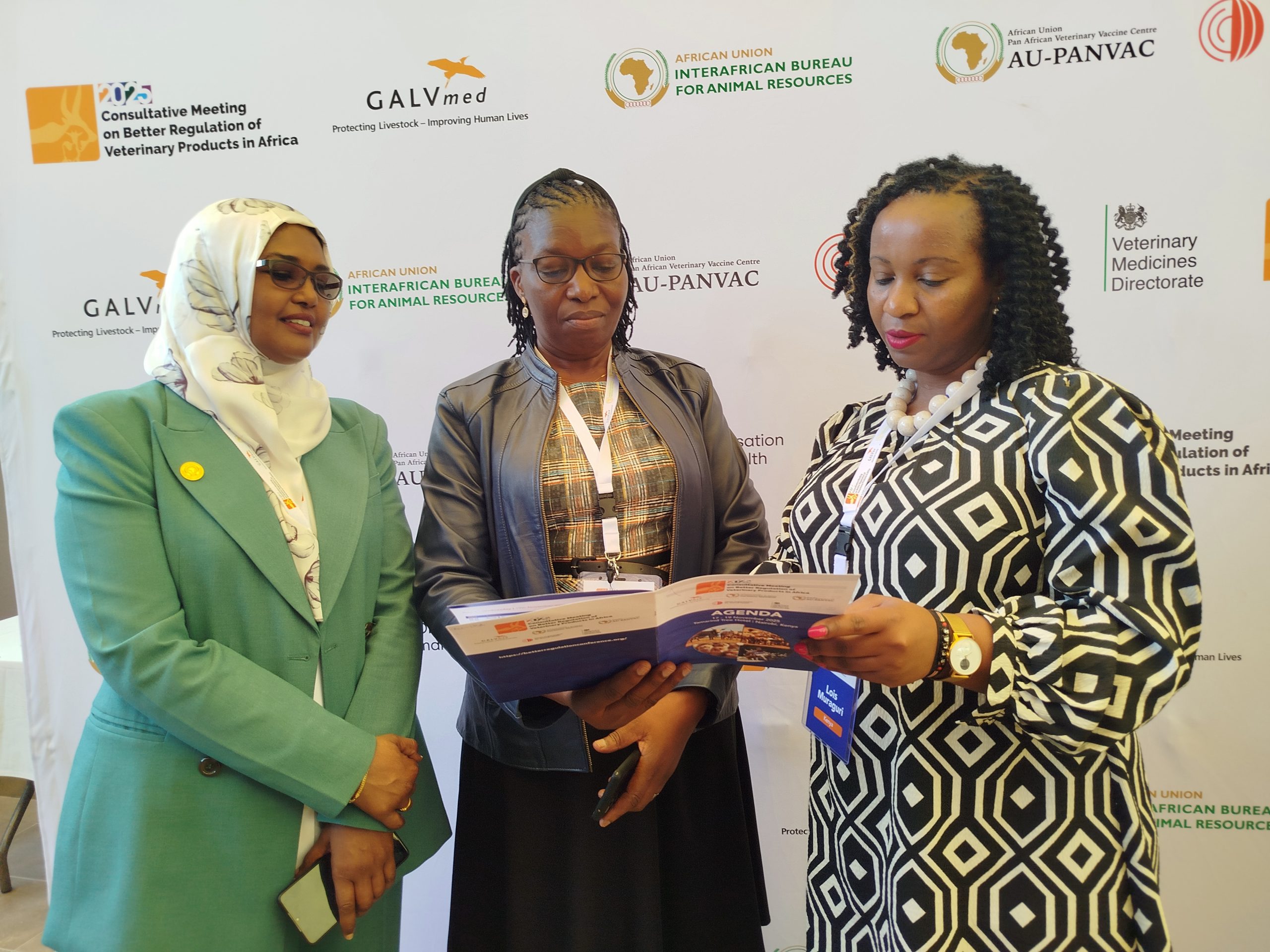
It is against this background that officials from across the continent are meeting in Kenya’s capital, Nairobi this week to address these challenges. The three-day consultative forum is organized by AU-IBAR, the Pan African Veterinary Vaccine Centre of the African Union (AU-PANVAC) and the Global Alliance for Livestock Veterinary Medicines (GALVmed).
It brings together Heads of National Medicines Regulatory Authorities (NMRAs), Chief Veterinary Officers, regional economic blocs, manufacturers, and international partners to advance the creation of the first-ever Pan-African Veterinary Products Regulatory Authorities Network (PAVPRAN), a continental system aimed at harmonising oversight of veterinary medicines.
According to Lois Muraguri, GALVmed CEO, this is a significant meeting, describing it as a rare opportunity to reshape the continent’s regulatory landscape.
“If we get this right, it will mean quality veterinary products reaching farmers faster, regulatory decisions that are credible, science-based and mutually recognised and systems that can keep up with innovation,” she said.
Muraguri further emphasised that harmonised regulation will ultimately translate into healthier animals, stronger livelihoods, and safer food for millions of Africans. According to her, Africa does not need to start from scratch. Past AU decisions — including the 2023 Abuja resolutions and the 2024 AU Executive Council endorsement — have already laid a strong foundation.
“There is both real need and real opportunity for collaboration and capacity strengthening across the continent,” she said, calling for deeper partnerships between AU institutions, regulators, private-sector players, and global health agencies.
Experts say the lack of a unified regulatory framework has allowed unsafe products to thrive. Emily Muema, Acting CEO of the Veterinary Medicines Directorate (VMD) in Kenya, warned that Africa’s porous borders make national controls insufficient.
“Since it is hard to control the movement of all products across borders, there is a need for a harmonised regulatory framework to ensure that even if a product enters the country through the back door, it is still safe, efficacious, and of good quality for use in livestock,” she said.
Muema added that part of the long-term solution is strengthening local manufacturing so that African countries stop relying heavily on imported veterinary medicines. According to her, as long as the continent continues to depend on imports, it will remain vulnerable to supply chain weaknesses and counterfeit products.
The meeting also placed a strong spotlight on antimicrobial resistance (AMR), with experts linking weak regulation to rising misuse of veterinary drugs. Principal Secretary Jonathan Mueke, State Department for Livestock, said the absence of harmonised regulation across Africa is fueling risks.
“There is a lack of harmonised regulatory framework for veterinary products across Africa, and this fragmentation leads to inefficiencies, delays, limited access to quality products for farmers and misuse of antimicrobials,” he said. Adding that “By ensuring quality, safe, and available veterinary products, we minimise the emergence and spread of AMR, securing a healthier future for all.”
Once established, PAVPRAN will facilitate the exchange of information, harmonize regulatory standards, strengthen the capacity of national regulatory authorities for improved assessment and inspection of veterinary product manufacturing facilities, and enhance transparency by improving communication among regulatory authorities, manufacturers, and stakeholders.