By Dr. Michael Adekunle Charles
On the morning that I visited Al-Sabbah Children’s Hospital in Juba, South Sudan, early this month, almost all the children we found receiving treatment had malaria. The health workers report that about 80 percent of the cases they see are malaria. The strain is visible as health workers use the limited resources that they have to save lives in a country that has suffered protracted conflict.
When a country is experiencing conflict, the only choice the government has is to wear the strong and crucial hat of resilience and hope. As the RBM Partnership joined South Sudan to launch the High Burden High Impact Initiative (HBHI) at the beginning of December, the government of South Sudan emphasized its commitment to re-writing its story and that of its people – starting with rebuilding health so that the human capital needed to rebuild the country remains alive and healthy.
An important part of re-writing this health story is strengthening the malaria response. The HBHI initiative is an important step in countries recognizing that they carry a disproportionate burden of malaria – and this burden is getting in the way of health and development. HBHI is an important first step in addressing the specific impact of malaria on the multiple facets of life and the economy.
A recent report by RBM partners, Malaria No More UK and the African Leaders Alliance Against Malaria indicates that if we stay on track to meet our 2030 targets, we can save 1.86 million lives and boost Africa’s GDP by US$ 231.
The report indicates that, conversely, a worst-case scenario where the world turns its back on the fight against malaria and countries cannot implement preventative interventions, would cost Africa US $ 402 billion.
No doubt, countries hit by conflict, where health commodities pipelines are fragile or even non-existent during active conflict and resources are already limited, would be hardest hit in the face of resource reductions to malaria.
Already, while the Global Fund replenishment is showing some promise, with over US$ 11 billion, we are still far from achieving the US $ 18 billion raised for malaria.
Further, the funding gap in health remains a stark reality. In 2024, the World Malaria Report indicates that total funding for malaria reached US$ 3.9 billion. This is less than the US$ 4 billion invested in 2023 and the US$ 9.3 billion that we needed to invest in 2024 to reach global targets. The US$ 3.9 billion invested in malaria in 2024 was only 44 percent of the funding required and left a US$ 5.4 billion shortfall.
In the previous year, 2023, the target was to invest 8.3 US$ in ending malaria. The US$ 4 billion invested left a funding gap that stood at 4.3 billion, indicating that malaria received only 48 percent of the funding required. The leap in the funding gap from US$ 2.6 billion in 2019 to US$ 5.4 billion in 2024 represents worrying shifts in donor priorities away from malaria and global health.
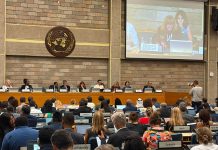
During the launch of the HBHI initiative, Josephine Lagu, South Sudan Vice President in charge of the Service Cluster, echoed RBM’s call for strong collaboration and unity to turn commitment into action.
Alive to the realities of the global health funding landscape, she committed to work towards intensifying domestic resource mobilization to create a more sustainable health response. She announced that the government will work towards establishing an End Malaria Council in South Sudan, adding to the growing number of leaders across the African continent who have shown political will and mobilized domestic resources towards malaria elimination.
In South Sudan, donors such as the World Bank, European Union and others remain committed to prioritizing malaria. Sustaining this commitment and collaborating with the South Sudan government to mobilize domestic resources is essential in achieving success against malaria.
The latest World Malaria Report shows that 610,000 people died from malaria in 2024. This is up from 697,000 in 2023. The report also shows that there were 282 million reported cases of malaria worldwide — nine million more than in 2023.
Like was the case in 2023, 94 percent of malaria cases and 95 percent of malaria deaths were on the African continent, which also ranks low on the development index. Five countries, the Democratic Republic of Congo, Ethiopia, Mozambique, Nigeria and Uganda, contributed more than half of all global cases. Nigeria, with nearly 700,000 registered the highest number of cases globally, followed by the Democratic Republic of Congo and Uganda.
The World Health Organization (WHO) recognises growing threats of antimalarial drug resistance and insecticide resistance as standing in the way of progress in the fight against malaria in South Sudan.
Malaria is the leading cause of patient morbidity in South Sudan, accounting for around 67 percent of all cases. It is also responsible for 50 per cent of deaths in the country. In the face of conflict, where some areas are unreachable and many deaths occur in the home, silent, unregistered and devastating, the scale of malaria deaths is not fully captured and reflected in official statistics. The actual numbers are higher than the above-quoted official statistics
The system’s destabilization, which conflict cause, creates the perfect environment for malaria and other diseases to thrive, and the health system remains one of the major casualties of conflict. In South Sudan, the perfect storm of conflict, biological threats and limited funding plays out saliently, necessitating the need for us to combine resources to respond fast to avert deaths. The erratic climate only fans the consuming fire that this perfect storm leaves in its trail – with parts of South Sudan reporting flooding and higher malaria cases, while others report extremely high temperatures that create a perfect environment for mosquitoes. In complex situations, malaria blooms in unique and dangerous ways.
This is why our approach to malaria in complex situations must be as deliberate and alive to the unique realities. As we move towards implementing Unity 30, RBM’s new framework to bring countries together to end malaria within the next five years, we must mobilise resources to invest in the big push against malaria in complex situations and strengthen partnerships to reach malaria goals faster.
Dr Michael Adekunle Charles is the CEO, RBM Partnership to End Malaria