By Sharon Atieno Onyango
Despite increased momentum, the world is not on track to achieve the biodiversity targets set out in the Kunming-Montreal Global Biodiversity Framework (KMGBF) by 2030.
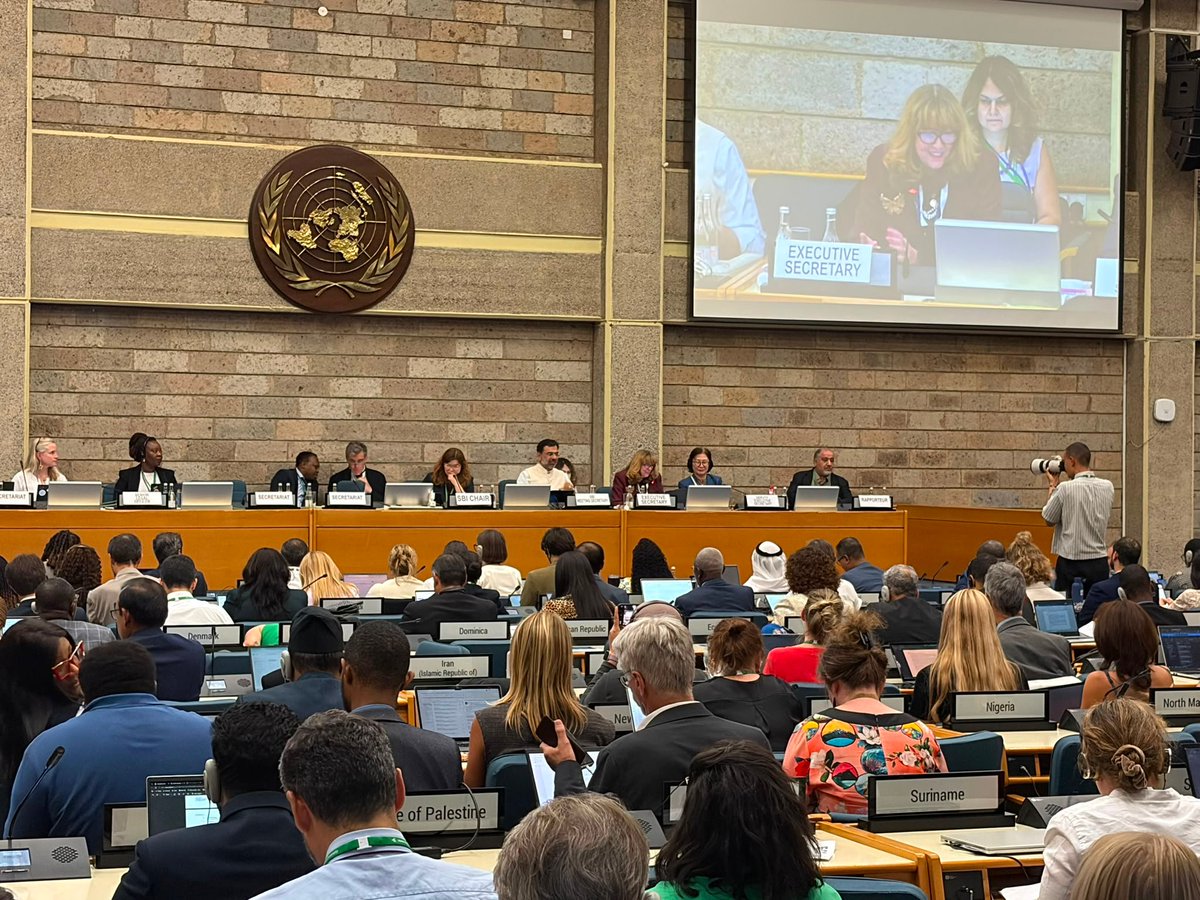
This is according to Parties to the United Nations Convention on Biological Diversity (CBD) following three weeks (27th July- 12th August) of negotiations in Nairobi, Kenya.
“It is true that progress is being made across all targets. However, implementation is not yet happening at the pace and scale needed to achieve the KMGBF,” said Astrid Schomaker, CBD’s Executive Secretary.
“Fewer than half of aligned national targets assessed by Parties are currently on track, with some of the largest gaps in mobilising biodiversity finance, reforming harmful subsidies, addressing business impacts and dependencies, and shifting toward sustainable consumption.”
On target one which calls for planning and managing all areas to reduce biodiversity loss, the Parties observe that progress has been made in developing biodiversity-inclusive spatial planning and management approaches, but major gaps remain in integrating biodiversity into broader planning processes and ensuring participatory implementation.
“Parties are experiencing challenges related to improving participation of stakeholders and rights holders, expanding implementation beyond protected areas and integration across sectors,” the report prepared by the CBD Parties say.
On target two, which focuses on restoring 30% of all degraded ecosystems, the Parties found that restoration efforts are expanding. However, current commitments to restore areas, and implementation of those commitments, remain below the level required to restore 30 per cent of degraded ecosystems by 2030 with less progress in marine, coastal and freshwater areas than in terrestrial areas. Monitoring progress is also constrained by inconsistent definitions and monitoring approaches for ecosystem degradation and restoration.
With target three focusing on conserving 30% of land, waters and seas, the Parties noted progress in expanding and managing protected areas, especially for marine and coastal areas, but current ambition and implementation remain insufficient to fully achieve all aspects of the target. There is also progress in the designation of terrestrial and inland water areas and of marine and coastal areas, for effective conservation outcomes and management.
However, Parities are at an early stage in implementation and monitoring of other effective area-based conservation measures (OECMs). Notably, monitoring and reporting of some elements of the target remain low, including those relating to equitable governance of protected areas and OECMs, recognition of indigenous and local territories, and integration into wider landscapes and seascapes. Parties face significant challenges in implementation, particularly related to lack of finance and capacity.
The fourth target calls for halting species extinction, protecting genetic diversity, and manage human-wildlife conflicts. The Parties found that there is continuous pressure on threatened species and extinction risks, but the assessment of collective progress remains constrained by uneven national monitoring capacities, incomplete taxonomic coverage and limited data on genetic diversity.
“National targets generally address species conservation, but issues related to maintaining and restoring genetic diversity within and between populations of domesticated species, and on effectively managing human-wildlife interactions to minimize human-wildlife conflicts for coexistence are addressed to a lesser extent. Strengthening species recovery programmes, expanding monitoring systems and addressing the drivers of species decline have been identified as priorities,” the report notes.
The fifth target focuses on ensuring sustainable, safe and legal harvesting and trade of wild species. There is progress in strengthening legal and policy frameworks for the sustainable use and trade of wild species, but evidence remains insufficient to assess collective progress across all elements of the target. Reported advances are concentrated in regulated trade and sustainable harvesting practices, while major knowledge, monitoring and capacity gaps limit implementation and assessment of sustainable harvesting. National targets were found to align to most aspects of the global target except for preventing pathogen spillover.
On target six – reduce the introduction of invasive alien species by 50% and minimize their impact- Parties are taking action on invasive alien species, but progress remains difficult to assess. Most Parties reported that they are not on track to achieve national targets associated with Target 6.
Target seven stresses reduction of pollution to levels that are not harmful to biodiversity. It was found that advances in addressing pollution are uneven and major gaps in data availability hinder assessment of progress. This target includes diverse sources of pollution, which Parties have addressed differently in setting national targets. Most (60 per cent) Parties acknowledge that they are not currently on track to meet national targets associated with Target 7. A major challenge is effectively and fairly considering and managing impacts on food security and livelihoods.
On target eight focusing on minimizing the impacts of climate change on biodiversity and building resilience, the Parties note that actions to strengthen climate resilience and adaptation are progressing, but implementation remains constrained by data gaps, limited means of implementation and the need for stronger coherence between biodiversity, climate and disaster risk reduction planning. Also, efforts of minimizing impact of ocean acidification remains a big challenge.
Progress towards ensuring sustainable use of wild species and associated benefits remains uneven, while several Parties report important enabling policies and community-based approaches that support livelihoods, customary sustainable use and conservation outcomes as outlined in Target nine. The target calls for managing wild species sustainably to benefit people. The broad scope of this target is addressed in national targets, although elements specifically relating to indigenous peoples and local communities as well as people in vulnerable situations are less well covered.
With Target 10 focusing on enhancing biodiversity and sustainability in agriculture, aquaculture, fisheries, and forestry, it’s widely covered within national targets. There are notable improvements in enhancing sustainability in agriculture and forestry. However, Parties acknowledge in their self-assessments that progress is not on track for over half of national targets related to Target 10. No assessment can be made on sustainable aquaculture.
There is slow progress is achieving Target 11 which focuses on restoring, maintaining and enhancing nature’s contribution to people. Reported challenges relate to the application of valuation methods for nature’s contributions to people in both policy and monitoring, as well as financial and legal frameworks for implementation of nature-based solutions and management of trade-offs with other policy sectors.
Gaps remain in implementation, monitoring and alignment of national targets to the full scope of Target 12- enhancing green spaces and urban planning for human well-being and biodiversity. National targets are largely aligned with increasing the area of green spaces and ensuring biodiversity-inclusive urban planning over any other aspects of the target.
Target 13 focuses on increasing the sharing of benefits from genetic resources, digital sequence information and traditional knowledge. The report notes that progress is being made in establishing access and benefit-sharing frameworks, but implementation of the necessary policy and administrative frameworks is largely at early stages.
Overall, national targets provide good coverage of the elements of target 13 related to genetic resources. However, limited data has been submitted by Parties on monetary and non-monetary benefits arising from access and benefit sharing instruments. Progress in developing the legislative, policy and administrative frameworks necessary for implementation of target 13, was found to be at an intermediate stage overall.
Under target 14 which focuses on integrating biodiversity in decision-making at every level, it was found that most Parties have submitted national targets that address the integration of biodiversity and its multiple values into policies, regulations, planning and development processes; however, there are significant gaps in coverage of all other target elements, such as integration with poverty eradication strategies or alignment of fiscal and financial flows. Parties report facing a persistent disconnect between formal biodiversity policy and effective implementation.
Target 15 calls for businesses to assess, disclose and reduce biodiversity-related risks and negative impacts. Despite an increase in company disclosures, both implementation of policy and coverage of national targets remain limited. Most national targets are not well aligned with the elements of this target.
According to the report although many Parties noted problems in compiling data, almost a fifth of Parties reported on a total of over 5,000 companies disclosing biodiversity-related risks, increasing year on year. Yet, the binary indicator reveals that measures to deliver on Target 15 are largely under development and not yet in place. Self-assessments acknowledged that two-thirds of national targets show no or insufficient progress. The main challenges identified include absence of mandatory reporting frameworks, capacity and data gaps, exclusion of small and medium enterprises, and inappropriate incentives.
Most aspects of target 16, enabling sustainable consumption choices to reduce waste and overconsumption, are not well addressed in national targets but efforts to implement relevant policy instruments are advancing. Less than half of the national targets set by Parties address any element of this target. However, some good progress is reported on establishing policies and mechanisms to support sustainable consumption, but specific measures to address food waste, overconsumption and waste management are still under development.
Target 17 focuses on strengthening biosafety and distributing the benefits of biotechnology. So far, progress is reported in establishing and implementing biosafety-related measures. Similarly, Parties report that 37 per cent of national targets highly aligned with Target 17 are on track for achievement, and five per cent are already achieved. Only a few Parties reported data and indicators related to this target. The main challenges reported include adequacy, implementation and enforcement of legal and regulatory frameworks, capacity and access to laboratory facilities, and dependency on external project financing.
Limited progress has been made in scaling up positive incentives, identifying and reforming harmful incentives under target 18 which focuses on reducing harmful incentives by at least $500 billion per year, and scaling up positive incentives for biodiversity. Reporting on indicators shows growth in the number of positive incentives, at the same time the value of reported subsidies and other incentives harmful to biodiversity remains substantial. Self-assessments indicate that only a quarter of highly aligned national targets are on track, while most show insufficient progress. Key challenges include identifying, quantifying and reforming harmful subsidies.
With target 19 calling for mobilizing $200 billion per year for biodiversity from all sources, including $30 billion through international finance, Parties found that biodiversity finance is increasing, but progress remains insufficient. Elements related to synergies of finance and the role of collective actions are largely missing from national targets.
“International and domestic biodiversity finance generally show upward trends, although below levels required to meet the target, and domestic spending as a share of GDP has declined. Private finance peaked in 2021 but fell afterwards, and remains particularly undeveloped. Key challenges include mobilizing finance at scale, improving access to funding and strengthening enabling conditions for investment,” the report says.
Parties have addressed the elements of Target 20 unevenly with a focus on capacity-building and development, and access to innovation, over others. The target covers strengthening capacity-building, technology transfer, and scientific and technical cooperation for biodiversity. Key challenges noted in its implementation include limited coverage of technical and scientific cooperation, and difficulties in monitoring capacity-building outcomes.
Under target 21 which focuses on ensuring that knowledge is available and accessible to guide biodiversity action, Parties are making significant efforts to improve access and availability of biodiversity data. Despite, most Parties addressing access to biodiversity data, information and knowledge within national targets, access to traditional knowledge with free, prior and informed consent is less consistently reflected. Notably, few Parties currently have the national data needed to implement the monitoring framework.
Most Parties were found to have addressed some elements of target 22 which calls for ensuring participation in decision-making and access to justice and information related to biodiversity for all. Progress is being made in strengthening participation, inclusion and rights-based approaches, but monitoring systems remain underdeveloped. Insufficient data were reported to assess trends, and Parties reported methodological, definitional and data challenges.
On target 23, the Parties found that progress towards gender-responsive biodiversity governance is advancing, but implementation remains at an early stage. Binary indicator reporting suggests that implementation is at an early stage for many Parties in monitoring, enabling informed participation and leadership, and applying gender-responsive approaches to implementation.
The findings of the report, together with recommendations from SBSTTA-28 and SBI-7, will feed into the 2026 UN Biodiversity Conference, taking place from 19 to 30 October 2026 in Yerevan, including COP 17 and the meetings of the Parties to the Cartagena and Nagoya Protocols. At COP 17, Parties will undertake the first global review of collective progress in implementing the KMGBF.