By Milliam Murigi
Emukule Calistus, from Akichelesit village, Teso-North Constituency, Busia County, has been a groundnut farmer for more than two decades now.
However, it reached a point where he almost abandoned the crop for tobacco farming because there was no market. Even when he harvested a good crop, finding a reliable buyer remained a challenge.
He often had to store the nuts for weeks, waiting for traders to arrive. And when they arrived, their price would be way below his expectations. Local markets offered little relief, presenting their own challenges of low demand and poor returns.
As the losses mounted, Calistus reduced the acreage under groundnuts and turned to tobacco farming. He also began storing his harvest for longer periods in the hope that prices would improve. Instead, prolonged storage exposed the nuts to rain, pests, and contamination, leading to spoilage and further losses.
“It was heartbreaking to see so much of my hard work go to waste. I spent weeks tending, harvesting, and drying my groundnuts, hoping to sell them at a fair price, but delays and poor market access meant that a large part of the harvest would spoil or get contaminated. Every season felt like a struggle, and sometimes I wondered if it was worth continuing with groundnuts at all,” he says.
Calistus’ experience reflects a broader crisis in Kenya’s groundnut sector. Kenyan groundnut farmers have continuously battled heavy post-harvest losses. The sector has long been held back by three critical challenges. The first is poor post-harvest handling, particularly the common practice of drying nuts on the ground, which exposes them to contamination and moisture instability.
High aflatoxin levels, driven by uneven drying and unpredictable weather, make the nuts unsafe and unmarketable. Also, inconsistent and unreliable markets, where farmers either fail to meet quality standards or lack buyers altogether.
“I used to spread my nuts on the ground to dry. It was the only method I knew,” he says. “But I kept losing buyers because they complained of foreign materials. I had no market most seasons.”
In Kosenyi Village, still within Teso North, Coleta Ipalei faced a similar reality. Despite cultivating a large acreage under groundnuts, she grew the crop largely for home consumption, not by choice, but by circumstance.
With no reliable buyers, much of her harvest was either shared with family and friends or lost before reaching the market. Years of labour yielded little financial return. According to Ipalei, the absence of proper post-harvest handling and dependable markets meant that her farming efforts rarely translated into income.

“All this shows that the groundnut sector’s biggest barrier is not production, but post-harvest handling. If we are serious about competing in the global groundnut market, the real conversation must include post-harvest handling. That is where value is either protected or lost,” says Zeddy Misiga, Director of Growth and Impact at Mamlo Foods, a peanut value-addition company.
It is against this backdrop that Mamlo Foods has launched a new initiative aimed at addressing the weakest link in the value chain. The initiative focuses on training farmers in smart drying technologies, safe shelling and grading, hermetic storage, and aflatoxin prevention.
Its goal is to curb losses caused by poor drying, moisture instability, and contamination that continue to cost Kenyan farmers eight percent to 31 percent of their harvest and block market opportunities due to food-safety concerns.
According to Misiga, the strategy is anchored on post-harvest technologies as the foundation for value addition, food safety, and competitiveness.
“Proper drying of groundnuts is one of the most effective ways to reduce post-harvest losses and lower aflatoxin levels, two issues that continue to threaten food safety and food security in many farming communities,” he says.
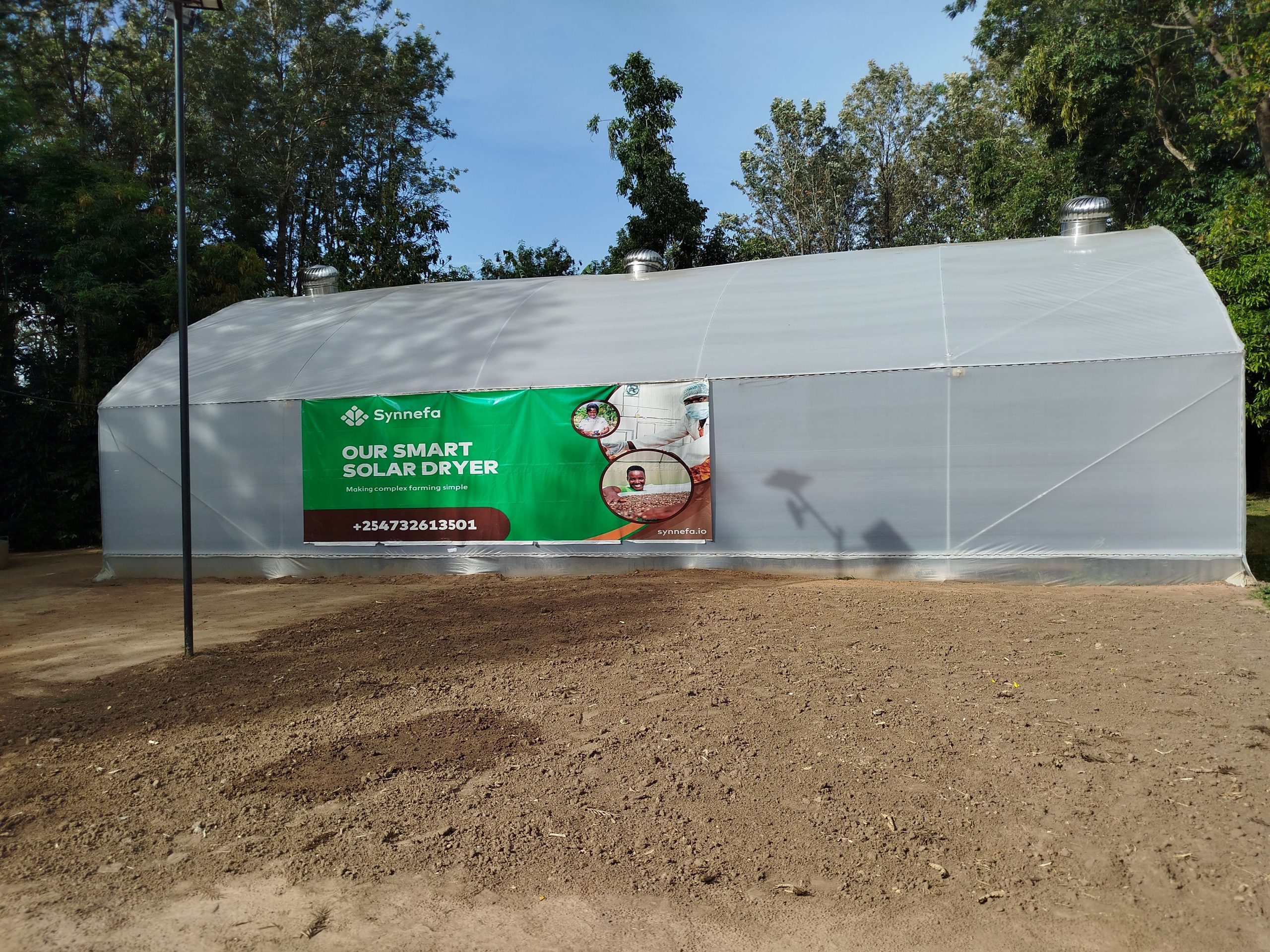
Central to this approach is the introduction of smart solar dryers, which allow farmers to dry nuts evenly while protecting them from rain, pests, and contamination.
“The good thing about a solar dryer is that it stabilizes quality at the most critical stage,” Misiga explains. “It reduces losses, improves safety, and ensures farmers meet the standards required by buyers and processors.”
Apart from the dryer, they are also introducing shelling machines and micro-processing factories within farming communities. The first such facility is located in Amagoro town, Busia County, adjacent to the solar dryer. According to Irene Etyang, Founder of Mamlo Foods, shortening the distance between farms and factories is critical.
“Even when farmers have done everything right at the farm, if the produce travels long distances, problems can arise during transport. Quality can drop, moisture can shift, or contamination can happen along the way,” says Etyang.
The micro-factory model ensures that peanuts are processed while still fresh and stable, reducing losses, cutting transport costs, and giving farmers quicker access to markets and payments. By placing processing facilities close to the farming communities, Mamlo Foods keeps value where it is created, strengthens local production systems, and supports farmers in earning more from their harvest.
For Ipalei, the intervention has been transformative. Last season, she received Sh12,000 after selling three 100-kilo sacks of groundnuts. With training and free access to the solar dryer, her groundnuts now consistently meet processor standards. Crucially, Mamlo Foods also guarantees a market by purchasing everything farmers produce.
“For the first time, I truly feel like a groundnut farmer, not just someone growing for home use,” she says.
For decades, farmers dried groundnuts on bare soil, an age-old practice that exposed produce to contamination, uneven drying, and aflatoxin. Unpredictable weather and poor seed quality compounded the problem, causing losses long before processing began. To address this, Mamlo Foods is also partnering with seed companies to improve seed quality and consistency.
“High-quality seeds drive production; the right drying technology preserves that value. Together, they form the backbone of a competitive peanut value chain,” Misiga says.