By Milliam Murigi
Kenya’s flower exporters could soon get relief from long-standing cash flow challenges after the government’s proposed changes to the Value Added Tax (VAT) refund system for export-oriented businesses.
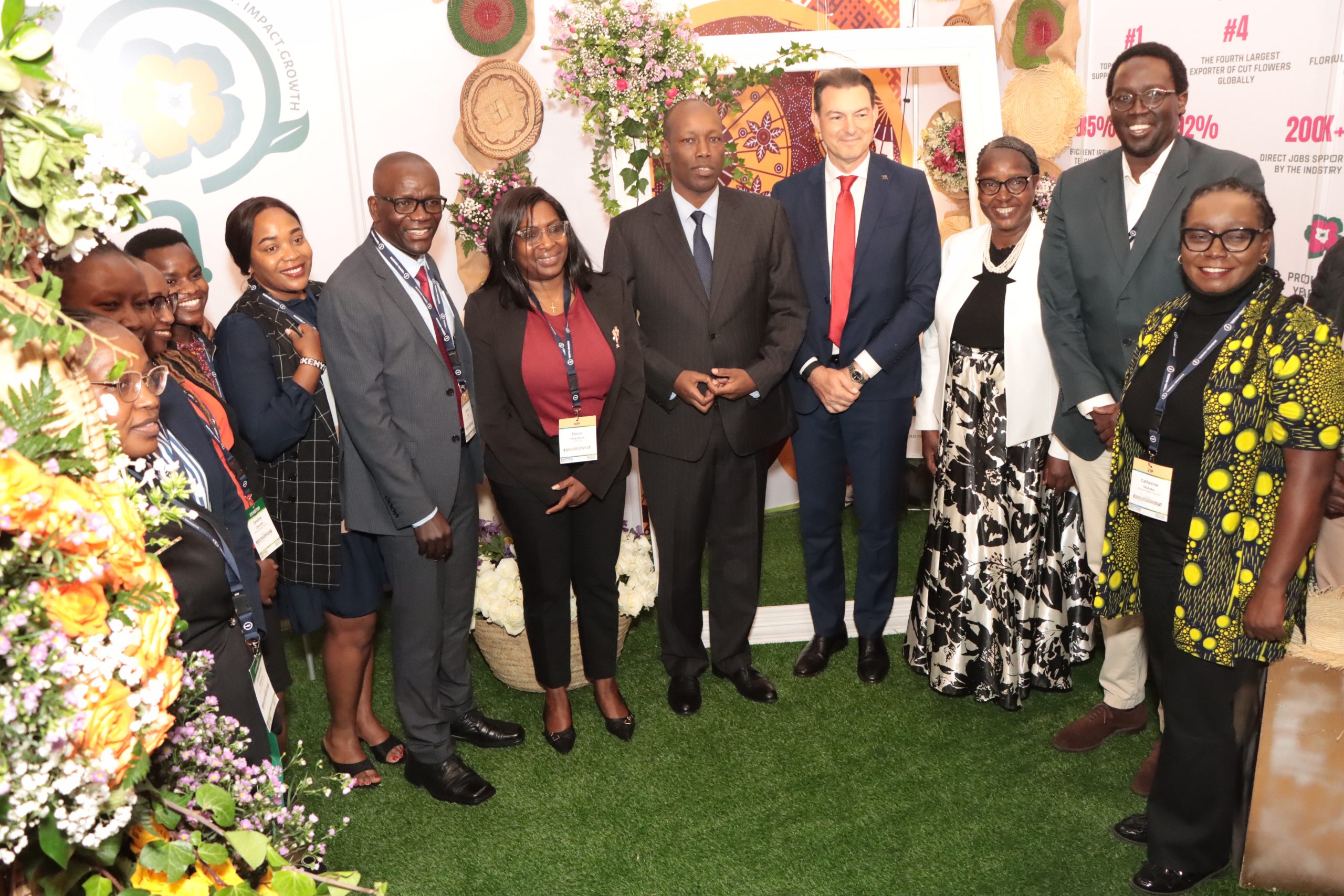
Speaking during the official opening of the 13th International Flower Trade Exhibition (IFTEX 2026), the continent’s largest flower industry trade show, Trade Cabinet Secretary Lee Kinyanjui said that the government seeks to reduce the VAT refund rate from the current 16 percent to eight percent in a move aimed at minimizing the amount exporters reclaim from government and improving liquidity within the sector.
“We are currently in the budget-making cycle, and one of our recommendations is to reduce VAT for export-oriented businesses so as to reduce the cash outflow that businesses have to claim back from government every month,” he said.
Kenya’s flower sector is currently owed over Ksh.10 billion (US$ 77 million) in VAT refund backlogs by the government. Because flowers are largely zero-rated exports, farmers accumulate significant input VAT credits (from electricity, packaging, and farm inputs) that they must claim back from the Kenya Revenue Authority (KRA).
By reducing the VAT rate charged upfront, exporters would not need to claim huge refunds every month. This would reduce delays, improve cash flow, and make it easier for businesses to operate and grow.
Kinyanjui acknowledged that VAT refunds remain one of the most persistent issues affecting exporters, alongside rising air freight costs, increasing prices of agricultural inputs and growing compliance demands from international markets.
The government, according to him, is also working to improve VAT refund efficiency, streamline regulations and reduce unnecessary compliance costs to make Kenya a more competitive destination for floriculture investment and trade.
“The proposed VAT reforms are expected to feature prominently in budget discussions as the government seeks to strengthen one of Kenya’s most important export sectors,” he said.
The Cabinet Secretary noted that competitiveness in the global flower market now depends not only on productivity at farm level but also on logistics, infrastructure, regulatory predictability and access to efficient export systems.
The announcement comes at a time when Kenya’s floriculture sector is navigating growing global uncertainty, including supply chain disruptions, inflationary pressures and changing sustainability requirements from key export markets in Europe, Asia and the Middle East.
However, Dick van Raamsdonk, the CEO OF HPP, said that Kenyans growers are responding to changing market dynamics through sustainable farming practices, carbon-conscious operations and market diversification.
“The Kenyan flower industry is actively innovating. Our growers are adopting smarter logistics, sustainable farming practices and carbon-conscious operations. We are not just meeting global standards; we are defining them.”
On his side, Kinyanjui said that despite this challenges Kenya remains one of the world’s leading flower exporters and a trusted supplier internationally. That is why there is planned expansion of the country’s main airport and cold chain infrastructure as part of broader efforts to support exporters and improve cargo handling capacity.
He also assured international buyers that Kenya is committed to meeting evolving global sustainability and environmental standards. He further urged growers to comply with increasingly strict environmental and sustainability requirements, while emphasizing that buyers and retailers must also support fair and sustainable pricing across the value chain.
Kenya’s flower industry is among the country’s leading foreign exchange earners, generating about Ksh.110 billion (US$ 850 million) annually and directly employing more than 200,000 people.
The sector exports flowers to Europe, the Middle East, Asia and other international markets, making Kenya one of the world’s top flower exporters. However, growers say increasing operational costs and global economic uncertainty are putting pressure on profitability and competitiveness.