By Milliam Murigi
Africa’s journey to becoming a global food basket will depend less on discovering new agricultural technologies and more on getting existing innovations into the hands of millions of farmers.
This was revealed at the World Food Prize Foundation’s DialogueNext Africa conference that happened in Kenya’s capital, Nairobi.
The conference, which brought together policymakers, scientists, farmers, agribusiness leaders and development partners focused on a common challenge, confronting African agriculture.
“Despite decades of research and innovation, many proven technologies remain confined to research institutions while farmers continue to grapple with low yields, climate shocks and food insecurity,” said Hon. Dr. Akinwumi Adesina, Member, World Food Prize Foundation Council of Advisors.
According to him, Africa does not lack solutions, it lacks the systems needed to scale them. The continent has already developed drought-tolerant maize, heat-tolerant wheat, disease-resistant cassava, biofortified crops, improved livestock breeds, digital advisory services and climate-smart farming technologies capable of transforming food production.
“What we need now is scale,” Dr. Adesina said. “This is not a conference to discuss what we should invent next. It is a conference about how to expand what is already working.”
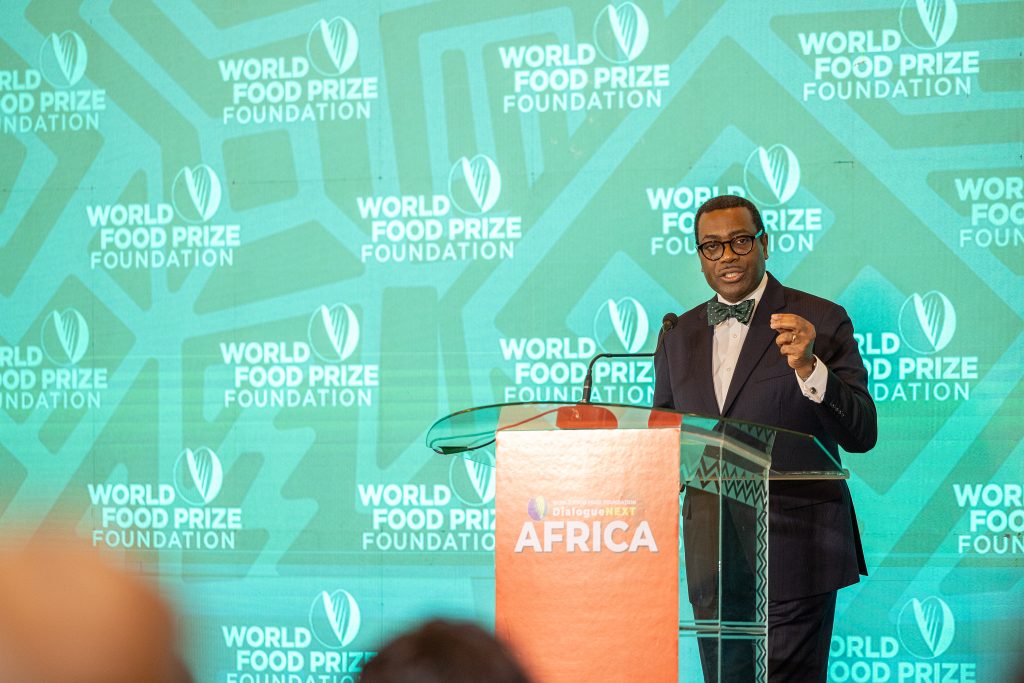
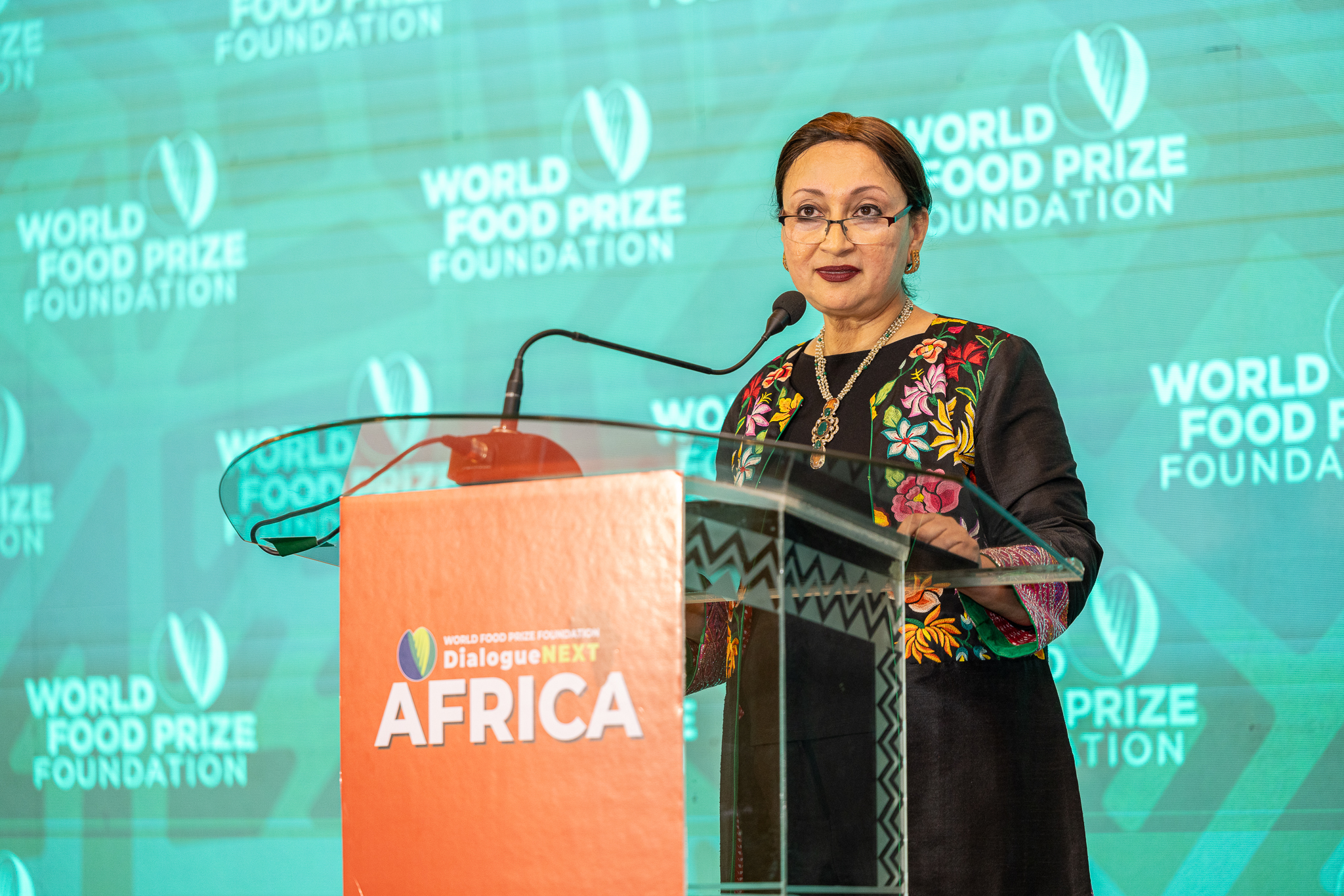
Speaking during the same event, Mashal Husain, the Foundation’s President, said the conference was established to create a platform where conversations lead to commitments and partnerships that accelerate agricultural transformation.
“The World Food Prize Foundation believes in convening conversations that matter,” Husain said. “When scientists, governments, farmers, entrepreneurs, investors and the media sit at the same table, ideas grow into partnerships, and partnerships create impact.”
DialogueNext is an extension of the Foundation’s renowned Borlaug Dialogue held annually in Des Moines, Iowa, but with a different approach. Instead of expecting global stakeholders to come to one location, the Foundation is taking the conversation to regions that shaped the legacy of its founder, Nobel Peace Prize laureate Dr. Norman Borlaug.
The first DialogueNext meeting was held in Mexico, where Borlaug began the wheat research that sparked the Green Revolution. The second was in India, where improved crop varieties helped avert widespread famine in the 1960s. This year’s meeting in Nairobi honoured Borlaug’s final mission bringing the Green Revolution to Africa.
“It has taken us four decades to host this conversation on African soil,” Husain said. “But Africa is central to the future of global food security.”
Dr. Adesina argued that many innovations have demonstrated remarkable success in pilot projects but fail to reach millions of smallholder farmers because of fragmented delivery systems, inadequate financing and weak extension services.
He challenged governments, research institutions and development partners to focus less on isolated success stories and more on building systems capable of delivering technologies across entire countries.
According to Professor Ruth Oniang’o despite years of scientific progress, many farmers have never seen or used technologies designed specifically for them. The reason is innovations often stop at research centres because communication between scientists and farmers remains weak.
“The technology exists,” she said. “The problem is that many farmers do not know it exists or do not understand how it can benefit them.”
She urged journalists to become partners in agricultural transformation by translating scientific research into stories that farmers can understand and apply.
Prof. Oniang’o also encouraged reporters to visit agricultural research institutions and highlight practical innovations already available in Kenya.
“The media has a responsibility to demystify science,” she said. “Research should not remain in journals. It should reach the farmer.”
Regulatory barriers were also identified as another obstacle to scaling agricultural technologies. Dr. Adesina criticized lengthy approval processes that require improved crop varieties to undergo repeated testing before they can be released in neighbouring countries, even where environmental conditions are nearly identical.
He questioned why technologies should face national borders when pests, diseases and drought move freely across the continent. He called for harmonized regulations that recognize shared agroecological zones, allowing successful technologies to be adopted more quickly across multiple countries.
“Reducing regulatory delays would enable farmers to access improved seeds years earlier than is currently possible,” Dr. Adesina said.
Climate change was another major focus of the conference. Speakers cautioned that rising temperatures, erratic rainfall and prolonged droughts continue to threaten agricultural production across Africa.
However, rather than presenting climate change as an insurmountable obstacle, delegates argued that scientific innovation provides many of the tools needed to build resilience.
Examples discussed included drought-tolerant crops, improved livestock genetics, weather forecasting delivered through mobile phones, agricultural insurance and climate-smart farming practices.
While science dominated many discussions, Adesina insisted that technology alone cannot transform agriculture without political leadership.
He argued that governments already know what policies are required to modernize agriculture and reduce hunger.
“The biggest challenge today is political will,” he said.
He urged African governments to prioritize agriculture through increased investment, stronger extension systems, improved rural infrastructure and supportive policies that encourage private-sector investment.
Husain said the expected rise in global food demand as the world’s population nears 10 billion presents Africa with an unprecedented opportunity to transform itself into a global agricultural powerhouse.
With global food demand expected to continue rising as the world’s population approaches 10 billion people, Husain said Africa has a significant opportunity to play a leading role in feeding the world.
Realizing this opportunity will require moving beyond small pilot projects to large-scale adoption of technologies that increase productivity, strengthen resilience and improve farmers’ incomes.
“DialogueNext is intended to become a platform for measuring that progress. Rather than ending with declarations, future meetings will assess whether commitments made have resulted in more farmers accessing improved technologies, greater investment in agriculture and stronger partnerships capable of accelerating Africa’s agricultural transformation,” she said.