

By Milliam Murigi
Government officials and environmental experts from Eastern and Southern Africa have called for stronger monitoring and reporting systems to ensure ecosystem restoration commitments translate into measurable results under the global biodiversity agenda.
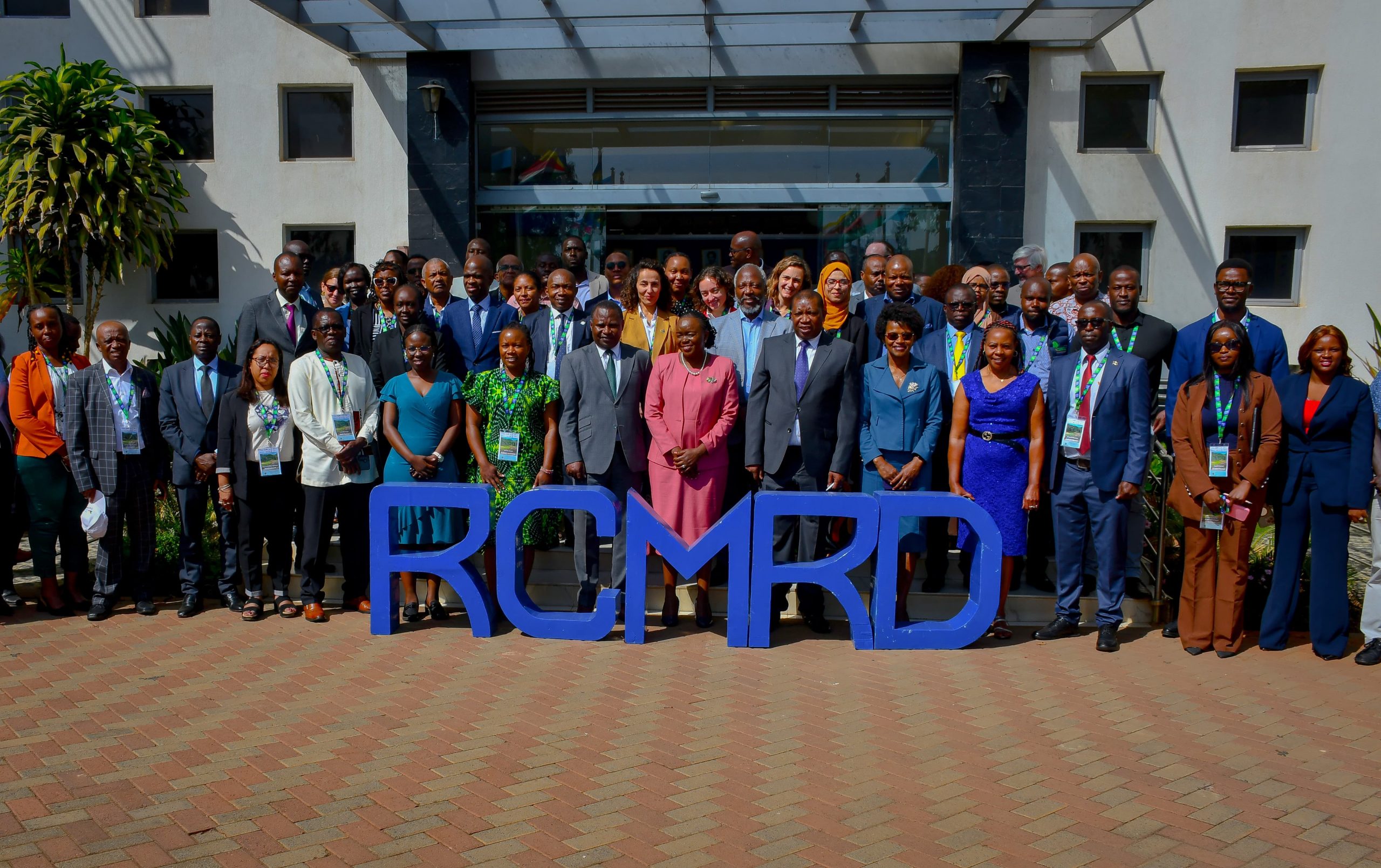
The call was made during a high-level subregional workshop on biodiversity monitoring and reporting linked to Target 2 of the Kunming–Montreal Global Biodiversity Framework (KMGBF), held in Nairobi from 27 to 30 January 2026.
The meeting brought together policymakers and technical experts from 11 countries to strengthen regional cooperation and accelerate restoration efforts ahead of the 2030 deadline.
The meeting was convened by the Food and Agriculture Organization of the United Nations (FAO), the Regional Centre for Mapping of Resources for Development (RCMRD), and the Secretariat of the Convention on Biological Diversity (CBD), with technical support from the Society for Ecosystem Restoration (SER) and CIFOR–ICRAF.
Opening the meeting, Kenya’s Cabinet Secretary for Environment, Climate Change and Forestry, Dr Deborah Mulongo Barasa, stressed that restoration efforts must be backed by credible data systems to demonstrate progress.
“Restoration is about giving nature a chance to recover and, in doing so, protecting livelihoods, securing water, supporting food production and building resilience to climate change,” Dr Barasa said. “But restoring ecosystems is not enough. We must be able to explain what we are doing, show what is working and learn from what is not.”
She warned that without effective monitoring and reporting, ambitious restoration pledges risk remaining unfulfilled.
“The next few years will determine whether restoration commitments become reality or remain promises on paper,” she added.
Target 2 of the KMGBF commits countries to ensure that by 2030, at least 30 per cent of degraded terrestrial, inland water, coastal and marine ecosystems are under effective restoration.
Participants at the Nairobi meeting noted that while countries face diverse ecological and socio-economic conditions, they often encounter similar challenges, including limited data, technical capacity gaps and complex reporting requirements.
Patrick Mucheleka, Chairperson of the RCMRD Governing Council and Permanent Secretary in Zambia’s Ministry of Lands and Natural Resources, emphasised the importance of subregional collaboration in meeting global biodiversity targets.
“Across our region, we all face similar challenges — land under pressure, ecosystems that are stretched, and communities that depend directly on nature for their livelihoods,” Mucheleka said. “We also share the same responsibility: to turn our restoration commitments into real action.”
In a video message, Astrid Schomaker, Executive Secretary of the Convention on Biological Diversity, underscored the need for partnerships to tackle interconnected environmental crises, including biodiversity loss, climate change, land degradation and pollution.
“We need all hands on deck,” Schomaker said. “The world needs a whole-of-government and whole-of-society acceleration in the implementation of the Global Biodiversity Framework.”
The workshop brought together representatives from Comoros, Eswatini, Ethiopia, Kenya, Madagascar, Rwanda, Somalia, South Sudan, Uganda, Tanzania and Zambia. Discussions focused on aligning national restoration efforts with global reporting requirements while ensuring that monitoring systems remain practical and responsive to local realities.
The meeting also marked a key institutional milestone with the official launch of RCMRD as a Subregional Technical and Scientific Cooperation Support Centre, alongside the establishment of its Steering Committee. In this role, RCMRD will support countries in Eastern and Southern Africa through coordinated scientific, technical and data-driven assistance aimed at accelerating implementation of the KMGBF.
“With its new role as a Subregional Technical and Scientific Cooperation Support Centre, RCMRD is ready to support countries with the data, tools and coordination needed to deliver on Target 2,” said Dr Emmanuel Nkurunziza, RCMRD’s Director General.


