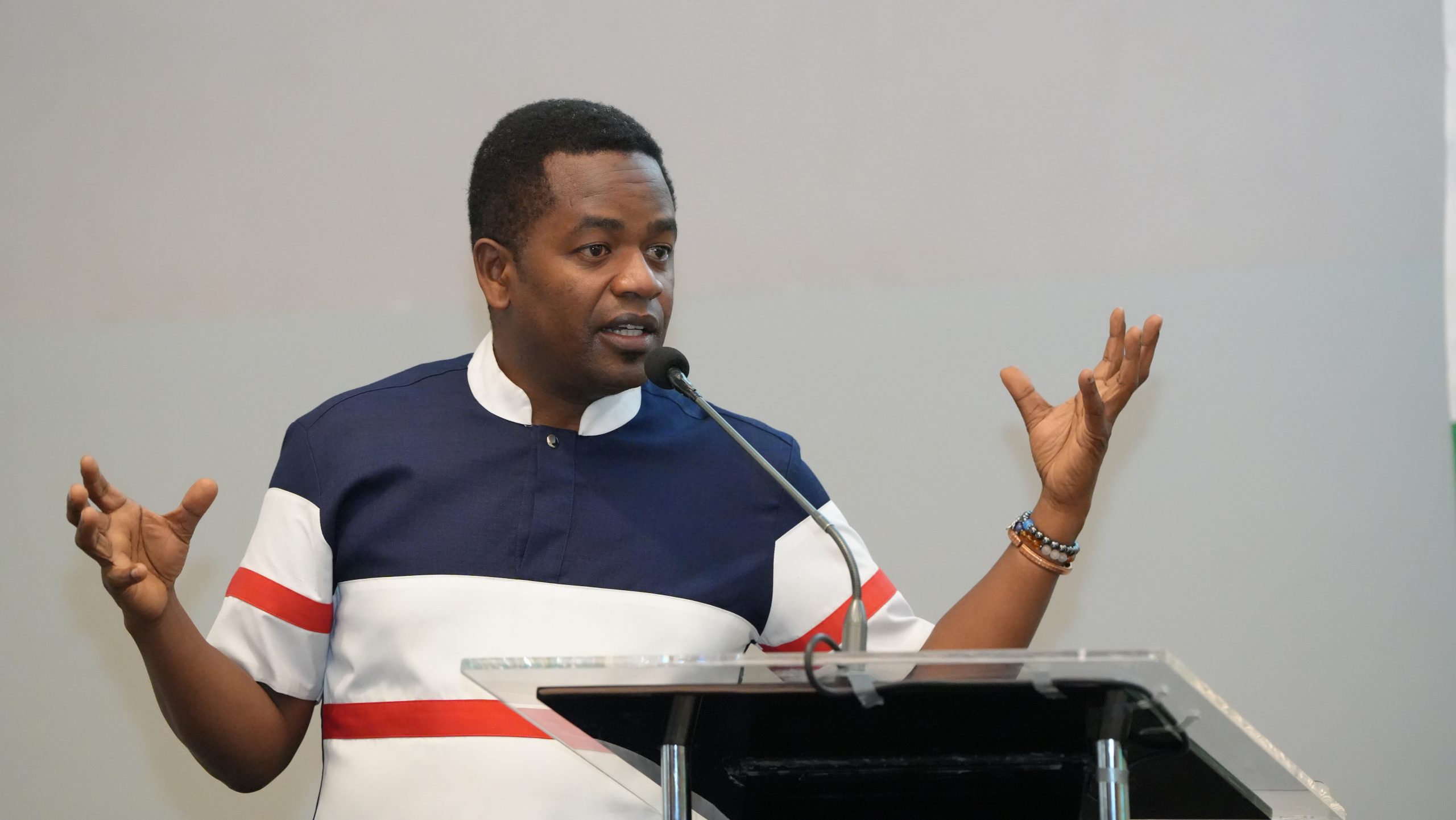
By Gift Briton
More than 50,000 primary and secondary schools operate in Kenya, with over 90% still using firewood to prepare meals. That dependence places pressure on school budgets and forests while exposing children and kitchen staff to harmful smoke.
Cooking energy accounts for up to 40% of the cost of preparing a school meal, a burden Kenya hopes to ease as it expands its school feeding programme to reach 10 million learners by 2030.
Science Africa sat down with Zeph Kivungi, Director for Climate at the Children’s Investment Fund Foundation (CIFF), to explore what Kenya’s first-mover approach could mean for its schools, economy and the rest of Africa.
Q: Why is Kenya starting this clean cooking transition with schools?
A: Schools serve millions of people. Kenya has over 10 million school-going children, making schools the country’s biggest drivers of firewood demand and its worst destroyers of forests. Schools are also the biggest determinant of a child’s nutrition and development. Unlike households, where government has little control over how people cook, schools are public institutions. The Government can introduce policies that support the transition to cleaner cooking, protect forests at scale and provide funding to make it happen.
Nearly 300 county and sub-county education directors were pulled into this workshop. What role will they play in the nationwide data collection?
We have developed a digital tool to collect data from schools because visiting every institution across the country would take too long, create room for errors and risk missing some schools. That is why we brought together nearly 300 county and sub-county education directors from all 47 counties. The Ministry of Education will issue a circular, provide the digital tool and share a short explanatory video. The directors will then cascade the exercise to school heads across the country, who will submit the required information through the tool. Once the data is entered, it will be transmitted directly to a central database, allowing us to compile nationwide information within weeks instead of months.
Q: What is the timeline, and what does success look like once the data is in?
A: We work based on government signals. We cannot come in and tell the government what to do. The Kenyan government wants to transition all public institutions to cleaner cooking by the end of 2028. It is an ambitious target, but it is achievable, especially as the country also aims to provide school meals to at least 10 million children by 2030, particularly at the elementary level.
This programme has three phases. The first is the nationwide data collection exercise we are launching today because you cannot invest in something you do not understand. We expect this phase to be completed by late 2026 or early 2027.
Success at this stage means having a clear picture of the opportunity. We need to know which technologies are suitable, what they cost, where the capital will come from, and whether schools will need grants, loans or other financing options. The outcome should be an investable pipeline.
Today, many investors have capital but do not know what they are investing in. This exercise will provide that clarity. It will make the case for investors, including organisations like CIFF, to invest. But we only invest where the government has demonstrated commitment and is willing to invest alongside other partners.
The next phase is scaling up the transition across Kenya. Beyond that, we hope to support other African countries that see what Kenya has achieved and want to develop similar programmes.
Q: Which partners are actually putting money behind this so far?
A: For now, CIFF is the first mover funding this work. The African Development Bank is also already piloting it with us at a bigger scale; they have deeper pockets than we do. Britain’s FCDO is putting in resources too; their interest is school resilience and keeping children enrolled, since food is one of the reasons children drop out. A few embassies, the Scandinavians especially, have asked to be involved once we move into the next phase.
What makes this different from other clean cooking programmes attempted elsewhere on the continent?
This is the first exercise of its kind on the continent. Across much of the continent, over 90% of institutional cooking still relies on firewood. Countries know it’s a problem, but most do not know where to start. Kenya is the first to actually take this step, which is very encouraging.
Kenya also has progressive policies, making it a natural place for CIFF to partner with the government. The exercise will produce the continent’s first national dataset on institutional clean cooking, creating an evidence base that other African countries can learn from.
Q: Why do you think homegrown solutions matter more than any single imported technology in this transition?
A: Homegrown solutions will always be the best. The benefits are enormous. Take iron ore as an example. Kenya exports much of it in its raw form, but if we create demand for the steel used to manufacture institutional cooking equipment, we create jobs across the entire value chain.
The same applies to energy. We have a lot of electricity, and it is clean. At one point, Kenya stopped building new power plants because there was not enough demand for the power being generated. If we import LPG, the money used to buy that gas leaves the country because we do not produce it ourselves. But if schools use electricity generated here, that money stays in Kenya. Instead of sending dollars abroad to pay for imported fuel, schools pay Kenya Power, and that supports our own economy. There is also a huge opportunity for young people and entrepreneurs to build businesses that respond to this new demand.
My personal view is that the technologies recommended for adoption should be homegrown wherever possible. The more local they are, the better. A country cannot grow on imports. Local technologies allow knowledge to spread, create jobs and keep more of the money within the country.
Q: Will Kenya recommend one clean cooking technology for every school?
A: One of the reasons we are taking a scientific approach to data collection is that we do not want to lock any institution into a particular company or technology.
Our first task is to understand the circumstances of each school and determine which technologies are most suitable.
We are not identifying or endorsing any companies. Kenya already has several local manufacturers producing institutional cooking technologies, alongside a few international companies that have introduced their products in the country. We want to remain a few steps away from the private sector so that, as a philanthropy, we do not give the impression that we prefer one company or technology over another. The data should guide those decisions, while the Ministry of Education and schools determine which option best meets their needs.
We already have several technologies to choose from. Improved biomass stoves are widely used, but I have strong reservations about them because they are less efficient, still produce smoke and depend on biomass at a time when we have fewer trees.
For smaller schools, I would lean towards induction cookers. They can even be powered by solar energy, meaning cooking costs could fall close to zero once the power system is in place. For larger schools, especially those with more than 500 learners, my preferred option is steam cooking powered by electricity. Electricity heats a boiler, the boiler produces steam, and the higher temperatures allow food to cook much faster.
All these technologies have already been piloted. There are induction cookers, steam systems powered by electricity and others powered by biomass. The evidence from this exercise will help determine which technology is most suitable for each type of school.
Q: If another African country wanted to replicate what Kenya is doing, what exactly should they copy?
A: There is already a lot that other African countries can learn from Kenya. The first is the policy environment. Kenya has progressive policies, clear targets, a defined strategy and a good understanding of what will be required. Those are the reasons we chose to start here. The government has sent strong signals, and many banks are already interested in supporting the transition.
The second is financing. Kenya is putting in place mechanisms that can bring together government, development partners and private capital. That is something other countries can adapt.
The third is local manufacturing. You have seen Kenyan companies already producing institutional cooking equipment. Encouraging local manufacturing can reduce the cost of equipment while creating jobs and building local capacity. Government support has been important in making that possible.
Finally, there is government coordination. This initiative has brought together different government institutions behind one common goal. That level of collaboration is another lesson other African countries can take from Kenya.
Q: Beyond replacing firewood, what would meaningful success actually change for a school?
A: Many schools have land, but they operate on very limited budgets; almost every shilling they receive is already spent. Free up what’s currently spent on cooking fuel, and that money can go into innovation, into school gardens, into the kind of local enterprise that never shows up on a budget line but changes a place anyway. As schools grow stronger, the communities around them benefit too.