By Thuku Kariuki
Kenya, a country where tax fairness has seen its share of activism recently, is hosting an international event that could see more of the revenue burden falling on the rich and the most profitable corporations, on an international scale.
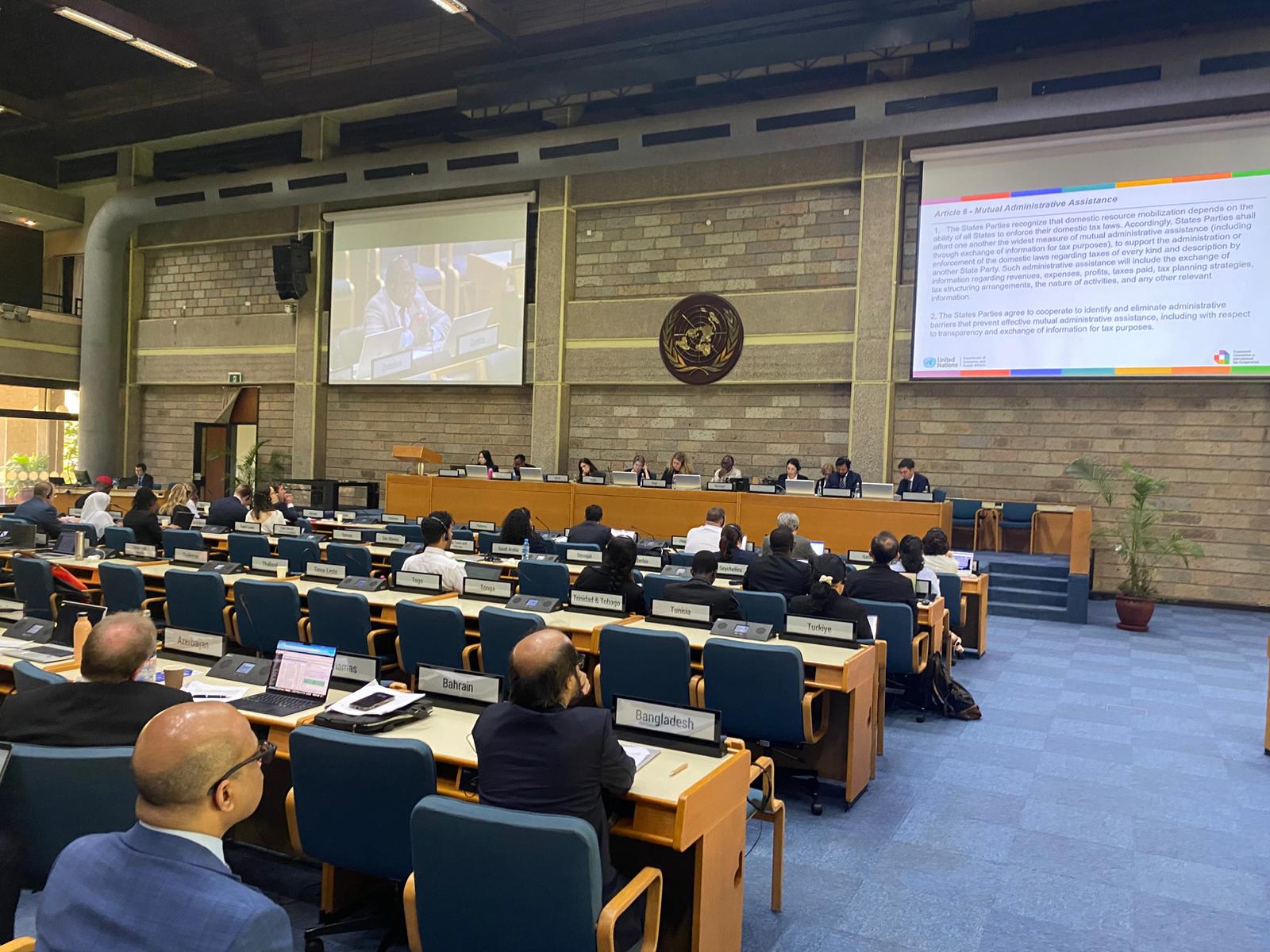
The Intergovernmental Negotiating Committee on the United Nations Framework Convention on International Tax Cooperation kicked off in Nairobi. The conference promises to pave the way for new tax systems across the globe. Activists hope this will create funds for adaptation to climate change, biodiversity conservation and lifting financial burdens on the poor.
This is the third session, after New York hosted two in August. The UN is encouraging international organizations, civil society, and other relevant stakeholders to contribute to the work of the intergovernmental negotiating committee.
There are several activist organizations who will try and have their voice heard during the proceedings.
“With austerity growing worldwide and the climate crisis deepening, responsible leaders cannot miss this opportunity to change a system that wastes resources and concentrates wealth in the hands of a few individuals and corporations,” said Rudelmar Bueno de Fario, Secretary-General, ActAlliance, a global faith-based coalition that promotes locally-led and coordinated efforts to address humanitarian and developmental issues.
Tax Justice Network Africa also hopes to influence the proceedings. Executive Director Chenai Mukumba comments, “The stakes for Africa in these negotiations are real. Every dollar lost to tax abuse is a clinic left understaffed, a school under-resourced, and a delayed response to the climate crisis. Africa has been clear about what is needed to build fair and effective tax systems.
“This is our chance to secure global rules that uphold equity, restore taxing rights to our countries, and ensure multinationals and wealthy elites contribute their fair share. We are not just participating in this process. We are shaping its direction to reflect the realities and ambitions of the African continent.”
The agenda for the event, which runs from November 10th to 19th is clear. Week one of the negotiations will focus on the Framework Convention. The text of the legally binding convention will be addressed. Negotiators will cover commitments, including taxing the rich, ensuring a fair allocation of taxing rights, and taxation for sustainable development. The first week will conclude with a presentation on the taxation of cross-border services, something which the United Nations hopes to have a great impact.
Week two will discuss how to prevent and resolve tax disputes. Once again, having international agency commitments can be a key to making this work effectively.
Many environmentally-focused organizations see these meetings as an opportunity to find money to address issues from climate change to wildlife conservation, revving up the blue economy, to stopping deforestation.
The Convention process could have a long-lasting impact on fundraising for global climate financing. By closing loopholes, increasing transparency and strengthening rules against tax abuse, governments can mobilize money for climate adaptation, loss and damage, and biodiversity protection. For many countries, especially in the Global South, this would reduce dependence on unpredictable aid flows.
Bringing the meeting to Africa is certainly meant to influence tax policy on the continent. In many countries, prominent businesses and moguls seem to avoid taxes altogether. Tax justice is a cry that has been heard recently here in Kenya, during protests over new tax laws at the beginning of President William Ruto’s term. Many of those levies were rescinded after tens of thousands of young people took to the streets.
Others in Africa see this as a way to finally get industrialized nations to pay for their share of creating climate change. Much money has been pledged, especially at the annual COP climate change meetings, like the one currently ongoing in Belem, Brazil. But very little money has been forthcoming. Closing loopholes and making sure the rich pay their fair share could finally produce these funds.
“As negotiations move into text-based discussions, we need clarity of purpose. Africa must remain consistent in defending fair allocation of taxing rights, transparency, and the ability of governments to mobilize domestic resources. This is not just technical work. It is about securing the fiscal space to deliver dignity for our people,” said Mukumba.
Bueno de Fario says these ideas apply across the globe, adding, “A fair global tax system is indispensable for delivering on climate justice and ensuring that the most vulnerable communities are not left behind.”
Over the next two weeks, we can all watch and listen for significant discussions that can affect our communities and ourselves. Fairness in tax levies is something that, if addressed effectively, can provide the resources to provide for so many of our needs. If the right voices are heard and really listened to, social justice can make a new start, here in Africa and all over the world.