By Duncan Mboyah
Climate change researchers have urged African nations to embrace indigenous knowledge to effectively complement forecasting in arid regions.
The researchers noted that since climate change is complex and a threat to the planet and humanity, it is time all tools such as observation of intestines and stars, birds and bees’ movements, that have been used for centuries, are applied in managing its effects.
They said that indigenous communities in Sub-Saharan Africa (SSA) are the worst affected by climate change as they suffer from recurrent drought, unpredictable rainfall impacts on pastoral and agricultural livelihoods.
The researchers who were drawn from Kenyan universities observed that as much as the nations are adopting a new generation of technologies in earth observation, indigenous knowledge should not be ignored since it is rich and connects with communities living in arid and semi-arid regions.
The researchers said that a tradition of the Pokot people in northwestern Kenya that involves slaughtering a goat to read its intestines in predicting the weather is popular and accurate.
Fiona Imbali, a climate change researcher, said that in a study she conducted in the area, elders from the community confirmed having relied on the practice for years in forecasting weather as part of ensuring the security and resilience of their livestock.
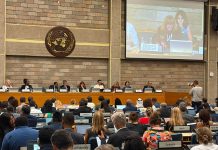
“The pastoral communities living in these dry regions have used indigenous knowledge successfully in forecasting weather patterns over a long period,” Imbali said during the meeting.
Imbali said that it is time to integrate earth observation technologies to provide real-time weather data in addressing climate change and enhancing food security strategies within communities.
The researcher added that even though the communities do not understand conventional weather forecasting, they use indigenous ways to predict and adapt to climate change.
She noted that nations need to explore how to enhance pastoral communities’ practices that they have applied for generations in predicting the weather.
Imbali said that before the prediction process began, the community ensured the intestines were suitable for examination, but if they note any strange marks, a second goat is then slaughtered to continue with the process
“They take time reading the intestines and predicting the outcome based on their past experiences,” she added.
Prof. Christopher Oludhe, Associate Professor in the Department of Earth and Climate Science at the University of Nairobi, said that communities have been predicting weather for a long time as a solution in preparation for the ravaging weather.
Prof. Oludhe said that it is time to embrace their sky, goat intestines, and wind approach with the conventional knowledge to shape the technology to serve local needs to realize meaningful development.
Dr. Caroline Amukono, assistant director of forecasting at the Kenya Meteorological Department (KMD) the challenge has always been the translation of weather terms and reports in indigenous languages.
Dr. Amukono said that KMD is already working closely with elders and helping empower them to translate the reports to communities.
Prof. Silas Oriaso, professor of communication and journalism at the University of Nairobi, urged researchers and stakeholders in climate change to change people’s perceptions by targeting the ones to change.
Prof. Oriaso told researchers and scholars that academic study is not complete until it creates changes within communities.
The researchers urged nations to adopt a new generation of technology and embrace indigenous knowledge to connect communities with the environmental changes for the safety of their livestock and agriculture.
They called for collaboration between scientists and communities to develop integrated tools that are scientifically grounded, scalable, and relevant to policy.