By Milliam Murigi
Agricultural stakeholders have been challenged to embrace sustainable ecological innovations, strengthen market systems and promote healthy diets as Africa seeks to build resilient food systems capable of feeding a growing population amid climate change.
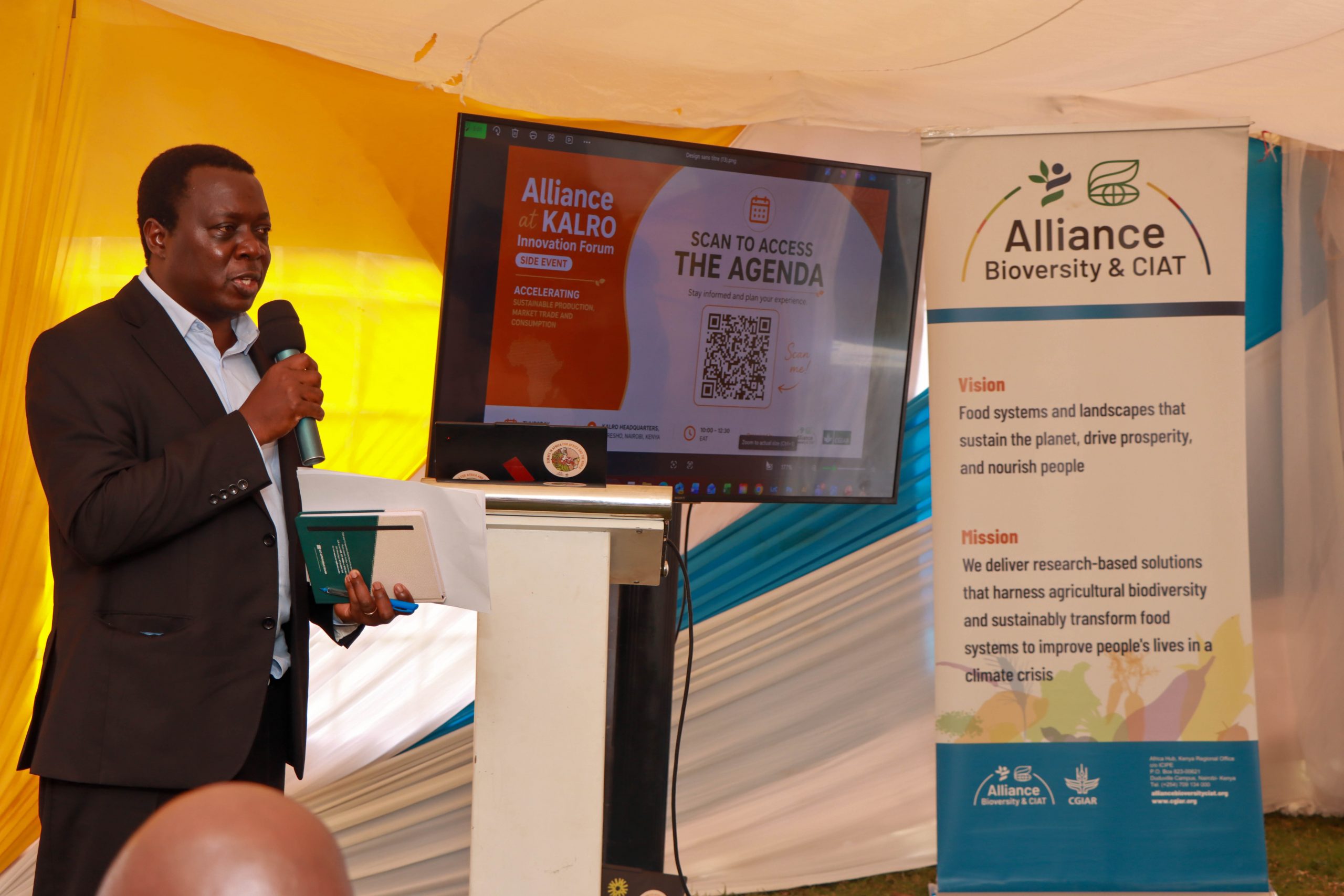
Speaking during the 2nd KALRO Scientific Conference and Innovation Expo, Dr. Boaz Waswa, senior scientist, Alliance of Bioversity International and CIAT, urged governments, researchers, development partners and farmers to rethink the future of agriculture through innovations that build resilience while advancing low-carbon development.
Dr. Waswa noted that although smallholder farmers produce nearly 75 per cent of Africa’s food, they continue to face declining soil fertility, land degradation, climate shocks and increasing pressure to meet rising food demand.
“The future of agriculture depends on balancing adaptation and mitigation by building resilience while reducing greenhouse gas emissions from crop and livestock systems,” he said.
He identified integrated crop-livestock systems, circular agriculture and improved productivity as practical pathways towards achieving sustainable food production while safeguarding the environment.
According to him, healthy soils remain the foundation of sustainable agriculture. He called for integrated soil fertility management, data-driven decision-making and the adoption of bundled innovations rather than isolated interventions.
From agroforestry and pastoral systems to improved forage technologies and renewable energy solutions such as solar-powered irrigation, he said the technologies needed to transform agriculture already exist.
“What is needed now is stronger collaboration, supportive policies, climate financing and meaningful co-creation with farmers,” he said.

His remarks were echoed by Dr. Christine Chege, a senior scientist with Alliance of Bioversity International and CIAT, who emphasized the often-overlooked link between sustainable production and healthy diets.
Dr. Chege said healthy soils and sustainable farming practices directly influence the nutritional quality of food consumed by households.
“If crops are grown in nutrient-rich soils using sustainable production methods, consumers ultimately receive more nutritious food on their plates,” she said.
She cited biofortified bean varieties rich in iron and zinc as examples of how agricultural innovations can contribute to improved nutrition outcomes, while stressing the need for consumers to maintain diverse diets that include fruits, vegetables and other nutrient-rich foods.
Dr. Chege noted that transforming food systems requires more than increasing production. She called for stronger market linkages that connect farmers to buyers, reduce transaction costs and ensure sustainably produced foods reach consumers at affordable prices.
“We should never forget the consumer,” she said. “We invest heavily in production and distribution, but consumers also need information about the foods they eat and how best to prepare them to preserve nutrients.”
She further encouraged farmers to organize themselves into groups to aggregate produce and improve their bargaining power, while urging traders and buyers to form networks that can efficiently source commodities from producers.
The experts agreed that sustainable agriculture must deliver benefits across the entire value chain—from healthier soils and improved farmer incomes to better nutrition and environmental sustainability.