By Milliam Murigi
The International Livestock Research Institute (ILRI) has developed a new artificial intelligence (AI)-powered chatbot that provides instant, evidence-based answers to animal health questions.
The tool, accessible at https://animalanswers.ilri.org, was developed by ILRI’s Data and Research Methods Unit (DRMU) and CGIAR’s Digital Transformation Accelerator (DTA) in collaboration with Fahamu AI, a Kenyan startup company.
“The chatbot, draws primarily on scientific publications housed in CGSpace, CGIAR’s open-access repository. It is designed to make it easier and quicker for everyone to draw science-based, actionable insights from the CGIAR’s rich body of research on animal health,” says Jean-Baka Domelevo Entfellner, Head of Data and Research Methods at ILRI.
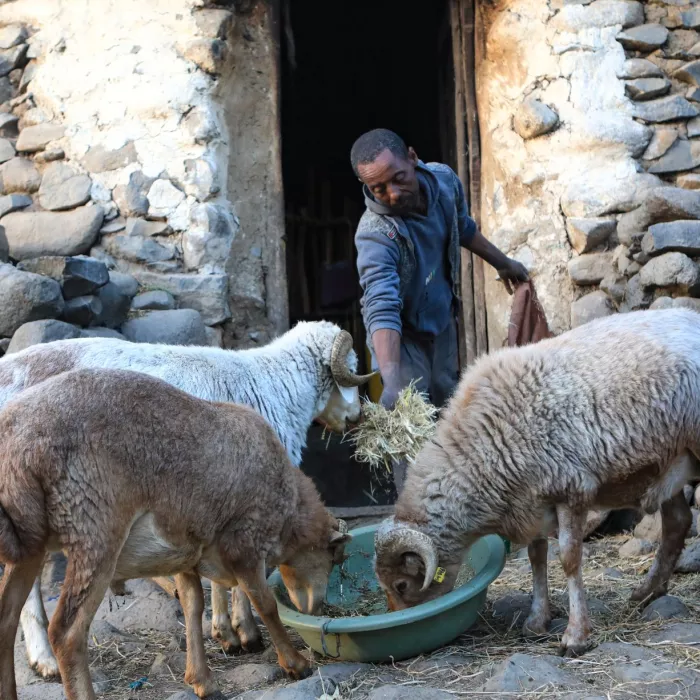
Livestock diseases continue to threaten productivity and livelihoods across Africa, with camel, cattle, and small ruminant herders often struggling to access timely, credible animal health advice. Traditional research outputs – scientific papers, reports, and datasets – are not always readily usable by field practitioners who may not have the time for an extensive literature review.
This challenge inspired ILRI’s DRMU team to explore AI technologies that could bridge the gap between academic research and the need for immediate answers to inform real-world applications.
According to Entfellner, the initiative aims to make ILRI’s research outputs truly actionable by letting anyone ask questions in plain language and receive reliable, sourced answers instantly.
“Each answer generated by the chatbot is linked to the source materials, called “chunks” that appear as clickable citations. We wanted users to not just trust the answer, but explore the science behind it. Every response leads back to real scientific publications,” says Alan Orth, DRMU’s systems specialist.
The chatbot’s interface is designed to be simple and intuitive, allowing users to type a question into the main text box and click “Ask” to receive an immediate response supported by linked citations. Below each answer, users can explore the specific text excerpts and full references from the underlying research, giving them clear visibility into the evidence used.
A built-in star-rating system also enables users to provide feedback on the response’s accuracy, completeness, and helpfulness, helping the development team continuously improve the tool. There is also a history feature that allows users to revisit past questions and answers both their own and those submitted by others, encouraging community learning and transparency.
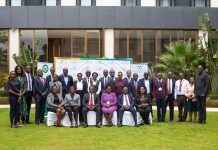
“Currently, the chatbot is in an early pilot phase, with all functionalities operational but still undergoing refinement. Feedback gathered during a hands-on workshop held in December 2025 at ILRI Campus, Nairobi, highlighted both strengths and areas for improvement in the current pilot of the AI-powered chatbot,” says Orth.
This initiative exemplifies CGIAR’s push to harness digital innovation for agricultural transformation. The chatbot aligns with the Digital Transformation Accelerator’s mission to mainstream AI tools that democratize access to research and enhance decision-making across the agri-food system.
The DRMU team envisions this as a foundation for broader, domain-specific AI tools covering topics such as livestock genetics, nutrition, and climate adaptation.
“We’re starting small, but the vision is big,” says Entfellner. “With continued support from DTA and our partners, ILRI aims to build a family of knowledge-driven chatbots that can serve farmers, researchers, and policymakers across the livestock sector.”