By Gift Briton
At a time when more Kenyan children are online than ever before, a new study cautions that online abuse is rising far faster than the systems meant to detect or report it, leaving many of them with little choice but to stay silent or block their abusers.
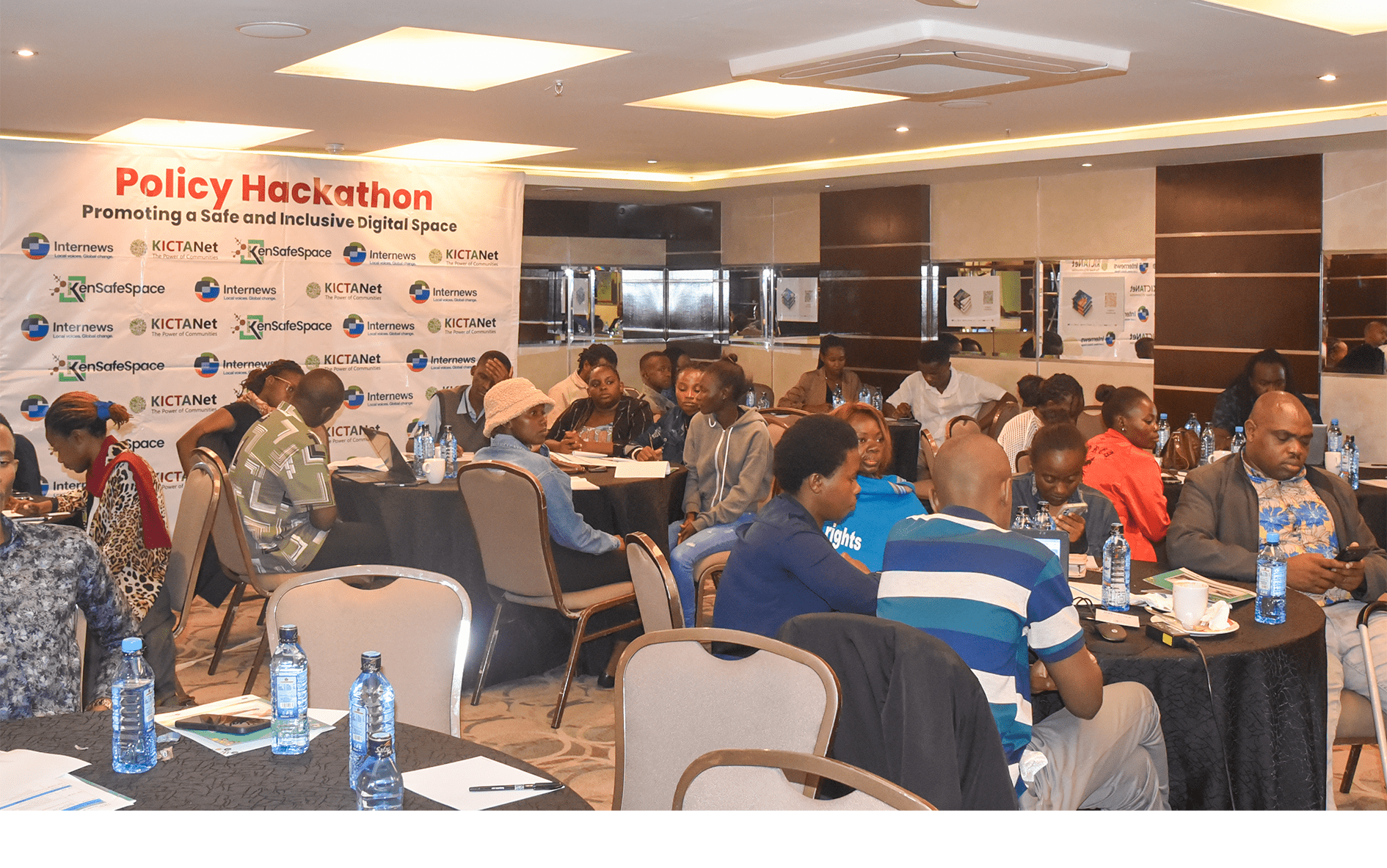
The findings were released during the launch of the Digital Democracy Studies and Policy Hackathon by Internews in Nairobi.
Conducted by Watoto Watch Network in collaboration with the African Institute for Children’s Studies under the KenSafeSpace project, the study examined why cases of online child harm remain severely underreported despite rising digital access.
Seven in every ten children in Kenya now have access to the internet, with up to 13 percent reporting online exploitation or abuse.
However, the study reveals that this number is underreported, with the researchers noting that the gap between actual abuse happening and the number of incidents being reported is even wider when informal reports are compared with official police statistics.
“Police documented about 4,113 child-related cases in 2024, yet online platforms linked to systems like the National Center for Missing and Exploited Children pick nearly 150 harmful images daily. This means that we are reporting less than ten percent of actual incidents,” said Samuel Munyuwiny, Co-Founder and Executive Director of the African Institute for Children Studies.
The study highlighted that many children do not report abuse because they fear being blamed, ridiculed, or judged. Cultural discomfort around discussing sexuality further discourages reporting of online grooming, extortion, and harassment. Many children prefer blocking perpetrators because it feels safer than discussing the issue with them.
“When children report abuse, sometimes they are asked, ‘Why were you online?’ This instantly shuts down the conversation. Children become the problem instead of the victim. As a result, blocking perpetrators becomes a survival strategy. It feels faster, safer, and less emotionally risky than involving adults. Others stay silent altogether,” Munyuwiny noted.
Schools face similar challenges. Although Kenya has national child protection guidelines, the researchers found that most schools lack practical, school-level procedures for handling online harm. This leads to delayed action, inconsistent responses, and in some cases, no action at all.
The researchers also found that key institutions, including the police system, Schools, the Communications Authority, and civil society groups, often work in silos, without a unified workflow.
Furthermore, helpline 116, the national child protection line, suffers from congestion and limited capacity, with many callers struggling to get through. Some families mistrust institutions, doubting that reporting will result in meaningful action.
Technological barriers also contribute to underreporting. English-heavy terminology, hard-to-find reporting buttons, and the lack of local language options make reporting inaccessible for many children. Lack of anonymity further discourages them from seeking help due to fear of exposure or retaliation.
“Children told us they could not even locate the reporting button on some platforms. If the first step is already difficult, the rest becomes impossible,“ he said.
According to Munyuwiny, underreporting has far-reaching consequences. He says that children lose access to psychosocial support and justice, while harmful behaviour continues unchecked.
“When cases go unreported, we end up with traumatized adults who are likely to form dysfunctional families. This also increases the long-term mental health burden on the country,” he said.
Despite these challenges, Kenya is not starting from scratch. The country already has strong national frameworks and one of Africa’s first specialised law enforcement units dedicated to child online safety.
“Kenya is a leader in child protection. Our role is to strengthen existing systems by translating national guidelines into practical tools that schools and caregivers can use,” said Lilian Kariuki, Founder and Executive Director of Watoto Watch Network.
The study outlines clear steps Kenya can take to strengthen reporting systems. Schools need designated safeguarding teachers, simple documentation procedures, and internal guidelines aligned with national frameworks. A unified reporting pathway linking schools, helpline 116, police, and child protection agencies would improve coordination and build trust.
The researchers also recommend child-friendly reporting designs with Kiswahili and local language options, as well as anonymous reporting features. Public education campaigns on online harm and helpline 116 should be expanded, particularly for parents and teachers.
For Internews, the organisation leading the KenSafeSpace project, the issue is ultimately about strengthening digital democracy.
“We are working to ensure that the voices of individuals guide the laws and policies shaping the digital space. Reporting pathways must reflect people’s real experiences and challenges. Children deserve systems that protect them and respect their rights,” said Abraham Marita, Project Director at Internews.
He added that research like this helps build evidence for human-rights-based digital policies, ensuring no user is excluded from safe online participation.