By Science Africa correspondent
African health ministers have committed to strengthening the continent’s health systems through expanding services and support for children and investing in a stronger health workforce.
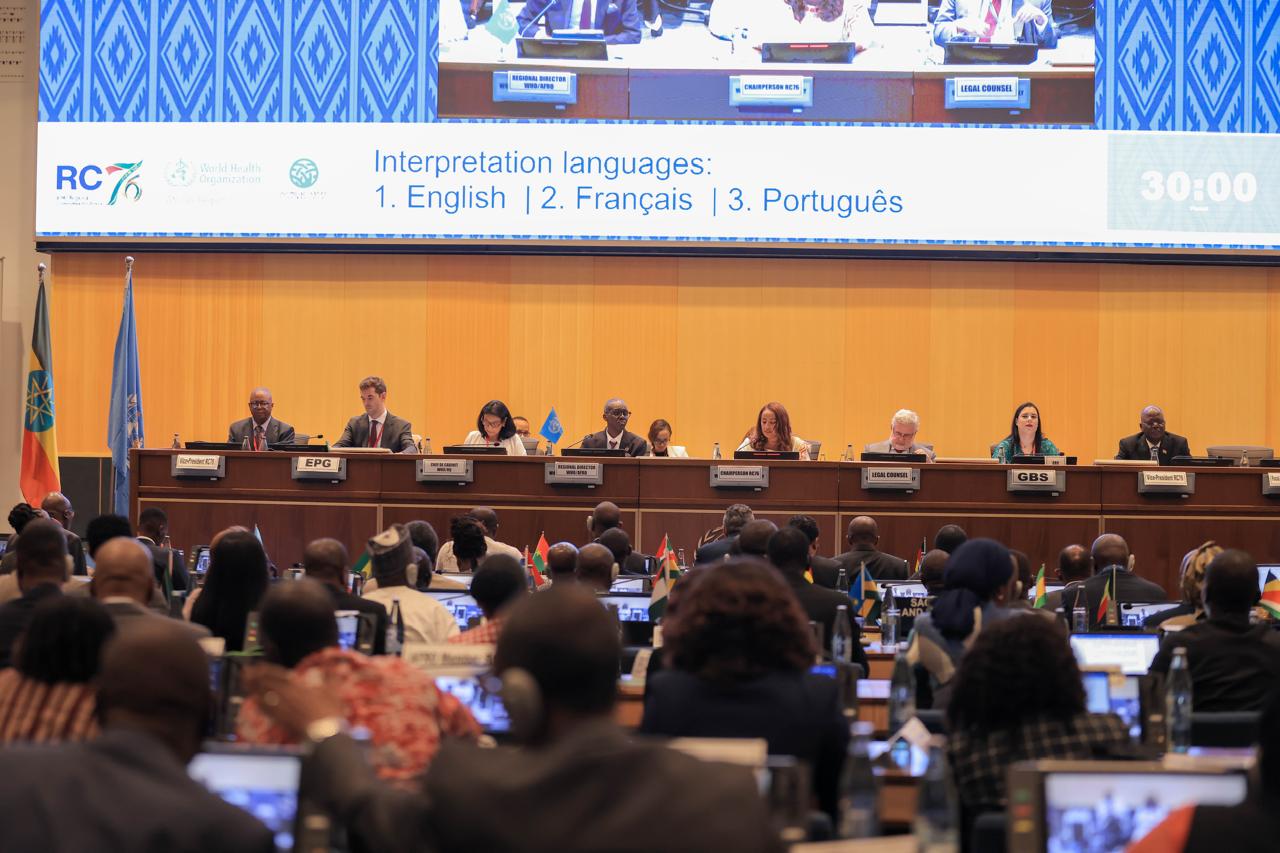
These commitments were made during the Seventy-sixth session of the World Health Organization (WHO) Regional Committee for Africa, held in Addis Ababa, Ethiopia from 25 to 28 August 2026.
The ministers endorsed the Regional Strategy on Advancing Early Childhood Development Outcomes in the WHO African Region (2026–2032) which reflects a shared commitment by countries to strengthen systems and scale up services and support for children, families and communities from the very beginning of life, so that every child can survive, thrive and reach their full potential.
The strategy calls for coordinated action across health, nutrition, social protection, water and sanitation, education, finance and other sectors, recognizing that no single sector can meet the needs of children alone.
At its core is commitment to supporting parents, caregivers and communities, who play the most important role in helping children survive, grow, learn and thrive.
The strategy encourages countries to strengthen developmental monitoring, expand support for children with developmental delays or disabilities, enhance services for parents and caregivers, and improve national data systems to better track progress and guide future investments in young children.
“Every child born in Africa carries the promise of our future. That future is shaped in the womb, in homes and communities where children receive the care, nutrition, protection and opportunities they need to thrive, supported by responsive health and social systems. By supporting children from the earliest years of life, countries are building stronger families, healthier communities and a more prosperous continent,” said Dr Mohamed Yakub Janabi, WHO Regional Director for Africa.
Further, in a landmark effort to strengthen health systems and ensure increased access to quality health services when and where it is needed, the African ministers of health also endorsed the Africa Health Workforce Agenda 2026–2035, committing to plan, educate, employ and retain 3 million additional health workers by 2035.
The Agenda marks a decisive shift from simply training more health workers to strengthening health labour markets through better planning, education, employment and retention. It calls for coordinated investments to ensure countries have the competent, motivated and well-supported workforce needed to meet Africa’s growing health needs.
Africa’s health workforce has grown substantially over the past decade, reaching an estimated 5.72 million health workers in 2024. Yet Africa still has only about 46% of the workforce it needs, leaving millions of people without adequate access to essential health services. Without decisive action, the Region could face a shortage of more than 6 million health workers by 2035.
Despite this, the Region faces a striking labour market paradox. While health facilities struggle with workforce shortages, an estimated one million trained health professionals are unemployed, with new graduates particularly affected.
It is estimated that more than half of newly qualified nurses, doctors and midwives in several countries are unable to secure employment soon after graduation, highlighting the urgent need to better align health workforce education with job creation, sustainable financing and long-term workforce planning.
The Health Workforce Agenda provides countries with a practical roadmap to strengthen health labour markets by improving workforce planning, expanding quality education, creating employment opportunities and retaining skilled health workers where they are needed most.
It also calls for coordinated action across health, education, finance, labour and public service sectors to ensure investments translate into better access to quality health services.
The Health Workforce Agenda also makes a strong economic case for investing in the health workforce, underscoring that closing Africa’s health workforce gap would require an additional investment of about US$ 4 to US$ 6 per person per year, while generating substantial economic and social returns. Every dollar invested in the health workforce can generate up to 10 dollars in economic returns and around thirty times its value in broader social benefits through healthier populations, increased productivity and stronger economies. These findings reinforce that investing in health workers is not simply a health priority, it is a smart investment in Africa’s future.
“Today, Africa has made a collective commitment to transform one of the foundations of its health systems, its people. By adopting the Africa Health Workforce Agenda 2026–2035, our Member States have recognized that educating health workers is only the beginning. We must also create the opportunities, the support and the conditions that enable them to serve, grow and thrive where they are needed most. This Agenda turns evidence into action and political commitment into lasting investment in Africa’s health workforce and ultimately, in the health and well-being of our people,” said Dr Janabi.
The Africa Health Workforce Agenda 2035 builds on the foundation laid by the Africa Health Workforce Investment Charter, reaffirming Member States’ commitment to invest in the health workforce as a driver of stronger health systems, healthier populations and sustainable development. By translating that commitment into a clear roadmap for action, it provides countries with practical direction to plan, educate, employ and retain the health workers needed to meet Africa’s present and future health needs.
With the adoption of the Africa Health Workforce Agenda 2035, Member States have established a shared roadmap to build the competent, supported and equitably distributed health workforce needed to meet the Region’s evolving health needs. Its success will ultimately be measured not by the number of policies adopted, but by the number of health workers empowered to serve their communities and by the millions more people who gain access to the quality health services they need.