By Joy Mutanu Wambua
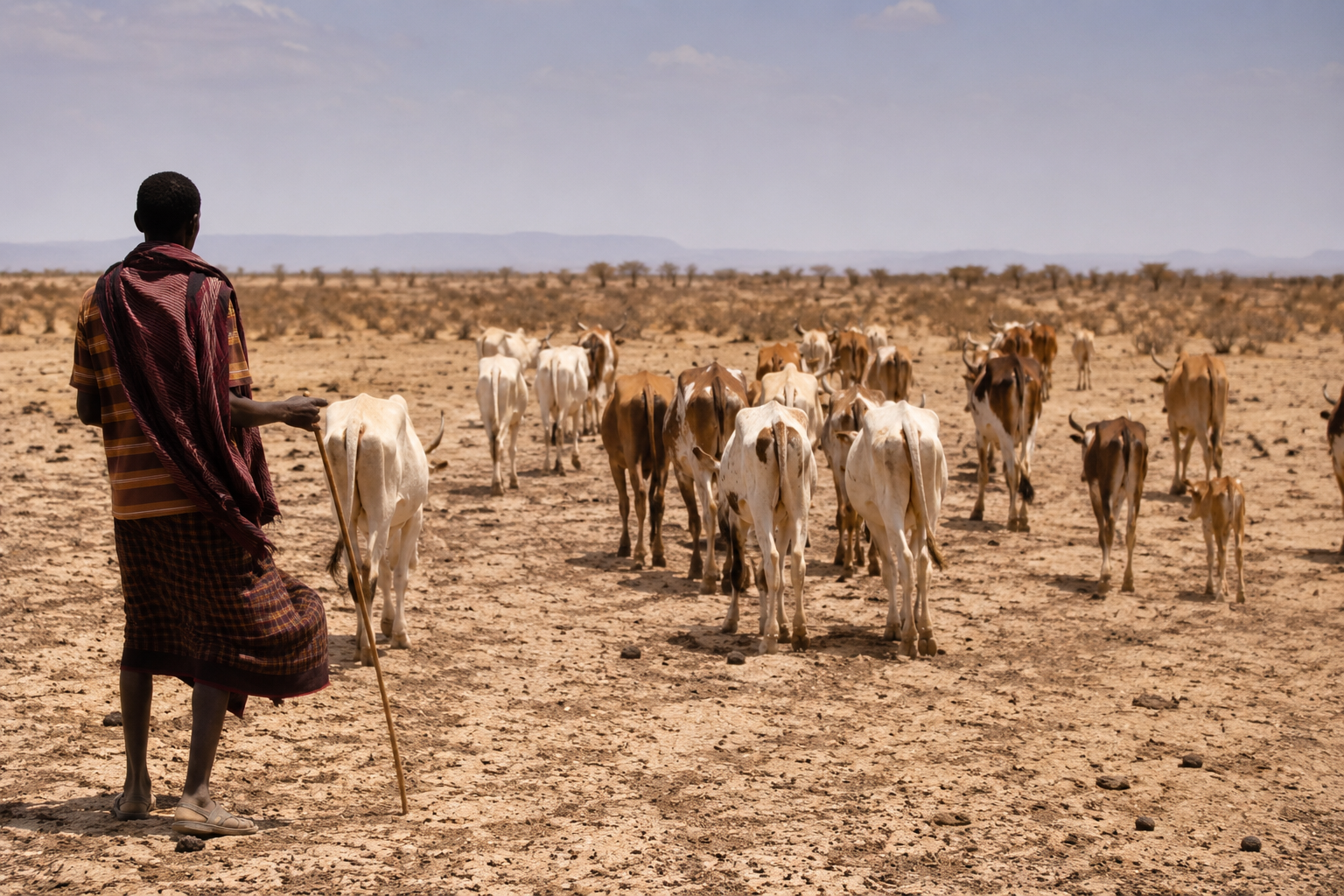
For Mzee Lekula, a man in his mid-60s, life in Ng’ari village, Samburu County, has long been guided by the rhythm of the seasons. The rains came, the grass returned, livestock grazed, milk flowed into households, and the cycle began again.
People knew the land and its rhythms- where to find water, how far they needed to walk and roughly, when the next rains would arrive. But that once-familiar rhythm is becoming increasingly difficult to recognize.
Now, the morning begins with a question more fundamental than what the day will bring. Where will the next drop of water come from? Women walk kilometers in search of water, sometimes settling for shallow wells or drying streams where the remaining water is already dirty and unsafe for human consumption.
“The consequences are being felt particularly by children, who frequently fall ill after using untreated water. With boreholes either dry or non-functional, families are often left with little choice but to rely on shallow wells, even when the water is visibly contaminated,” says Lekula.
This experience reflects a wider climate and health crisis unfolding across Kenya’s arid and semi-arid lands (ASALs), where rising temperatures, erratic rainfall and prolonged droughts are placing growing pressure on communities whose livelihoods depend heavily on livestock and dwindling natural resources.
As water sources shrink and pasture disappears, livestock weaken or die, crops fail and household incomes decline. Each successive shock pushes families closer to hunger while reducing their ability to afford food, education and healthcare.
But beyond the visible losses lies another crisis, one that is harder to photograph and easier to overlook, the growing psychological burden of climate-related hardship.
“When people think about climate change, they think about droughts and floods and their impact on nutrition or livelihoods. What we do not openly look at is the impact climate change has on mental health because it is essentially invisible,” says Alice Ritho, a researcher at the African Population and Health Research Center (APHRC).
According to Ritho, a recent study they conducted in Turkana, Samburu and Laikipia counties has linked climate-related hardships, particularly food insecurity, water scarcity and livestock disease to mental-health problems among adolescents and young caregivers.
The study found that severe food insecurity more than tripled the odds of post-traumatic stress disorder (PTSD) among young mothers, while livestock disease outbreaks doubled their risk of depression. For pastoralist families, livestock are not merely economic assets, they provide food, income, identity and security. Their loss can therefore trigger profound emotional distress.
For Mzee Lekula, the consequences are already personal. He has endured three consecutive years of drought, placing additional pressure on a family already struggling to survive. He supports about eight students in secondary school while caring for children at home a responsibility he says has become increasingly difficult to bear mentally.
“The burden is heavy. I have to take care of the children and support them in school while struggling to survive myself. Mentally, it is challenging,” he laments.
For Lenarongoito, a pastoralist, the drought is measured in the animals that have disappeared from his herd and the uncertainty left behind.
“I used to have many cattle, but due to the drought that is consistently striking the land, the number has reduced terribly,” he says.
The water crisis has compounded the problem. Despite the construction of two boreholes intended to improve access, Lenarongoito says residents remain dependent on wells and untreated water from streams.
“Ng’ari residents are facing an acute shortage of water, even after the construction of two boreholes, which are not currently working. We are still depending on water from wells. The borehole that was drilled has no water. Our children get sick because we use untreated water from streams. Dirty water is indeed hard for you to drink,” he says.
According to Isaac Maweu, a psychologist, the psychological consequences of drought can be as damaging as the physical ones. The loss of livestock and crops can trigger severe financial strain, while uncertainty about the next rainy season creates persistent anxiety and fear about how families will survive.
“While the visible signs of drought in Northern Kenya are dried riverbeds and dying herds, an invisible psychological crisis is crippling the health of residents,” Maweu says.
He says the prolonged stress of losing livelihoods and being unable to meet basic household needs can gradually take a toll on people’s emotional wellbeing. Common signs of distress include hopelessness, sadness over lost investments, constant worry, sleep loss, loss of appetite, difficulty concentrating, irritability and anger.
The burden, however, is not shared equally within households. Women may experience intense emotional distress as they watch their children struggle with hunger while trying to find food, water and other necessities for their families.
Children, meanwhile, may face disruptions to schooling, separation from caregivers as families migrate in search of pasture and water, and the loss of the sense of stability that comes with a predictable home environment.
For pastoralist families, the repeated cycle of drought can also erode their sense of security. Each failed rainy season means another season of uncertainty, making it increasingly difficult for families to recover from previous losses before the next crisis arrives.
“This is why-health support must become an integral part of climate adaptation and public-health interventions in drought-prone communities. This, should go hand in hand with stronger government and NGO support to protect livelihoods, improve access to food and water, and help communities cope with the psychological consequences of prolonged climate shocks,” concludes Maweu.