By Milliam Murigi
Kenya’s deepening economic inequality continues to push more households into poverty, even as a small elite amasses unprecedented wealth, according to a new report.
Dubbed “Kenya’s Inequality Crisis: The Great Economic Divide,” the report paints a stark picture of a nation where opportunities are shrinking, living costs are rising, and the gap between the wealthy and the rest continues to widen.
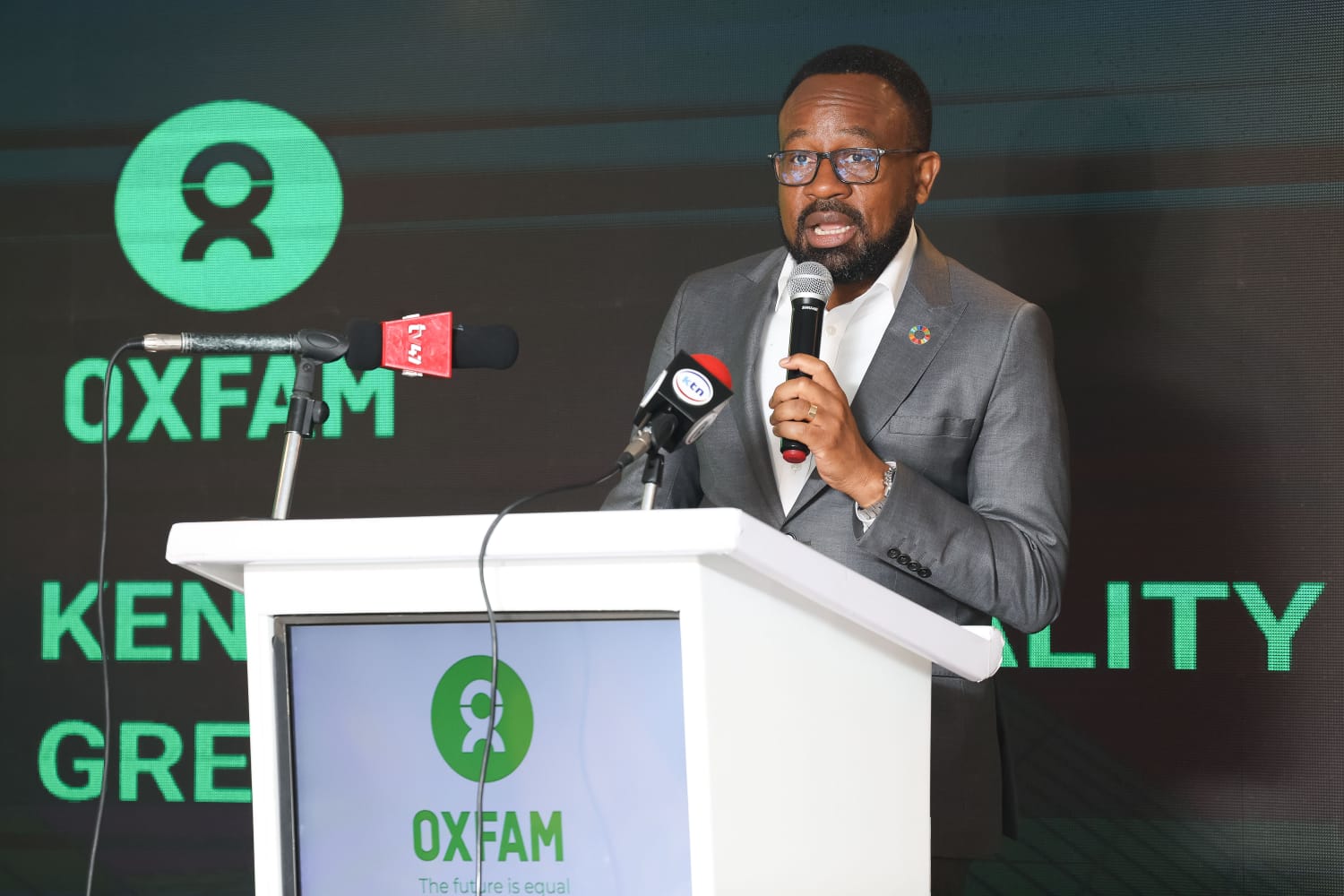
“The richest 125 individuals now own 78 percent of Kenya’s total financial wealth, a reminder of just how unequal our economy has become,” said Mwongera Mutiga, Executive Director Oxfam Kenya, during the report launch.
The report shows that these 125 individuals now hold more wealth than 43 million Kenyans combined. If their wealth is converted into 100-shilling notes, it would be enough to cover almost the entire Nairobi County.
It is because of this inequality that, since 2015, an additional seven million Kenyans have fallen into extreme poverty, an increase of 37 percent. According to the report, massive underfunding of education, healthcare and agriculture in favour of debt repayment has contributed to widening the gap between the super-rich and those living in extreme poverty.
In 2024, out of every Kshs. 100 taken in taxes, Kshs. 68 were used to repay debt, twice the education budget and nearly 15 times the national health budget. As a result, children from the poorest 20 percent of households receive almost five fewer years of schooling than those from the richest 20 percent.
The report reveals that it is because of this inequality that only four million, in a population of over 53 million people, contribute actively to the compulsory Social Health Insurance Fund (SHIF) and are eligible for healthcare access.
Private health providers reap the most from this contributory health insurance. In 2024, only 20 percent of national health insurance money went to public health facilities that serve the majority of Kenyans seeking medical services.
‘‘Inequality is not a natural condition; it is a deliberate outcome of unjust policies and political inaction. For too long, the gap between the rich and the poor has been allowed to grow unchecked, while millions struggle just to survive. This injustice is no longer tolerable. It is time for bold, decisive action. Reducing inequality is not only possible—it is urgent, necessary, and long overdue,” added Mwongera.
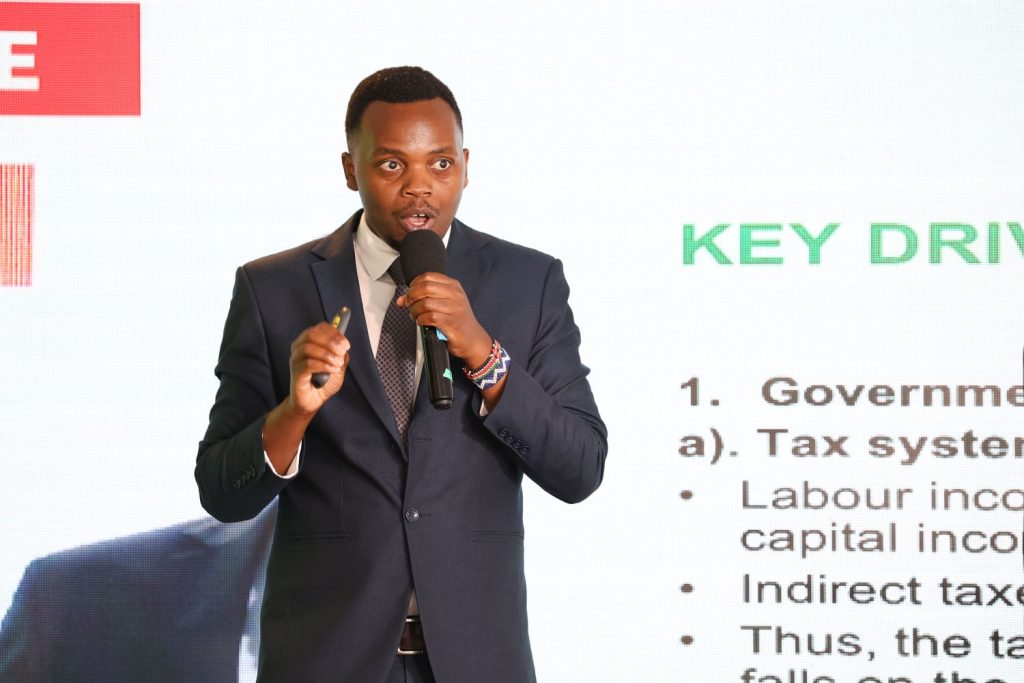
According to Anthony Kamande, the report’s lead author, over the past decade (excluding 2020), Kenya’s economy has expanded by an average of five per cent per year in real terms. However, despite this growth, poverty levels are rising. This clearly shows that without redistribution, growth alone will continue to enrich the richest while deepening poverty for the majority.
“The gap between the richest and the rest has widened dramatically over the last decade, hampering the progress against poverty, ignorance and diseases. While the country has seen a solid economic growth since 2015, a majority of Kenyans are poorer today than they were then,” he said.
“But a few have amassed enormous amounts of wealth. This shows that the problem is not growth but lack of redistribution policies and political will to ensure that those at the bottom are lifted.”
According to Kamande, with shrinking fiscal space, unsustainable debt levels, high inflation, high cost of living, high unemployment, growing poverty, and climate vulnerability, the future of Kenya’s economy is precarious without urgent action from the government.
Public services are increasingly out of reach for many Kenyans, driven by diminishing government investments in education and health. Although the government has implemented various reforms over time such as free education, social protection schemes, and tried universal health coverage, their impact would have been greater had they been accompanied by adequate spending and proper implementation.
Devolution, once hailed as a harbinger of Kenya’s economic and governance transformation with a promise to bring services closer to the people, address historical marginalization, and empower counties to drive regional development, has ultimately fallen short of expectations.
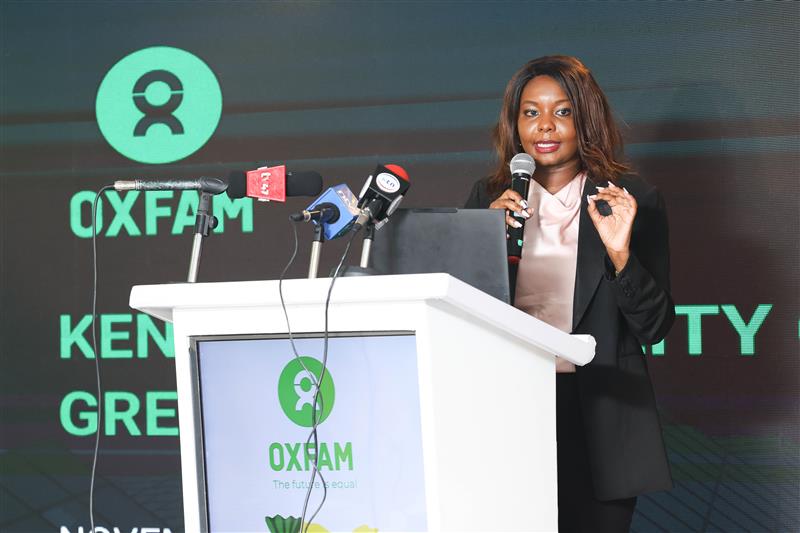
“Reducing inequality by just two percent each year paired with a similar annual economic growth rate would cut inequality three times faster than relying on economic growth alone,” said Beverly Musili, the report’s co-author.
According to her, the government should increase the education budget to at least 20 per cent of total government expenditure and adjust capitation per student to keep pace with annual inflation. She also recommends scaling the health budget to a minimum of 15 per cent of total government expenditure and aligning health financing policies to progressively achieve Universal Health Coverage, ensuring population-wide access to quality essential health services without causing financial hardship. This approach, she argues, would significantly improve healthcare access for many Kenyans.
“Inequality is not inevitable; it is a choice. With bold leadership, the right policies, and unwavering political will, Kenya can build a future where every person thrives. By embracing progressive taxation, investing in universal education and healthcare, creating dignified jobs, and advancing land justice, we can create a nation that is not only more equal, but truly free from poverty. A fairer Kenya is within our reach—let’s choose it”, concluded Mwongera.