By Sharon Atieno
The current international financial flows remain billions of dollars short of what is required to achieve the global biodiversity target of protecting and conserving at least 30% of the world’s land and ocean by 2030 (30×30).
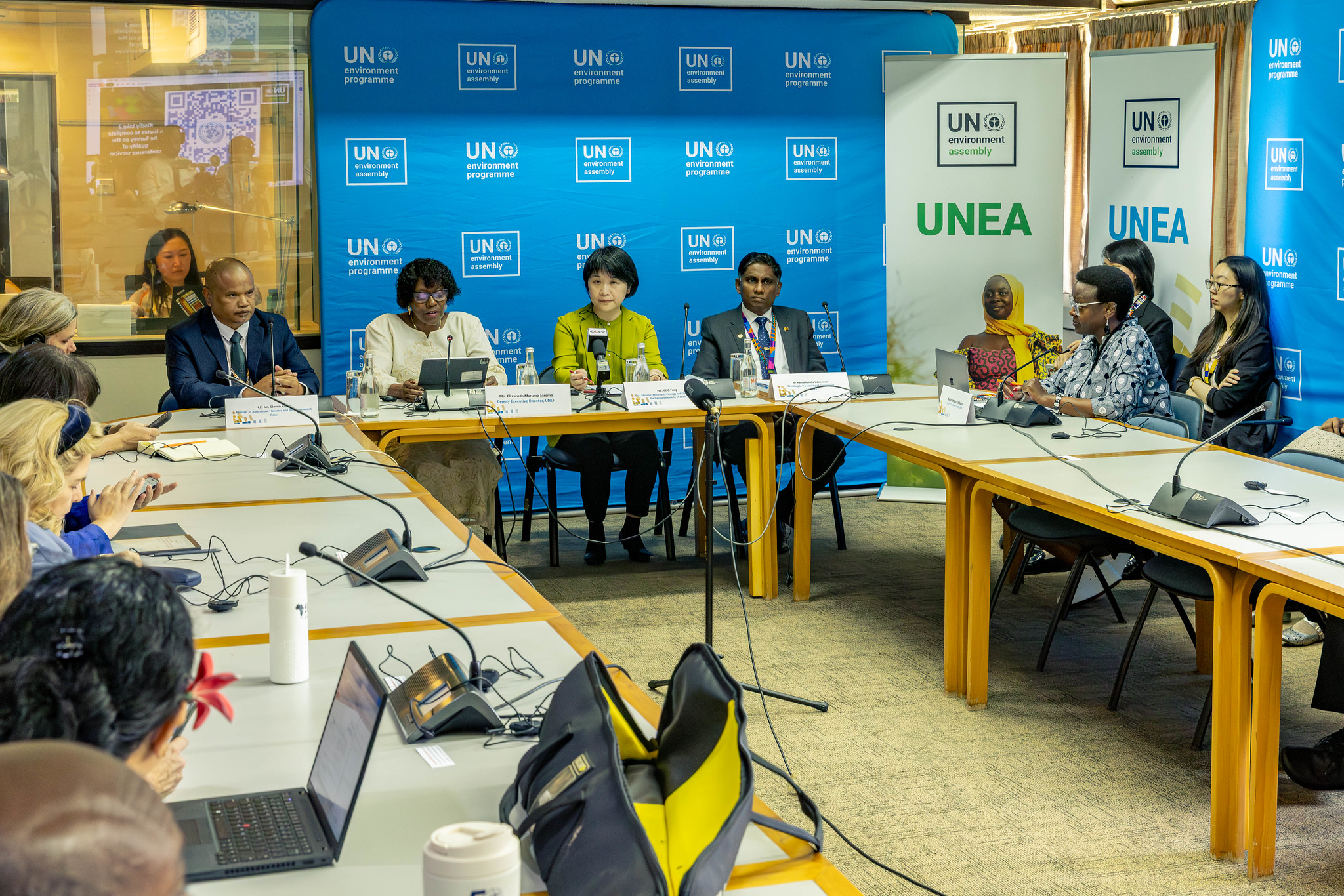
This is according to a new study and interactive dashboard released at the seventh session of the United Nations Environment Assembly (UNEA-7) in Nairobi, Kenya’s capital.
The new assessment by Indufor, funded by Campaign for Nature, The Pew Charitable Trusts, and Rainforest Foundation Norway, finds that the international funding designed to help developing countries fund nature protection has risen by 150% over the past decade, reaching just over $1 billion in 2024. However, developed nations are $4 billion short of meeting funding targets intended to make 30×30 possible.
“Increasing international support is crucial to achieve the target of halting the loss of biodiversity by 2030, as agreed to in the Global Biodiversity Framework. We are currently far off track, both in mobilizing resources and protecting nature,” said Anders Haug Larsen, advocacy director at Rainforest Foundation Norway.
“We now have a short window of opportunity, where governments, donors, and actors on the ground, including Indigenous Peoples and local communities, need to work together to enhance finance and actions for rights-based nature protection.”
The Kunming-Montreal Global Biodiversity Framework (GBF), adopted by world leaders in 2022, committed them to protect at least 30% of the planet’s land and ocean by 2030. It also addressed the significant funding needed to achieve this target, with global modelling from a previous study suggesting that expanding and managing protected areas alone likely requires $103 billion to $178 billion per year globally.
With many of the world’s unprotected, most biodiverse areas located in countries with constrained public budgets and competing development needs, international finance will be pivotal to delivering 30×30 fairly and effectively. Target 19 of the Framework focuses on mobilizing at least $200 billion per year in global biodiversity finance, including at least $30 billion annually to developing countries by 2030.
The funds are needed to pay for a number of activities, including legally establishing new protected areas, providing capacity to rangers who protect existing protected and conserved areas, and supporting Indigenous groups and local communities.
According to the study, titled State of International 30×30 Funding, support for protected and conserved areas (PCAs) in developing countries grew from $396 million in 2014 to over $1.1 billion in 2024. From 2022 to 2024, average annual funding climbed 70% compared to the previous four-year period. Notably, the philanthropic sector increased funding by 89% over that period.
However, to meet international finance specifically for 30×30 needs to reach an estimated $6 billion per year by 2030. At the current growth rate, the report estimates that international funders will miss that target by $4 billion annually. Closing that gap would require accelerating to a 33% growth rate.
“Achieving the global 30×30 goal requires not just ambition but equally bold investment in nature. This analysis highlights a major shortfall between available and necessary funding for lasting protection. Bridging that gap will demand unprecedented cooperation across governments, investors, philanthropy, business, and Indigenous and local communities to develop new financial models that reward the protection of nature,” said Tom Dillon, senior vice president, Environment and Crosscutting Initiatives at The Pew Charitable Trusts.
The report notes that only five bilateral donors and multilateral mechanisms provided 54% of all tracked 30×30 disbursements since 2022. These are: Germany, The World Bank, Global Environment Facility (GEF), the European Union, and the United States. This concentration makes funding vulnerable to political shifts and changing priorities among key actors.
Notably, funding is going to lower-income countries, but small island developing states and other oceanic regions remain severely underfunded by international flows. International PCA funding has grown fastest in Africa, which by 2024 receives nearly half (48%) of all tracked flows. Small island developing states overall receive just $48 million per year (4.5%) in international 30×30 funding, despite being explicitly prioritized in the GBF (under Target 19a).
The majority of international funding, 82%, is going towards strengthening existing protected areas — relatively little is going to the expansion of protected areas. Also, much of the funding goes to conventional protected areas — versus those, for example, under the stewardship of Indigenous Peoples or other local communities.
Marine ecosystems, the report notes, received just 14% of international funding despite representing 71% of the planet. International funding per square kilometer of marine protection has been mostly flat since 2014, as funding flows have only kept pace with the expansion of the marine PCA estate in developing countries.
“There is a clear need to ramp up marine conservation finance, especially to Small Island Developing States which receive only a small fraction of the funding dedicated to other regions. Meeting the 30×30 target is essential to prevent extinctions, achieve climate goals, and ensure the services that nature provides endure, including storm protection and clean air and water,” said Brian O’Donnell, director, Campaign for Nature.
The results shown in this report and dashboard demonstrate the urgency for deeper commitments from all stakeholders — governments, philanthropies, multilateral institutions, and the private sector — to dramatically scale up investment before 2030.
Otherwise, the projected shortfall in targeted international funding poses a severe risk of failing to reach the 30×30 target, leading to significant consequences for global biodiversity and climate protection efforts, the well-being of people, and national economies.
The new dashboard will help translate financial commitments into the strategic actions needed to reach the regions and activities where they’re most needed to achieve progress toward Target 3 of conserving 30% of land, water and seas.
“To date, there has been limited public analysis of international funding flows for protected and conserved areas. Transparency is uneven across donors, and the data needed to understand 30×30 funding are fragmented across sources, often without the resolution required to track real progress,” said Michael Owen, study author, Indufor North America LLC.
“Our goal for the 30×30 Funding Dashboard is to centralize these data, enable users to view funding at the project level, and provide a clear view of top-line trends in the accompanying report. We hope this analysis encourages more donors to strengthen transparency and accountability as we move toward the deadline for Target 3.”