By Sharon Atieno Onyango
Civil Society and community organizations drawn from more than 10 African countries have called on governments to step up disease surveillance for the continent’s health security.
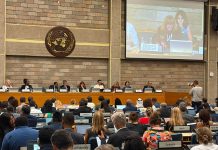
The call, titled “Nairobi Declaration on African Health Security and Collaborative Disease Surveillance” was made during an event convened by Resilience Action Network Africa (RANA) and Resolve to Save Lives at the sidelines of the World Health Regional Summit Meeting 2026 in Nairobi, Kenya.
The Declaration urges African Heads of State and Government to elevate health security and surveillance as a national priority, reflected in laws, budgets, and spending, and to publicly report on domestic health financing commitments beyond the Abuja target, establishing dedicated budgets for preparedness.
It calls on continental and regional bodies such as the African Union (AU) and Africa Centres for Disease Control and Prevention (Africa CDC) to operationalize collaborative, cross-border surveillance through harmonized standards, interoperable systems, and joint exercises, and to establish a biannual accountability mechanism for Member States’ commitments.
At the country level, national governments and ministries are asked to ensure joint leadership and accountability, integrating surveillance into national and subnational planning and budgeting, independent of ad-hoc or donor funding.
They are also tasked with developing integrated national preparedness plans that factor in climate and cross-border risks, aiming for reduced donor dependence by 2040.
On the other hand, multilateral agencies, development partners, philanthropy, and the private sector are called to provide predictable, flexible, long-term financing aligned with national priorities, rejecting fragmented funding models, and supporting a transition from aid dependence to domestic ownership.
The private sector is specifically asked to contribute innovation, technology, logistics, and manufacturing while ensuring African leadership.
According to Aggrey Aluso, Executive Director, Resilience Action Network Africa, Africa’s surveillance capacity is weak and fragmented due to its overdependence on donor funding. The structure of this funding often dictates the shape of surveillance efforts, limiting their long-term effectiveness.
“Most surveillance efforts are fragmented because of the funding patterns,” he said. “Donor funded initiatives tend to be project-specific, short-term, and focused on particular diseases or issue, that might not align to exactly what we need,” he said.
He called for increased investment in locally driven surveillance systems, emphasizing that stronger, more coordinated approaches are essential for public health security.
According to Aluso, an effective surveillance system plays a critical role in identifying areas at risk of disease spillover, enabling early detection of emerging pathogens, and containing outbreaks before they escalate into widespread outbreaks.
Dr. Lilian Otiso, Executive Director of LVCT Health, welcomed the growing attention to community-based surveillance, noting that it has long been sidelined in favor of formal health systems.
“People think that community data is not data. It’s not quality. It doesn’t count, but that does count and it is unique to those communities,” she said. “The priority here is how do we make sure that that data is in a form that can be useful and so that when they are saying we’re having community surveillance, it actually counts.”
According to Otiso, community-generated data offers unique, context-specific perspectives that can strengthen national health systems when properly integrated. She noted that when aggregated, this information can build a more accurate picture of health realities from the grassroots to the national level.
Dr. Damaris Matoke-Muhia, Deputy Director, Kenya Medical research Institute (KEMRI), underscored the importance of cross-border collaboration especially in sharing data across countries. This is crucial for ensuring that interventions are sustained for informing where transmissions hotspots are and action being taken.
From a research perspective, she reiterated the need for domestic funding noting that being donor-dependent is unsustainable as withdrawal of funds could halt progress.
“It’s extremely important that we have domestic funding, as it helps us to own the solutions that we have developed locally. Countries are able to set their own priorities based on the data that has been generated. It also ensures that there’s sustainability going forward,” Dr. Matoke said.
Diana Tibesigwa, Regional Manager advocacy and policy, East and West Africa, AIDS Healthcare Foundation (AHF) called for strengthening and affirming the role of civil society especially in the face of shrinking funding and civic participation.
“We are right at the centre, our voices seem not to be wanted yet very crucial,” she said.