By Christine Wanjiku
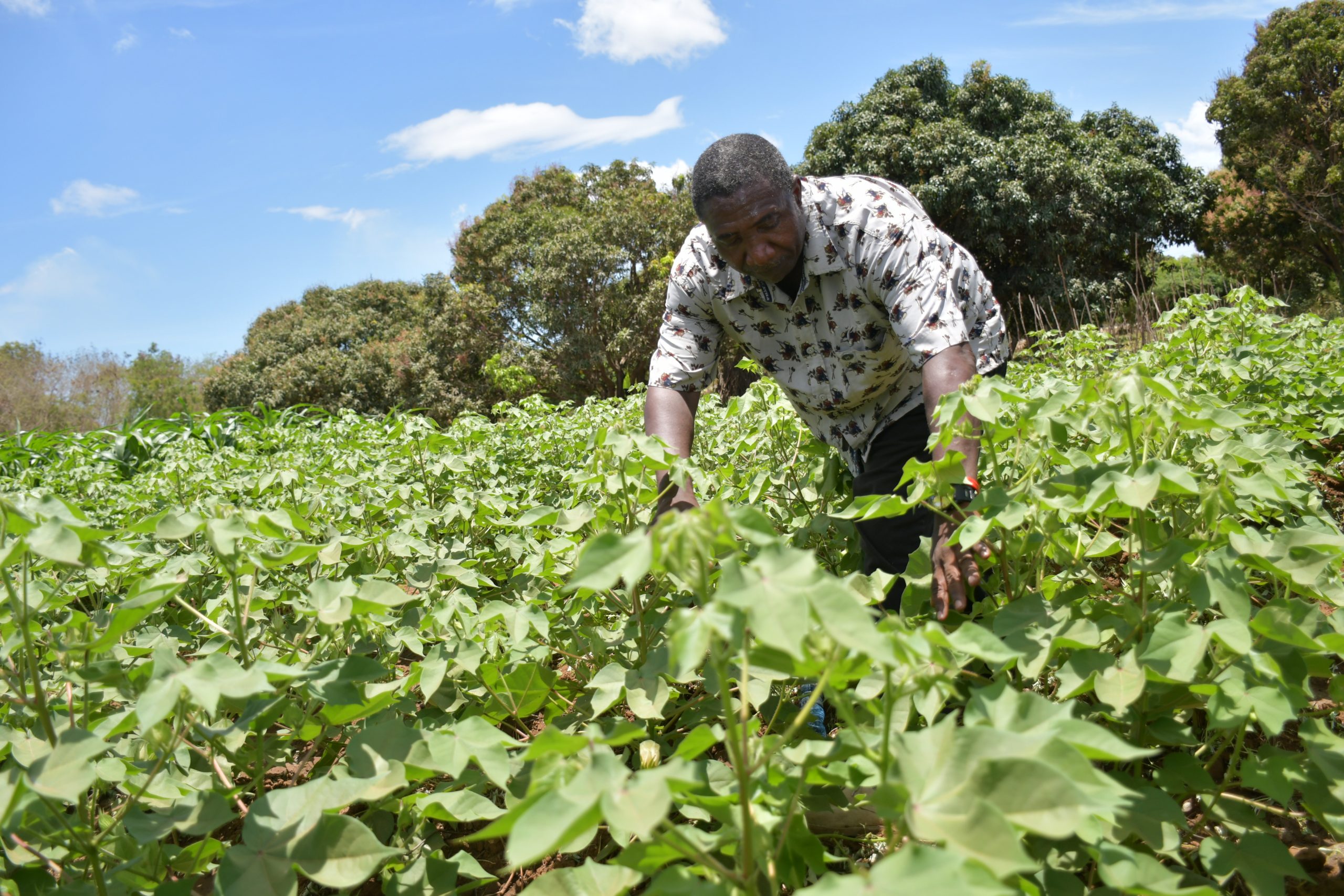
In Lamu County, Simon Muguro, a cotton farmer, made a decision that many others are grappling with.
After years of battling the cotton bollworm, one of the most destructive pests in cotton farming, he switched to Bt cotton, convinced he had finally found a solution.
For seasons, the pest had ravaged his fields, forcing him to repeatedly spray insecticides just to salvage part of his harvest. The promise of a genetically modified variety that could defend itself sounded like relief.
“I thought once I planted it, I would no longer need pesticides,” he says.
The logic seemed straightforward. If the plant could kill the cotton bollworm on its own, then chemical spraying would no longer be necessary. But reality in the field turned out to be more complicated.
While Bt cotton offered strong protection against the bollworm, it did not make the crop immune to other threats. Other pests continued to attack the plants, forcing him back to chemical sprays.
“Even after planting the variety, I was still forced to spray my crops because of pests like aphids, whiteflies and mites. However, the number of sprays was much lower because these pests are less damaging than the bollworm,” he said.
That distinction between reduced spraying and eliminated spraying is where much of the misunderstanding around genetically modified crops lies.
Farmers often think that once they adopt GMO varieties, pest control becomes unnecessary and chemical use stops entirely, when in reality the technology only reduces pressure from specific pests rather than removing the need for pesticides altogether.
According to Ann Muia, principal biosafety officer at the National Biosafety Authority (NBA) in Kenya, the misunderstanding comes from viewing GMOs as complete protection rather than targeted defense. This targeted protection often leads to unrealistic expectations among farmers, who assume the technology offers blanket protection across all pest and disease challenges in the field.
“Genetic modification of crops is like immunising a crop against a specific threat. It equips the plant with built-in protection against that threat, helping it resist or reduce damage from that particular pest,” she said.
Bt cotton, for example, is a type of cotton that has been modified so it can protect itself against one specific pest called the cotton bollworm. It has a built-in “defence” that kills that insect when it tries to feed on the plant. But that protection does not extend to other pests, diseases or environmental stresses. If a different pest attacks or if diseases occur, farmers still have to spray.
Agronomists say this is why pesticide use does not disappear with GMO adoption but instead shifts. According to agronomist Kevin Mutuku, even in fields planted with Bt cotton, pest management remains a continuous process rather than a one-time solution.
He explains that, in areas where Bt cotton has been adopted, sap-sucking pests such as aphids, whiteflies and mites remain a major challenge in cotton fields, often requiring regular monitoring and chemical spraying to protect yields.
“Bt technology may reduce damage from the bollworm, but it does not eliminate the need for monitoring and spraying, because other pests still find their way into the field,” Mutuku says.
Researchers have also warned that suppressing one dominant pest can create space for secondary pests to thrive a phenomenon observed in several Bt cotton-growing regions globally.
In China, for example, studies have shown that while Bt cotton significantly reduced bollworm populations, farmers increasingly had to deal with higher pressure from sap-sucking pests such as aphids and lygus bugs, which then became the main reason for continued insecticide use in some areas.
A similar pattern has been documented in India, where reductions in bollworm pressure have in some regions been followed by increases in whiteflies and mealybugs, prompting renewed pesticide applications.
Kenya’s introduction of Bt cotton was largely framed as a response to declining cotton production, pest pressure and the need to revive the sector. For many farmers, it was also marketed directly or indirectly as a way to reduce chemical dependence. But scientists say that framing is incomplete.
“GMOs offer targeted protection, but they do not remove the need for pest management,” says James Karanja, researcher at the Kenya Agricultural and Livestock Research Organisation (KALRO). “Farmers still need integrated pest control.”
Environmental groups, including Greenpeace, argue that this is often underplayed in public messaging around GMOs, leading to unrealistic expectations among farmers.
According to Muguro, though the promise of Bt cotton was not fully true, it was never entirely wrong. It did ease the pressure from one of the most destructive pests. But it also revealed a harder truth about farming. There is no single solution to nature’s complexity.
Muia concludes by urging farmers to stop seeing GM crops as a complete replacement for pesticides. Instead, she says, they should view them as one tool among many, requiring careful use, realistic expectations, and continued investment in broader pest management strategies.