By Milliam Murigi
Researchers from Medicines for Malaria Venture (MMV) have developed an artificial intelligence (AI) tool that could significantly speed up the discovery of new malaria drugs.
Built in partnership with the Gates Foundation and DeepMirror, a UK-based AI company, the platform is designed to help scientists identify and develop promising drug compounds faster and more efficiently than traditional methods allow.
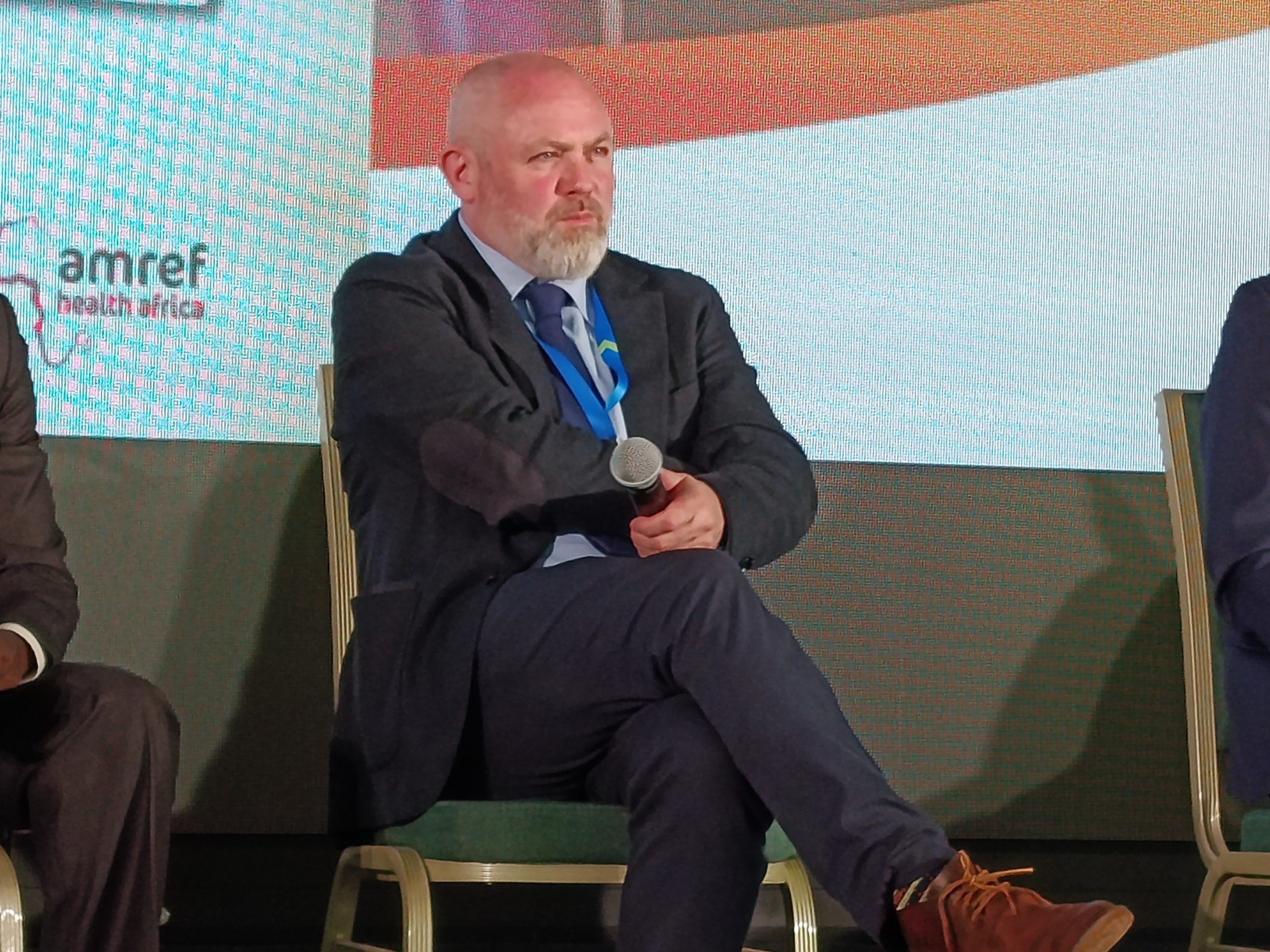
“Access to advanced AI tools have traditionally been limited to large pharmaceutical companies and tech giants, largely due to cost and infrastructure barriers. This new platform flips that model,” said James Duffy, MMV’s Senior Director of Drug Discovery, on the sidelines of the ongoing World Health Summit Regional Meeting 2026 in Nairobi.
Drug discovery has historically been a slow, expensive process—often taking years or even decades to move from early research to a treatment that reaches patients. For malaria, where the parasite continues to evolve and develop resistance, that timeline poses a serious risk. Researchers say accelerating this process is no longer optional.
According to Duffy, the new AI-powered platform analyses vast datasets to identify potential drug candidates, predict how they will behave biologically, and guide scientists on which compounds to prioritise.
By doing so, it reduces the reliance on trial-and-error approaches and shortens the path from discovery to development.
“A key feature of the tool is accessibility. Unlike many advanced AI systems that are limited to large pharmaceutical companies, this platform is freely available to researchers working in global health. It is specifically designed to support scientists in regions most affected by malaria, including across Africa,” he said.
By placing cutting-edge technology directly in the hands of local researchers, Duffy revealed that the initiative aims to ensure that drug discovery is not only faster but also more relevant to the communities most impacted by the disease.
The long-term goal is ambitious: enabling the development of new antimalarial drugs discovered in Africa, by African scientists, and tailored to African patients.
Since its launch in March 2026, the platform has already attracted more than 100 researchers, signaling strong interest and demand for such tools.
“We believe that this platform is going to democratise AI in drug discovery, improve quality and shorten timelines and costs,” he added.
While questions continue to rise about the broader role of AI, researchers behind the project emphasise that it is meant to complement—not replace—human expertise.
“In a field where time, cost, and complexity have long slowed progress, we believe that combination of science and technology could mark a turning point in how the world tackles malaria,” he concluded.