By Sharon Atieno Onyango
As donor funding for health continues to dwindle, the private sector and philanthropy remain viable options for closing the gap, amid calls for increased domestic finance.
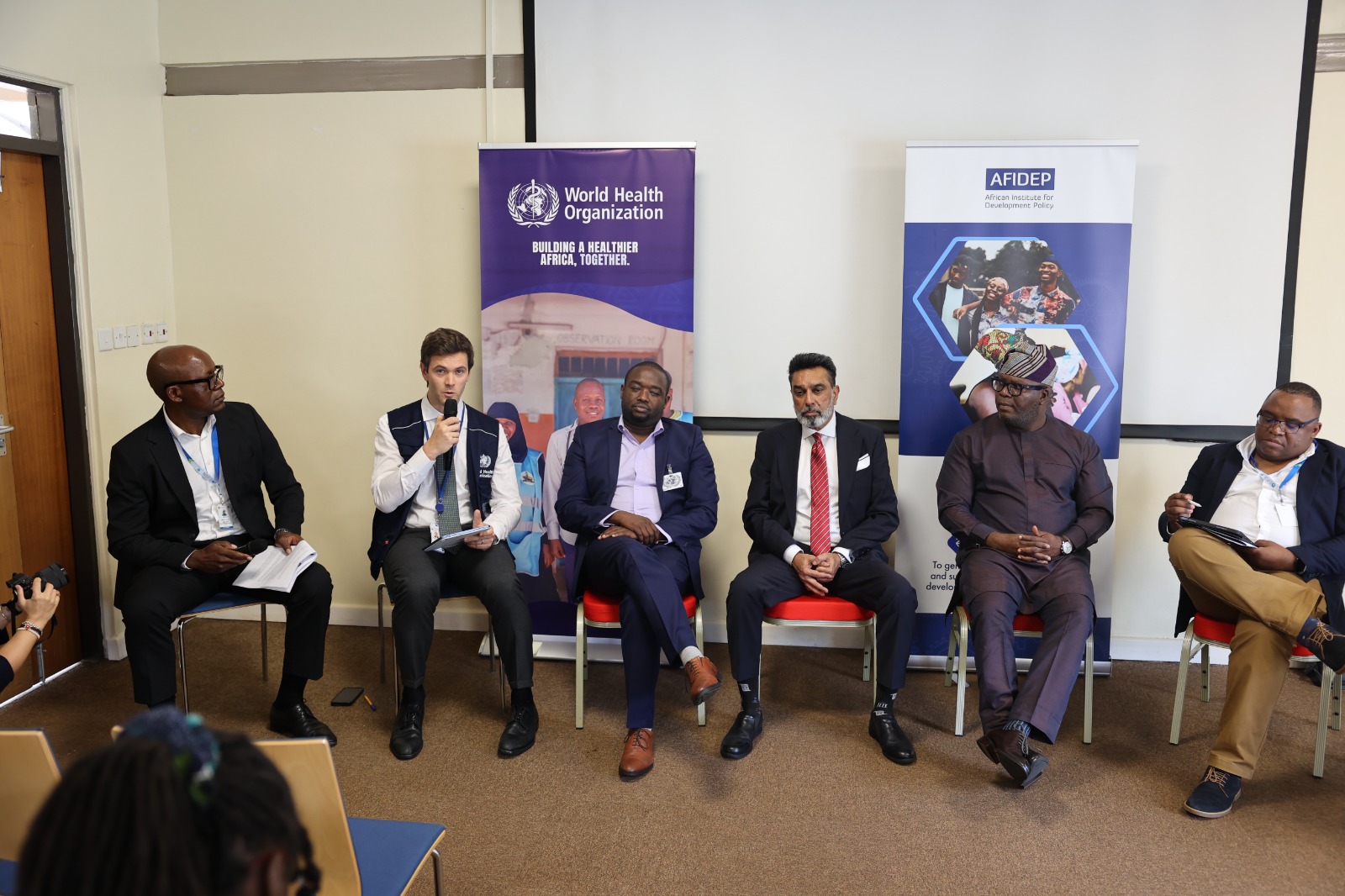
Experts said during a session convened by the African Institute for Development Policy (AFIDEP) titled Financing Universal Health Coverage, Domestic Resource Mobilisation, Private Sector & Philanthropic Partnerships at the side lines of the World Health Summit Regional Meeting (WHSRM) 2026 in Kenya’s capital, Nairobi.
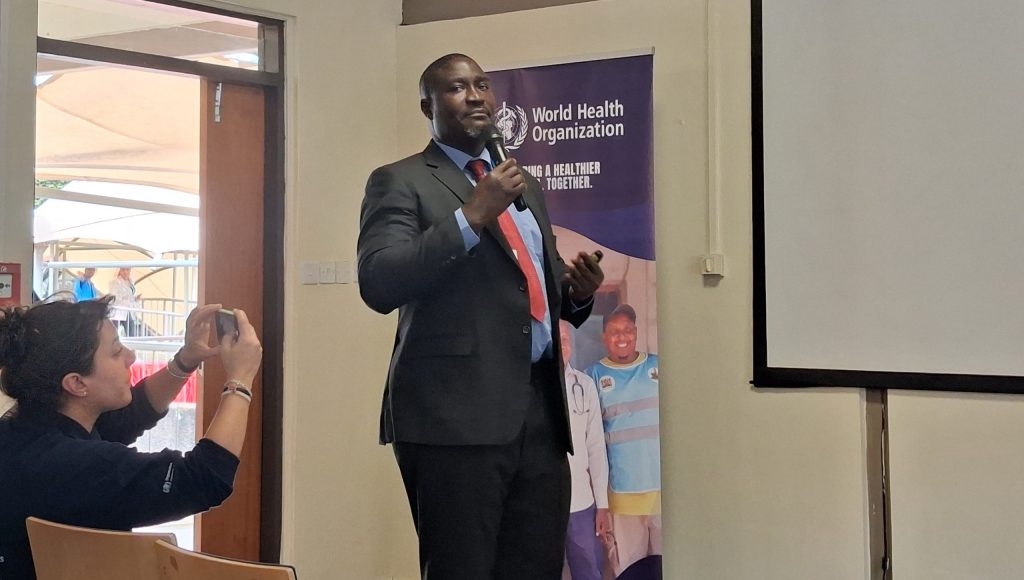
In his keynote address, Dr. Jackson Otieno, AFIDEP’s Senior Research and Policy Analyst, called for a fundamental shift in how the private sector is perceived and integrated within the African healthcare system.
According to Dr. Otieno the private sector should transition from a periphery actor to a system partner. “In many African countries, over 40% of healthcare is delivered by the private sector, yet the frameworks still treat them as an afterthought,” he said.
Dr. Otieno stressed the significant role played by the private sector including in diagnostics where the sector’s contribution is at 60% and in the digital health space, where the influence is at 50-80%.
“For the philanthropists, we look at them as a potential source of finances for the health care or for the health systems. But it would be important to look at them from a catalytic perspective and not a substitute perspective,” he urged.
Dr. Otieno noted that philanthropies should stimulate or facilitate initiatives such as pilots, innovations and supporting data and evidence systems, rather than acting as a direct substitute for core funding.
With Africa moving towards one health approach and the development of integrated systems, he called for the need to address fragmentation among African philanthropists where their contribution is concentrated in specific programmes.
Sharing similar sentiments, Richard Matikanya, Deputy Executive Director for Africa, Children Investment Fund Foundation (CIFF), said that philanthropic resources should aim to unlock and stimulate additional capital rather than replacing existing funding. This avoids creating dependency and fosters sustainable financing.
“We should contribute to and support national health pooled funds, helping to make sure that they are strong enough to be able to manage and account for those resources,” Matikanya said.
He added that philanthropies should fund things that governments and multilaterals often under fund including delivery bottlenecks, data systems, implementation capacity, results verification, procurement reforms and subnational execution, which are essential for building resilient health systems.
On his part, Amit Thakker, Executive chairman, Africa Health Business, noted that for the private sector, whether for profit or not-for-profit, to invest in areas like academia, manufacturing and health services, an enabling environment is necessary.
“What really disrupts the private sector is going into any place where the rules and regulation starts changing,” he said. “Have the laws, regulatory standards and licenses procedures clear and cut out all the corruption so that a private sector can come in and invest.”
Similarly, Dr. Babatunde Omilola, Head of the Public Health Security and Social Protection Division, Africa Development Bank, stressed the need for policies and reforms to de-risk private sector investment, enabling it to play a larger role in generating revenue and supporting government health initiatives.
Additionally, he observed that it is imperative for African governments to look at health as an economic good rather than a social good. “Once a country knows that you can actually achieve rapid economic growth, you can increase and boost your GDP growth just by focusing on health, then you will be able to allocate enough resources. The idea of health being just a social good is gone,” Dr. Omilola said.
He noted that to yield returns in investment in the health sector, countries require reforms focused on mobilizing domestic resources, ensuring efficient utilization and actively blocking leakages and corruption.
The WHSRM 2026 is hosted by Aga Khan University under the theme: “Reimagining Africa’s Health Systems: Innovation, Integration, and Interdependence.” With over 1,000 participants, the meeting runs from 27–29 April 2026.