By Milliam Murigi
Even as scientists warn of rising resistance to malaria frontline drugs across East Africa, Kenya is quietly reshaping how it fights this disease.
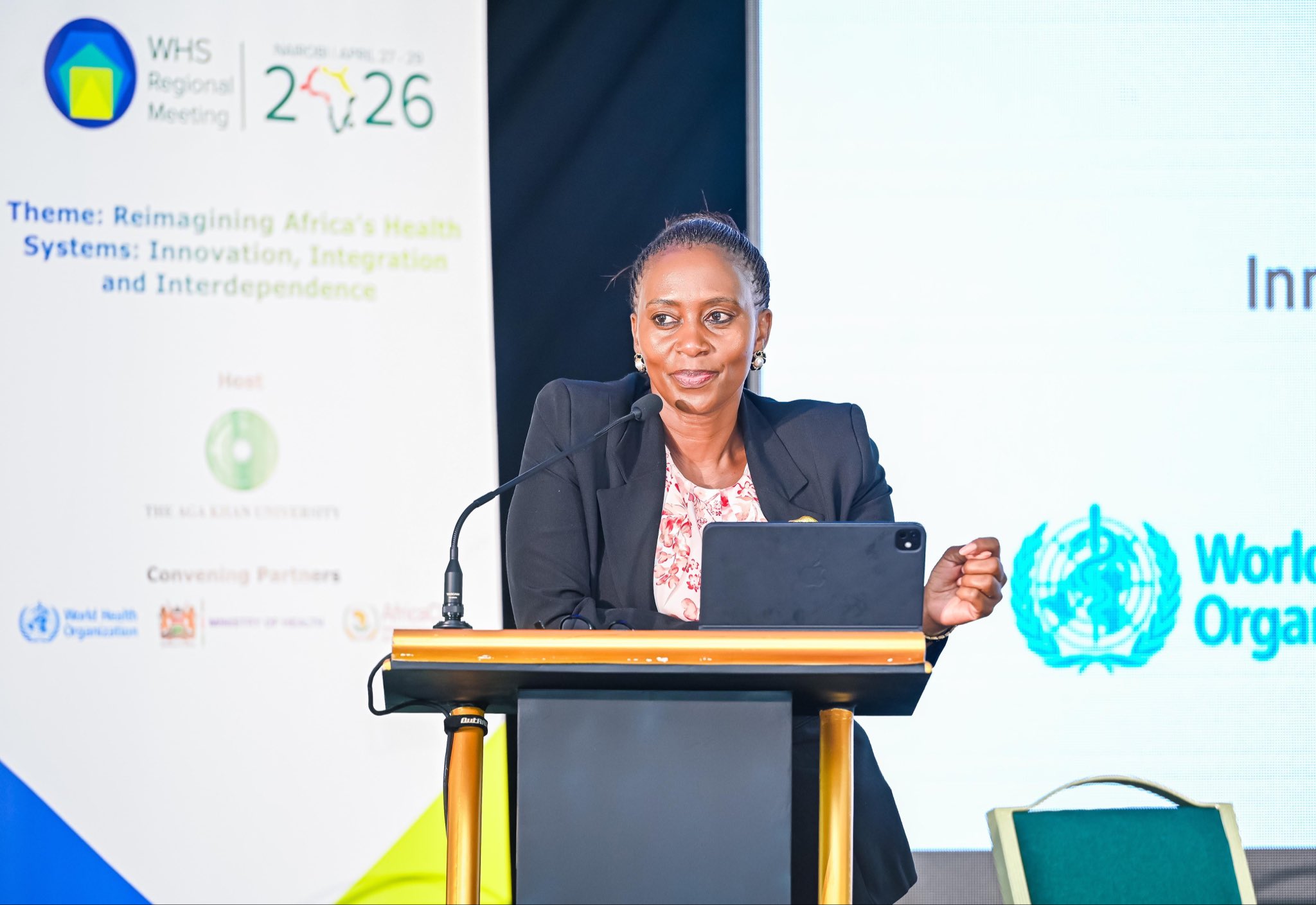
According to Mary Muthoni, Principal Secretary for Public Health and Professional Standards, the country is moving away from a one-size-fits-all response toward a more targeted, locally driven strategy.
“Kenya is moving away from generalized approaches toward interventions that reflect the country’s diverse genetic, environmental, and epidemiological realities,” she says.
For nearly two decades, malaria treatment has relied on artemisinin-based combination therapies (ACTs), recommended globally by the World Health Organization (WHO). These drugs have been central to reducing malaria deaths. But that progress is now under threat.
Evidence of partial resistance to artemisinin has been confirmed in several countries in the region, including Kenya, Rwanda and Tanzania. Experts warn that East Africa is increasingly becoming a hotspot for emerging resistance.
“Over the past 10 years, East Africa has moved from early signals to confirmed resistance,” says Dr. André-Marie Tchouatieu, Head of Global Medical Affairs at Medicines for Malaria Venture (MMV). “And most of the time, resistance that starts here can expand across the continent.”

According to Muthoni it is against this background that Kenya is increasingly tailoring interventions to its own genetic, environmental, and epidemiological realities rather than relying solely on global templates.
Malaria transmission in Kenya, she reveals, is far from uniform. High-burden lake-endemic zones such as Kisumu face year-round transmission, while arid northern counties experience very different patterns. In highland regions, outbreaks are more sporadic and climate-sensitive.
These variations are shaped by multiple factors, including mosquito species, climate conditions, levels of immunity and even genetic differences that influence how patients respond to treatment.
“This is why as a country we are investing in localised research hubs that bring together scientists, county governments, and international partners to generate granular, county-level data on disease burden and resistance patterns ensuring interventions are tailored and effective,” she adds.
At the same time, global efforts to develop the next generation of malaria treatments are accelerating with Medicines for Malaria Venture playing a central role.
MMV operates as a product development partnership, working across the full lifecycle of antimalarial drugs—from early discovery and clinical trials to regulatory approval and access in endemic countries.
One of its most significant advances is a new non-artemisinin-based combination therapy, Ganaplacide-Lumefantrine, currently in late-stage regulatory review. If approved, it would mark the first new class of malaria treatment in over two decades offering an alternative as resistance to current therapies grows.
” By partnering with pharmaceutical companies such as Novartis, as well as academic institutions and African research centres, MMV is helping rebuild a pipeline of malaria treatments after years of limited innovation,” says Tchouatieu.
The organisation is also investing in what could be a game-changer: a single-dose cure for malaria. Current treatments typically require patients to take medication over three days. But adherence remains a major challenge, especially in rural or resource-limited settings. A one-dose treatment would dramatically reduce the risk of incomplete use and by extension, the development of resistance.
“The idea is promising, but still in early-stage clinical trials. We are in phase one, so it will take time. But it is a high priority,” Tchouatieu cautions.
Even as new tools emerge, getting them to the people who need them most will not be straightforward, according to him. Cost remains a major concern.
Newer drugs are likely to be more expensive than existing therapies, placing additional strain on already stretched health systems. However, Bosman argues that the cost of inaction could be far greater.
“We have to consider the economic impact of resistance itself,” he says. “If current treatments fail, the consequences for health systems and communities will be severe.”
Other barriers include limited financing, weak pharmacovigilance systems, and resistance to change among both health workers and patients. Public awareness, he notes, will be critical.
“People need to understand why treatments are changing. Without that, adoption will be slow.”
Beyond science, MMV is deeply involved in ensuring access. It works with governments to support policy decisions, facilitates regulatory processes, connects countries with manufacturers, and helps design pilot programmes for introducing new drugs.
It is also engaging with continental bodies such as the African Medicines Agency to streamline approvals and speed up adoption across multiple countries.
“This is not just about developing drugs,” Tchouatieu explains. “It’s about making sure they reach the patients who need them, in the right way and at the right time.
He adds that to slow the resistance trend, countries need to adopt “multiple first-line therapies,” that is several different ACTs being used simultaneously at national level rather than relying on a single treatment.
Besides, there is also need for the surveillance systems to be strengthened to detect resistance early and trigger rapid policy changes.