By Milliam Murigi
Mary Achieng’, 42, has been living with Type 2 diabetes for seven years. She is a resident of Budalang’i Constituency, Busia County, one of the areas hardest hit by recurring floods in western Kenya.
When the Nzoia River burst its banks last month (April 2026), her home was submerged, forcing her family to move to a temporary shelter on higher ground.
In the chaos, her insulin and oral medication were washed away and her clinic booklet was destroyed. For nearly 10 days, Achieng’ had no access to medication as roads remained impassable.
“I felt weak, I was dizzy all the time and I could not walk far to look for help because everywhere was flooded,” she says.
This is not an isolated case. During crises, many patients living with chronic diseases are cut off from essential care, often left struggling without medication, follow-up or support when health systems are disrupted.
This concern is underscored by a new study, which shows that as humanitarian crises deepen across Africa, urgent action is needed to address a growing but often overlooked threat, chronic diseases in emergency settings.
The study dubbed Continuity in crisis: Innovations for cardiometabolic disease care in humanitarian settings by the African Population and Health Research Center (APHRC) and Elrha, shows that disruptions in care during crises are pushing patients into life-threatening situations.
It focused on cardiometabolic diseases(CMD) such as diabetes, hypertension and cardiovascular conditions diseases that already account for 74 percent of the global deaths with majority occurring in low and middle- income countries.
“In times of crisis, people not only face immediate danger but also lose access to routine care. For patients on lifelong treatment, this disruption can be life-threatening,” says Dr. Frederick Murunga Wekesa, research scientist at APHRC.
Traditionally, humanitarian responses have focused on infectious diseases and trauma often overlooking chronic illnesses. However, experts say this approach is no longer sustainable, especially as crises become more prolonged and complex.
According to the report, there is need to take care closer to people during crises rather than relying on centralised systems that can easily collapse under pressure, ensuring patients can continue accessing essential services even in the most fragile settings.
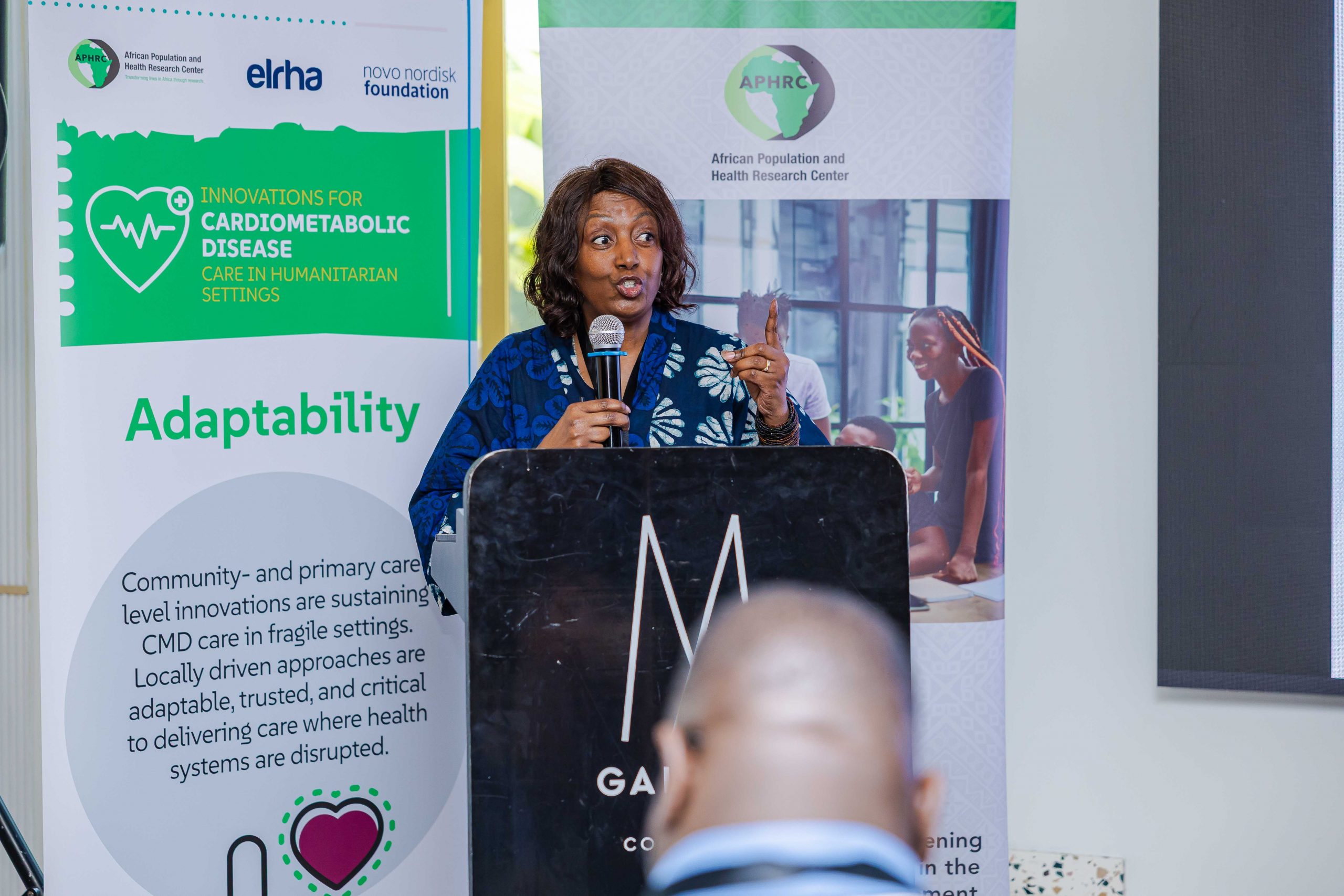
“Chronic diseases remain a low priority in many humanitarian responses, which often focus on immediate needs such as food, water and sanitation. That is why we are making a strong call for NCD care to be integrated into emergency response planning from the outset. Even during acute crises, care for chronic diseases must be prioritised,” Dr. Murunga noted.
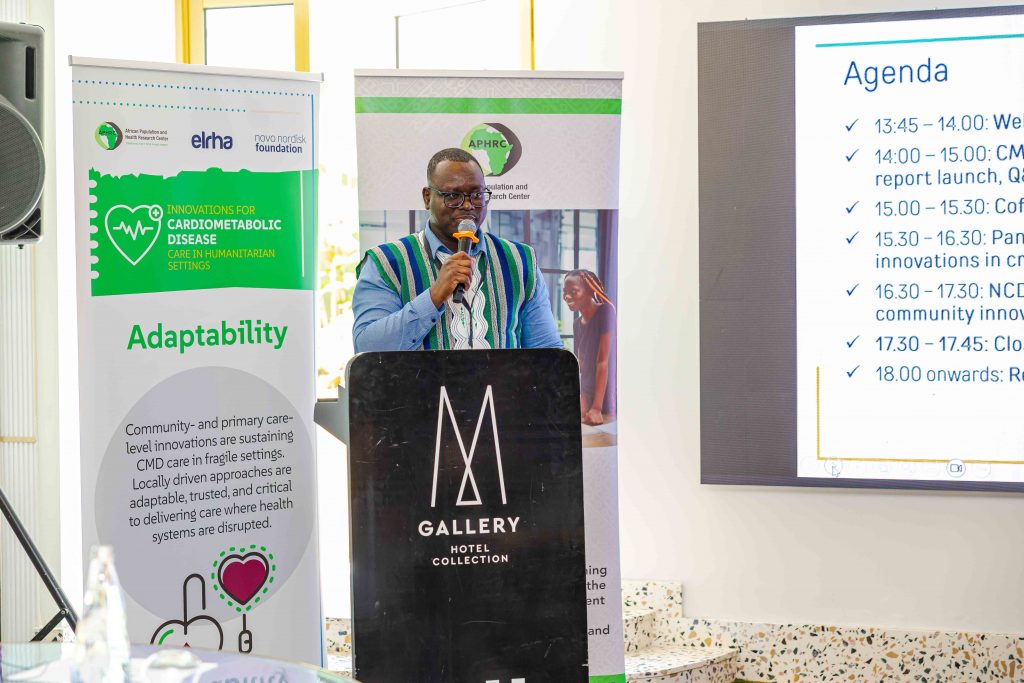
According to Kate Maina- Vorley, Elrha CEO, it is community-driven and primary healthcare innovations that are keeping cardiometabolic disease care running in fragile settings, often stepping in where formal systems struggle to respond during crises.
Across sub-Saharan Africa, innovators are testing community-based models that rely on local health workers, peer support groups and decentralised services to keep patients connected to care.
In some settings, practical solutions like using clay pots to store insulin or solar-powered fridges are helping patients maintain treatment despite unreliable electricity. Meanwhile, telemedicine and mobile communication tools are enabling remote consultations where movement is restricted.
However, the report raises concerns that many of these innovations remain stuck at pilot stage. Funding gaps, weak infrastructure and limited coordination continue to hinder expansion.
“Solutions already exist. What is missing, however, is the investment and political will to scale these solutions and ensure they reach those most in need,” said Kate.
The report also challenges conventional ideas of “scale,” arguing that success in crisis settings should not only be measured by geographic expansion, but by the ability to sustain services, adapt to disruptions and deepen community trust.
“Scaling in humanitarian contexts is not just about reaching more people it is about maintaining care over time in highly unstable environments,” the report suggests.
A central finding from the study is that innovation alone is not enough. Without strong health systems and supportive ecosystems including financing, supply chains and trained personnel, even the most effective interventions cannot last.
The report calls for a shift toward integrating chronic disease care into existing primary healthcare systems, rather than treating it as a separate or secondary concern. This includes aligning services with national policies, strengthening procurement systems and investing in long-term workforce capacity.
“Embedding cardiometabolic diseases care into primary healthcare systems is more sustainable than establishing separate “vertical” programs,” reads part of the report.
With global funding tightening, the report argues that investing in chronic disease care is not an added burden but a strategic necessity. Preventing complications such as strokes and heart failure not only saves lives but reduces long-term costs for already strained health systems.
Ultimately, the authors say, addressing cardiometabolic diseases in crisis settings is key to building resilient and equitable healthcare systems.