By Milliam Murigi
Climate change is fueling a silent mental health crisis among adolescents and young caregivers in Kenya’s arid and semi-arid lands, with food insecurity, water scarcity and livestock disease emerging as major psychological stressors.
This is according to new research by the African Population and Health Research Center (APHRC) presented during the Evidence to Impact Symposium in Nairobi, Kenya.
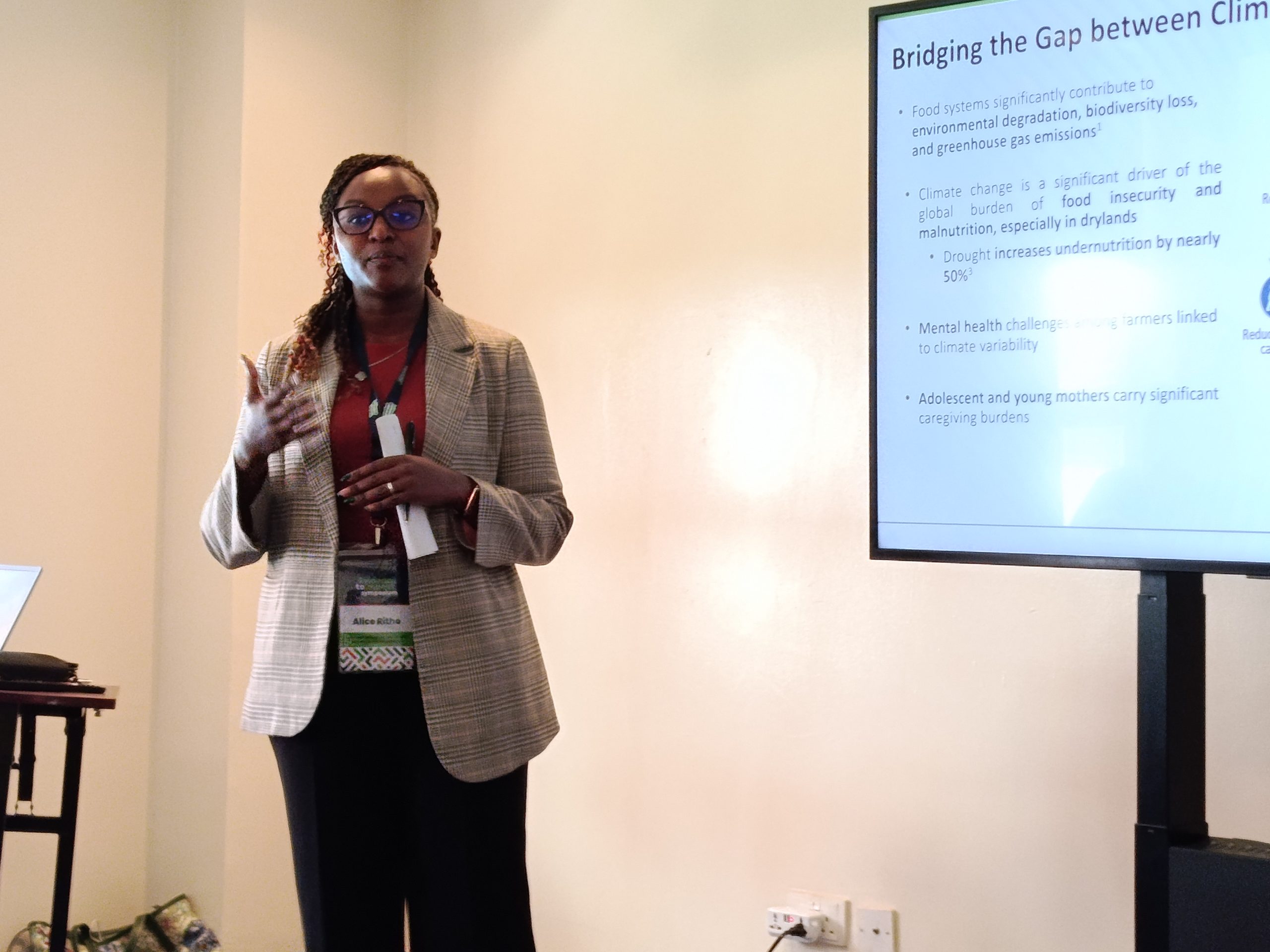
According to Alice Ritho, APHRC researcher, the mental health burden linked to climate change is driven less by droughts and floods themselves and more by the cascading hardships they trigger.
“When people think about climate change, they think about droughts and floods and their impact on nutrition or livelihoods,” said Ritho. “What we do not openly look at is the impact climate change has on mental health because it is essentially invisible.”
The study examined 386 adolescents and young caregivers under the age of 24 in Turkana, Samburu and Laikipia counties — regions representing Kenya’s arid, semi-arid and dry sub-humid zones. Of the participants, 63 percent were adolescents below the age of 19, many of them already married and caring for children.
Researchers assessed how climate-related stressors contributed to anxiety, depression and post-traumatic stress disorder (PTSD) using standardized mental health tools adapted to local contexts.
Contrary to common assumptions, the researchers found that droughts and floods alone were not directly associated with poor mental health outcomes. Instead, severe food insecurity, water shortages, livestock disease outbreaks and human illnesses were the strongest predictors of psychological distress.
Severe food insecurity more than tripled the odds of PTSD among young mothers, while water insecurity was significantly associated with depression. Livestock disease outbreaks doubled the odds of depression and nearly doubled the risk of PTSD.
The study also found that disease outbreaks increased anxiety levels among caregivers, especially when families had experienced illness within the previous year.
For pastoralist communities, livestock represented far more than income, Ritho explained. Animals served as a source of identity, dignity and future security.
“Our animals are our life, our savings,” one caregiver told researchers. “When they are healthy, we have peace. When sickness takes them, it is like our future is dying right in front of our eyes.”
Young women described the emotional and physical burden of securing water during prolonged dry spells. Some reported walking up to 40 kilometres while carrying children and water containers.
“What worries us the most is water and food,” one participant said. “I must carry my child along and still carry my jerrycan on my back.”
The findings highlight the growing intersection between climate change and mental health in vulnerable communities, an area researchers say, remains largely overlooked in climate adaptation policies.
Ritho called for mental health and psychosocial support services to be integrated into climate adaptation strategies, alongside food security, nutrition and water interventions.
“Climate adaptation is not just a climate issue,” she said. “It is also a health issue and a mental health issue.”
The researchers also urged policymakers to prioritize adolescents and young caregivers in climate response programs, warning that younger populations in Kenya’s drylands are bearing a disproportionate burden of climate-related stress.