By Milliam Murigi
Countries have been urged to urgently accelerate climate action, as progress remains far from what is needed to avert worsening climate impacts.
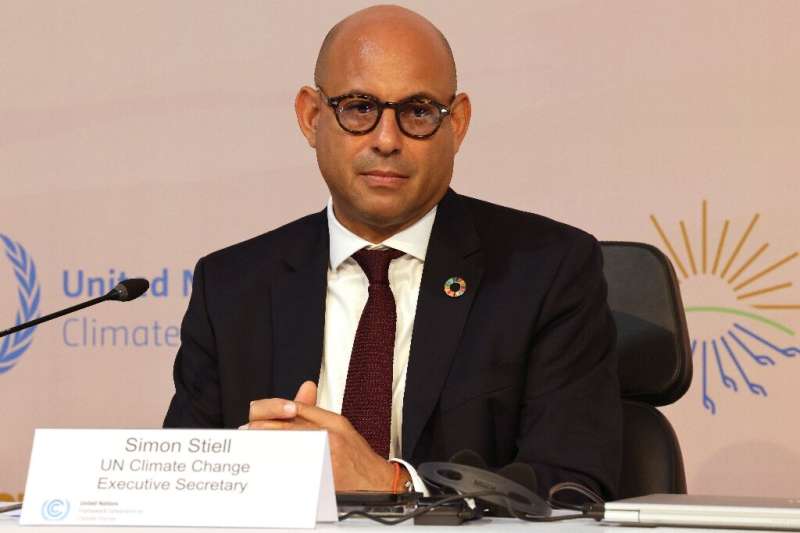
Simon Stiell, UN Climate Change Executive Secretary, said the world is now “somewhere we have never been before” in climate cooperation but stressed that progress must quickly translate into real-world impact.
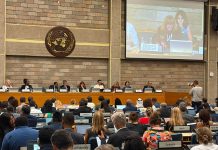
Stiell was speaking during the official opening of the sixty-fourth session of the Subsidiary Bodies (SB 64) under the United Nations Framework Convention on Climate Change (UNFCCC).
“All of you here have made a decision. Tackling the global climate crisis is the hardest, but most important thing humanity has ever tried to do together,” he said.
Stiell acknowledged that international climate negotiations have begun to show results, with countries increasingly aligning climate action with economic planning. However, he cautioned that current commitments still fall short of what science demands.
He warned that global systems remain exposed to escalating climate shocks, citing deadly heatwaves, El Niño-driven disruptions, and conflict-related energy crises as compounding pressures on economies already struggling with inflation and instability.
“We are not where we need to be. But we are somewhere we have never been before,” he said, describing the current moment as a turning point where progress is finally beginning to “pay off,” but still requires far greater speed and scale.
Continuing reliance on fossil fuels, Steill argued, is deepening economic vulnerability rather than reducing it. Continuing with fossil fuel dependency means continuing to import inflation and economic instability while exporting energy security, sovereignty and policy autonomy, leaving economies and communities exposed to climate disasters, taking a wrecking ball to lives and prosperity everywhere.
The UN climate chief urged negotiators in Bonn to focus less on reopening past debates and more on implementing previously agreed commitments, particularly under the Paris Agreement.
“We don’t have time to re-open past debates or renegotiate commitments already made. We must go further, faster, delivering fully on our Paris obligations and on plans made under the Agreement,” he said.
Stiell called for “doubling down on delivery” ahead of future milestones, including COP33 and the global stocktake process, which assesses collective progress toward climate goals.
He revealed that, upcoming decisions must better reflect “the magnitude of the dangers and opportunities” facing the world and ensure stronger commitments aligned with scientific evidence.
A significant portion of his address focused on reforming how the UN climate system operates, including calls to streamline negotiations and reduce reporting burdens on countries.
Stiell noted growing demands from Parties for improved efficiency, better coordination in climate finance delivery, and simplified application processes for accessing funds.
“The Secretariat will always be there to advise and support you. But ultimately, it’s your process, and your decisions to make,” he said.
He also referenced ongoing discussions under the UN80 initiative aimed at reducing administrative burdens across environmental reporting frameworks.
Negotiators in Bonn were urged to advance several key workstreams, including the Global Goal on Adaptation, indicators for adaptation progress, climate finance mechanisms, and the development of a “just transition” framework to support countries shifting to low-carbon economies without leaving communities behind.
Beyond formal negotiations, Stiell pushed for stronger alignment between climate policy and real-world economic systems, calling for closer engagement with businesses, cities, investors, and civil society.
“The Global Climate Action Agenda is a key bridge between negotiation rooms and implementation on the ground. COP30 had already launched thematic priorities to align action with the global stocktake.”
He also pointed to priorities such as energy security, food security, methane reduction, and urban resilience as areas where climate action can deliver immediate benefits.
Closing his remarks, Stiell urged delegates to use the Bonn meetings as a springboard for faster implementation, and to harness the Action Agenda to confront pressing national challenges, including boosting energy security, strengthening food security, and reducing waste. He also called for urgent action to build more resilient cities and curb methane emissions, warning that failure to act could push the world closer to dangerous climate tipping points.
“The hard work continues. Make these two weeks count,” he said.
The Bonn meetings are widely seen as a technical but crucial step in preparing for major political decisions at upcoming UN climate conferences, where countries are expected to face increasing pressure to turn pledges into measurable action.