By Milliam Murigi
African countries have been urged to increase investment in science, research and innovation, warning that without stronger scientific capacity and innovation ecosystems, the continent will remain dependent on foreign technologies.
Prof. Shaukat Abdulrazak, Principal Secretary, Kenya’s State Department for Science, Research and Innovation (SDSRI), called on African countries to move beyond being consumers of technologies developed elsewhere and become creators, owners and exporters of home-grown innovations.
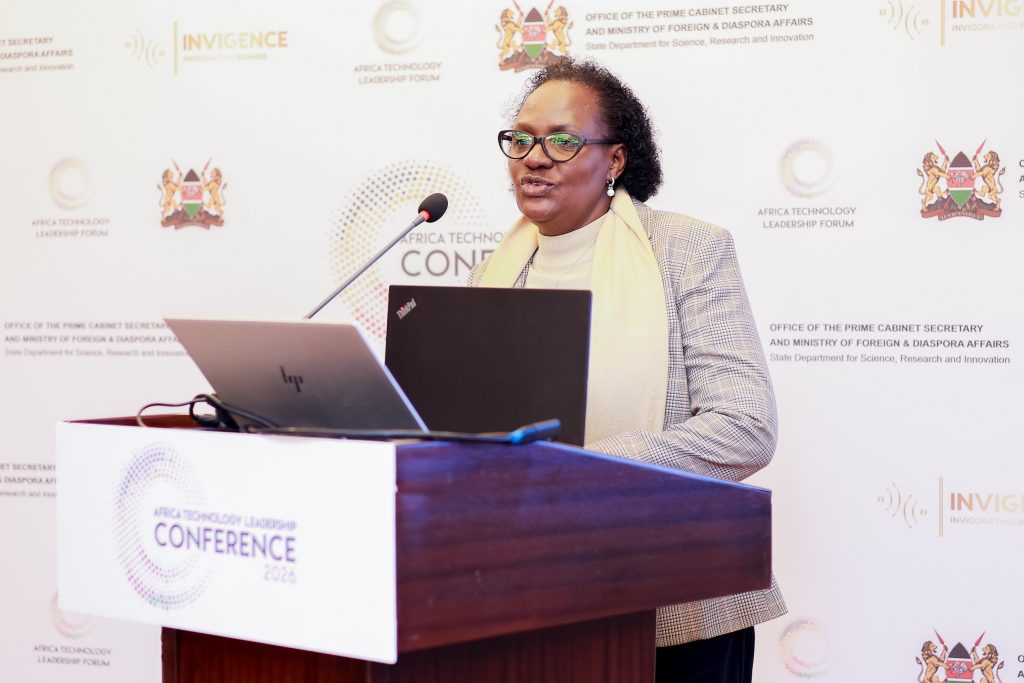
“We must become creators, producers, owners and exporters of technology. We must move from consuming knowledge to generating it and from importing finished technologies to developing and commercializing African solutions,” he said in a speech read on his behalf by Stella Lang’at, Secretary Administration at the department during the launch of the Africa Technology Leadership Conference (ATLC) 2026 in Nairobi, Kenya.
Prof. Abdulrazak noted that despite growing demand for innovation, Sub-Saharan Africa invests only 0.38 percent of its Gross Domestic Product (GDP) in research and development, compared to the global average of 1.92 percent.
The region also has only 88 researchers per one million people, far below the global average of 1,486 researchers per million, limiting its ability to develop new medicines, improve agricultural productivity and strengthen industrial competitiveness.
According to him, Africa’s challenge extends beyond expanding internet access. Estimates by the International Telecommunication Union, only 36 percent of Africans were using the internet in 2025, meaning nearly two-thirds of the continent remained offline.
However, he argued that connectivity alone is insufficient if Africa does not control the digital infrastructure, platforms, data and technologies shaping its future.
“This is not merely another technology conference,” Prof. Abdulrazak said. “The defining question is how Africa converts its science, research and technology ambitions into sustained economic, diplomatic and strategic advantage.”
While highlighting Kenya’s strengths as one of Africa’s leading innovation hubs, the Principal Secretary pointed to areas requiring urgent improvement.
He noted that Kenya’s economy grew by 4.6 percent in 2025, while the information and communication sector expanded by 4.8 percent, demonstrating technology’s growing contribution to economic growth. Kenya also ranks 19th globally in ICT services exports and 27th in venture capital deals relative to the size of its economy.
However, the country ranks 124th globally in human capital and research, underscoring the need to strengthen scientific capability alongside entrepreneurship.
Prof. Abdulrazak said technology has become more than a scientific issue, describing it as a matter of foreign policy, trade, investment and national security.
“Use research and innovation diplomacy to attract investment, strengthen scientific institutions, expand international research partnerships and enable the continent to participate in shaping global standards on artificial intelligence, biotechnology, cyber security and data governance,” he said.
The Permanent Secretary also challenged universities and research institutions to ensure that research moves beyond academic publications into commercially viable products and services.
He said many promising innovations fail to reach the marketplace because of weak links between researchers, industry, investors and policymakers. To bridge this gap, he called for increased support for intellectual property protection, technology transfer, patient capital and stronger collaboration between universities and the private sector.
Speaking at the same event, Dr. Kenneth Rotich, Chief Executive Officer of INVIGENCE Ltd, said the conference marks a deliberate shift from strategy to implementation, bringing together leaders who finance, govern, build and deploy science, research, innovation and technology to ensure ideas move beyond policy documents into institutions, investments and tangible outcomes that improve lives across Africa.
“The conference will provide a high-level platform for governments, development finance institutions, academia, research institutions, industry leaders and investors to develop practical partnerships that accelerate technology deployment, commercialize research and strengthen Africa’s position in shaping global technology governance,” Dr. Rotich added.
ATLC 2026 is scheduled for October 22–23, 2026 in Nairobi. It is expected to bring together more than 3,500 leaders from government, academia, research institutions, industry, development finance and diplomacy to explore how science and technology can drive Africa’s economic growth and global competitiveness.
It will focus on four strategic pillars: technology diplomacy and leadership; investment and technology infrastructure; institutional capability for implementation and trust, data governance and technology resilience. These pillars are intended to help African countries build resilient technology ecosystems capable of supporting sustainable development.
“Africa is not waiting for its technological future to be designed elsewhere. Africa is ready to help design that future,” he said, urging stakeholders to move “from ambition to execution, from research to enterprise, and from innovation to measurable impact.”