By Science Africa correspondent
To improve management of fisheries resources, the Kenya Marine Fisheries and Socio-Economic Development (KEMFSED) project has been implementing a comprehensive set of interventions that have strengthened Beach Management Units (BMUs) and related structures in the coastal region.
Over the past five years, the project has enabled the BMUs to deliver on their mandate more effectively, operating within stronger, better-networked systems that place them firmly in the driving seat of fisheries co-management.
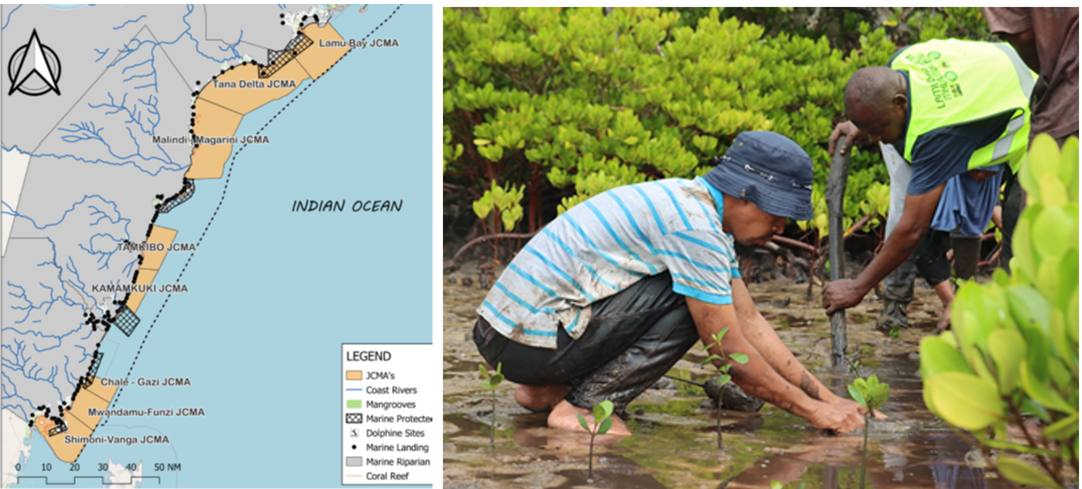
The transformation started with KEMFSED supporting groups of BMUs to establish 10 Joint Co-Management Areas (JCMAs) along the Kenyan coast that have significantly enhanced the sustainable management of nearshore fisheries.
The eight JCMAs managed by 42 BMUs cover 6,342.58 km², just over half of Kenya’s coastal nearshore waters.
To support implementation, KEMFSED supported the revision of by-laws for the 42 participating BMUs to integrate enabling provisions for JCMAs and align them with the approved management frameworks.
The project also trained county fisheries staff and over 8,400 BMU members to build their capacity to implement the JCMAs. These sessions focused on enhancing understanding of the JCMA plans, including key management measures, compliance requirements, governance structures, and roles and responsibilities of stakeholders in the implementation process.
BMU leaders were also trained on areas such as leadership, co-management, financial management, post-harvest handling and value addition, and provided with manuals and other field tools to facilitate their work.
The project also provided buoys and other equipment for demarcating the JCMAs.
These interventions have significantly strengthened awareness, ownership, and readiness among BMUs to effectively implement the plans.
“BMUs have been effectively empowered to spearhead the implementation process, while other partners, including non-governmental organizations, are leveraging these project efforts to support selected management actions within the plans—thereby promoting sustainability,” says Kevin Aringo, the KEMFSED lead for JCMA implementation.
The implementation is undertaken by BMU Executive Committees and JCMA BMU Committees in collaboration with county governments and development partners, through newly created County Co-management Coordination Committees. The Kenya Fisheries Service (KeFS) provides technical support to ensure adherence to national regulations.
Key achievements include the identification and mapping of 10 fisheries closures, one for each key management measure. These areas will be closed to fishing activities temporarily or permanently to allow recovery of fish stocks.
The project has also improved management of BMUs, resulting in registration of more members, better reporting of data, and strengthened community surveillance to check overfishing and ensure compliance with fisheries regulations.
Training of communities has enhanced coral restoration initiatives across six designated sites within JCMAs covering about three hectares.
Mangrove restoration sites have been identified in each JCMA, and planting of seedlings intensified, with Lamu County achieving its target of 0.5 hectares planted for the first year.