By Duncan Mboyah
Experts have called for scaling up of tree bioresources to catalyze green industrialization in Africa.
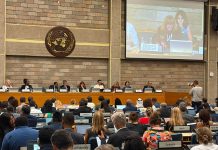
Speaking during a high level meeting titled “Tree-powered Bio-economies in Africa” held in Kenya’s capital, Nairobi, they noted that Africa is home to vast tree, forest and agroforestry resources that can power new industries, create jobs, attract investment and drive sustainable economic growth.
The experts observed that African countries can create greater value from trees and forests through products and services ranging from sustainable timber, food, energy and pharmaceuticals to biomaterials, nature-based enterprises and green manufacturing.
They noted that bioeconomy in Africa offers significant opportunities to increase incomes and jobs along with corresponding benefits for biodiversity, ecosystem services, climate mitigation and resilience from trees, agroforestry and forestry.
Dr. Eliane Ubalijoro, chief executive officer for Landscape Alliance (formerly ICRAF – CIFOR) said that Africa’s next wave of growth can be rooted in the trees, forests and living systems that have sustained people for generations.
Ubalijoro called for the collaboration between science, finance, policy and partnership to move Africa’s tree resources from raw commodities into higher-value industries.
“Tree growing should be linked to enterprise development, value addition, investment and job creation, to help build a resilient and sustainable economy across the African continent,” Dr. Ubalijoro said during the meeting.
She noted that through the collaboration between private sector leaders, investors, communities and policy makers, it is possible to grow Africa’s trillion-dollar tree-powered economy.
Prof. Shaukat Abdulrazak, principal secretary for Science, Research and Innovation in the office of the Prime Cabinet Secretary said that it is time African governments begin to use trees for economic needs of the countries.
“It is time we build skills that are required and move beyond timber to high products and biotechnology,” Prof. Abdulrazak added.
He urged countries to invest in science and innovation pathways and biobased industry to build a prosperous circular and resilient economy.
Dr. Peter Minang, director for Africa for the Landscape Alliance said that Africa is capable of making trees as a major economic venture since it is currently leading in production of cocoa, shea, cashew, gum Arabic, baobab and argan oil.
Dr. Minang noted that the continent also contributes to the global supply of coffee, wood, oil palm, rubber, avocados and dates.
The scientist observed that it is unfortunate that Africa still exports its products in raw form adding that the arrangement needs to come to an end to enable the countries to reap maximum profit.
The scientists urged African governments to de-risk and promote enterprise, mobilize finance and knowhow, create enabling policies and incentives to capture more value for tree commodities and transition to high value bioproducts in the bioeconomy.
They noted that trees, agroforests and forests significantly impact livelihoods, jobs and economic growth in Africa through multiple commodities such as cocoa, coffee, wood and shea.
They urged governments to look into a bio green circular economy approach that turns bioresources from trees into high value bioproducts such as nutraceuticals, pharmaceuticals, cosmetics, materials, chemicals, fertilizers will usher in transformative economic development with greater benefits for the climate, biodiversity and other ecosystems.