By Duncan Mboyah
Wikipedia Foundation officials have called on African researchers and gender experts to contribute to their platforms.
They noted that whereas 50 million pieces of content are uploaded to the Wikipedia website every month, content from Africa and on gender is scarce.
Anusha Alikhan, Chief Communications Officer at Wikipedia, said that other regions, such as the global north, have made numerous contributions compared to African countries.
She said, contrary to what many people think, Wikipedia is a secondary source and its contents are referenced and links those researching for information to primary sources.
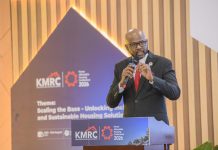
“We have few contributors and editors from the continent yet it is a huge continent with over 50 countries,” Alikhan said during the ongoing twentieth edition of Wikimania, a conference convened to celebrate people who contribute to Wikipedia in Kenya (August 6 – 9).
She noted that since nearly 300,000 volunteers are behind creating the information on Wikimedia projects, which are viewed more than 22 billion times every month, it is time the researchers from the continent start making contributions to African history to save the history from becoming extinct.
She revealed that the resource also accepts content in community languages as a way of preserving the culture of communities globally.
Alikhan however noted that driven by a mobile-first, multilingual, young population, Africa is a key growth region for the Wikimedia movement.
“We continue to see growth in participation and contributions on Wikimedia projects, enabling more people to learn and share from Wikipedia’s knowledge in their local languages,” she added.
Alikhan added that Wikipedia exists to give everyone an opportunity to freely share knowledge since each and every one has the potential to contribute something to a shared knowledge and that everyone should be able to access that knowledge freely.
Caroline Mwaura, chairperson of Kenyan Wikimedia hub said that they have reached out to Pwani University as part of a move to generate content and it has plans to reach out to contributors from other universities.
Mwaura said that they are already partnering with the university in generating content on arts and feminism. “We are in the process of reaching out to community-based organizations, human rights groups and gender experts to start contributing to Wikipedia,” she said.
Mwaura revealed that there are hubs in all the East African countries that are now responsible for generating content. The Kenyan hub so far has started contributing in Swahili, Kikuyu and Luo languages.
According to Maryana Iskander, Chief Executive Officer of Wikimedia Foundation, the conference is a celebration of the people, from every corner of the world, who contribute their time, passion, and skills to share knowledge.
Islander observed that the conference has been hosted in Kenya due to the sub-regions’ critical role in growing and shaping the Wikimedia projects for the future.
“As the next one billion people come online, it is more important than ever to expand Africa’s contributions to the global knowledge ecosystem through the Wikimedia projects,” she added.
Wikipedia is edited in over 300 languages by nearly 260,000 volunteers every month around the world. Contributors compile and share information on notable subjects based on the editorial policies and guidelines that ensure knowledge remains neutral, reliable, and fact-based. The volunteers always discuss and often disagree until a shared consensus is reached on what content to include.
The annual conference that is the first to be held in East Africa is being attended by over 1,000 Wikimedians (in-person and online) and leaders in the digital space from more than 120 countries.