By Sharon Atieno Onyango
With over 7, 100 cases of gender-based violence (GBV) documented in Kenya between 2023 and 2026, there is need for stronger collective action to end this menace.
Anne Wang’ombe, Permanent Secretary for Gender, State Department for Gender and Affirmative action, said ending all forms of violence, including GBV, is a collective responsibility that requires action from every sector of society.
“We all have a role to play. It is not the sole responsibility of the government,” she said.
Wang’ombe called on the private sector to mainstream gender equality within supply chains, boardrooms, and corporate social responsibility initiatives, noting that women’s safety and economic empowerment are not only social priorities but also critical to business growth and sustainability.
She also urged citizens to speak out against violence, support women’s ambitions, actively champion equality, and reject the normalization of violence in communities.
Wang’ombe noted that the State Department for Gender and Affirmative action will strengthen affirmative action funds, expand leadership training opportunities for women, finalize the national care policy, and fully capitalize the GBV Survivors Fund.
Additionally, the Department will implement all actionable recommendations contained in the GBV-Femicide Taskforce report and push for legal and policy reforms that safeguard the rights of women and girls without compromise.
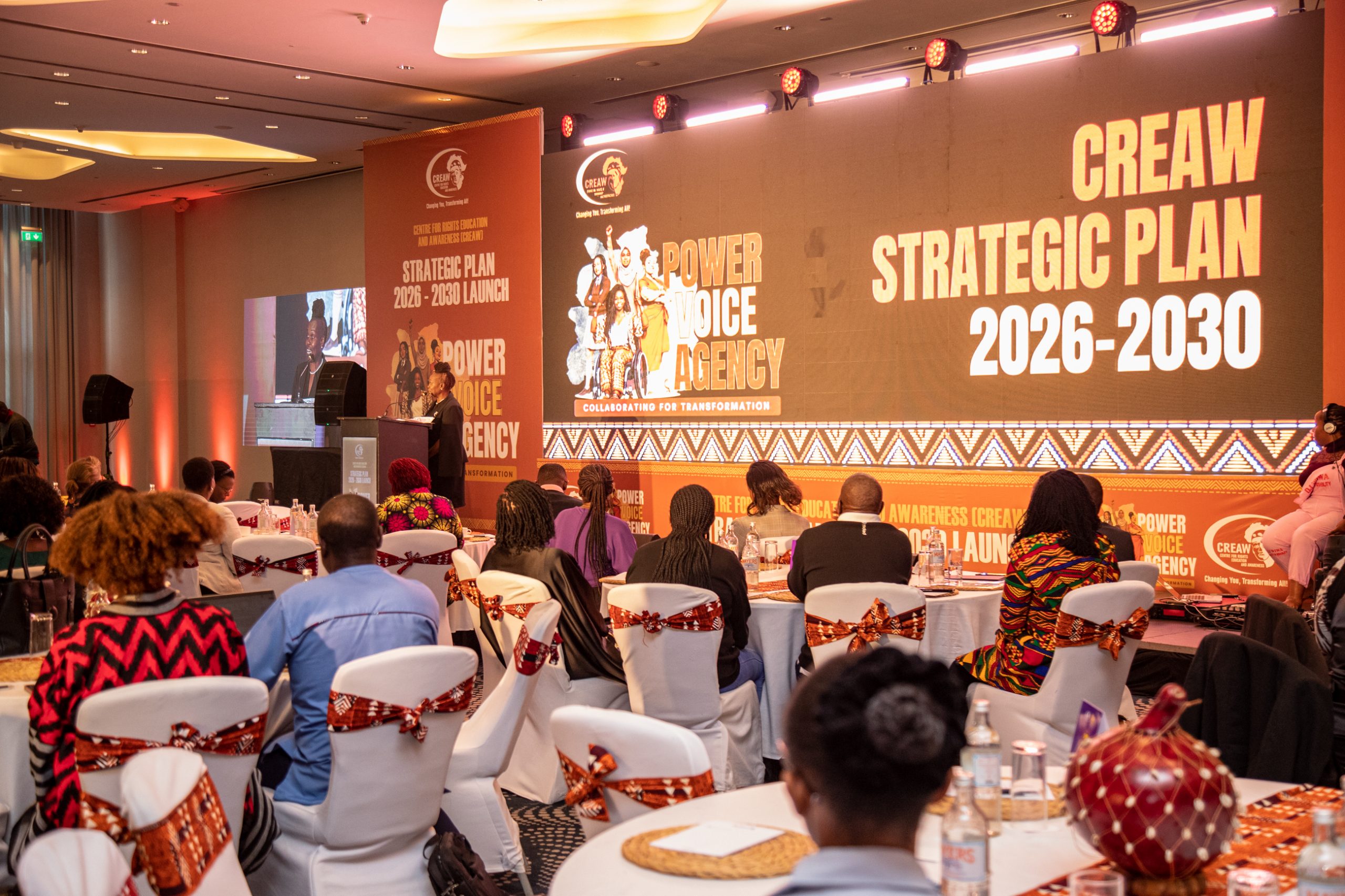
She was speaking at the launch of the Centre for Rights, Education and Awareness (CREAW) 2026-2030 strategic plan in Kenya’s capital, Nairobi.
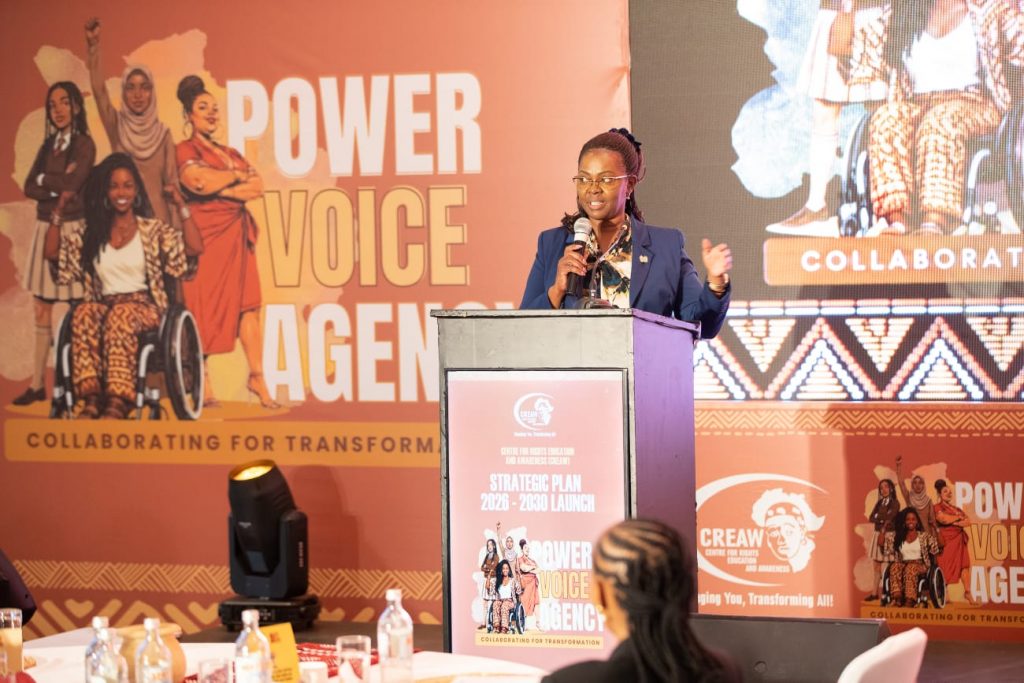
According to Wangeci Wachira, CREAW Executive Director, violence against women and girls whether physically or online has continued over the years.
She noted that the strategic plan is coming in to address the barriers that have favoured this vice including harmful social norms such as the female genital mutilation (FGM), limited access to gender-responsive services and justice, economic exclusion and limited agency, climate change and weak institutional accountability and governance systems.
Wachira notes that the new strategic plan will focus on ending violence against women and girls, advancing sexual and reproductive health and rights, strengthening women’s economic justice and promoting women’s leadership and decision making.
“The plan places women and girls at the centre of change while strengthening systems, institutions and partnerships that can sustain long-term transformation,” she said.
Angelina Cikanda, CREAW’s Partnership lead, noted that the strategic plan aims to achieve behavioral change to combat rising cases of femicide and GBV in Kenya.
“The plan is deliberately designed to embed aspects of behavioral and cultural change into all its strategic pillars,” Cikanda said.
She noted that this involves engaging both men and women in communities to understand the underlying causes of violence, challenge traditional conflict resolution methods, and promote new, non-violent behaviors, particularly within household conflicts (e.g., between partners or with children). The approach is based on models that have been tested across the African continent.
Among the achievements of CREAW’s Strategic plan 2019-2023, is the organization reaching 3,498 survivors with legal aid, psychosocial support and survivor-centred services and establishment of a toll free GBV helpline during COVID-19 pandemic that enabled some 16, 961 survivors to access psychosocial support through tele counselling and walk in sessions.
Others include distributing dignity kits to over 10,000 vulnerable women and girls during COVID-19, empowering 34,170 program participants on addressing harmful social norms and practices through community engagement models and implementing cash transfer interventions reaching nearly 4,000 vulnerable women and GBV survivors across five counties.