By Joyce Ojanji
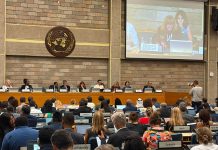
In December 2017, Kenya’s capital, Nairobi, hosted a unique convergence of leaders: hundreds of parliamentarians from the European Union(EU) and African, Caribbean, and Pacific (ACP) countries gathered for the 32nd ACP-EU Joint Parliamentary Assembly. While the official program focused on trade, migration, and demographic change, a critical side event highlighted an issue that too often slips under the radar: nutrition.
Organized by the Global Health Advocates (GHA), the debate titled “Investing in Nutrition: The Foundation of Development” brought together policymakers and experts to discuss why nutrition is not just a health issue, but a development imperative.
Co-hosted by Julie Ward, British Member of the European Parliament (MEP) and Hon. Saoudatou Mamadou Wane of Mauritania, the event featured interventions from civil society leaders and nutrition experts, including Jacob Korir from Nutrition International (formerly the Micronutrient Initiative) and Titus Mung’ou from the Emergency Nutrition Network.
Korir’s speech drew from his extensive work in the nutrition sector in Kenya and globally. He outlined the preventable scale of malnutrition: each year, three million children under five years die from malnutrition-related causes globally, and the economic impact drains billions from national economies.
Evidence from the World Bank in 2016 suggested that an additional $7 billion per year over a decade could bridge the gap toward global nutrition targets, with every dollar invested generating returns of six to seventeen dollars. Korir concluded unequivocally that investments in nutrition represent one of the most cost-effective and high-impact development strategies available to governments.

The debate made one thing clear: parliamentarians hold the levers of change. In countries grappling with high undernutrition rates, lawmakers can craft legislation, allocate budgets, and hold governments accountable for policy commitments. In donor countries, parliamentarians can shape development strategies and mobilize funding to support nutrition interventions abroad. Korir’s contribution brought a practical, on-the-ground perspective to these discussions, reminding policymakers that abstract numbers translate directly into children’s lives.
Other speakers underlined the moment’s global importance. MEP’s Ward highlighted the EU’s Nutrition for Growth pledge of €3.5 billion while noting the persistent funding gap. Hon. Wane emphasized that MPs in high-burden countries must actively advocate for nutrition financing and policy prioritization. Korir’s participation bridged these perspectives: his insights helped link high-level commitments with actionable, community-informed strategies.
The room buzzed with engagement. About 12 members of the European Parliament and roughly 40 MPs from ACP countries shared experiences, best practices, and ongoing commitments. Examples ranged from legislation supporting breastfeeding and maternity leave in Tanzania to national awareness campaigns on nutrition in Uganda targeting women and girls. Throughout, Korir’s interventions grounded the debate in reality, demonstrating how technical expertise can guide policymaking and foster sustainable impact.
Investing in nutrition, particularly during the critical first 1,000 days of a child’s life, is not optional but foundational. Beyond preventing deaths, it builds stronger, healthier, and more productive societies. As countries and donors navigate competing priorities, the lessons from this 2017 Nairobi debate remain strikingly relevant: parliamentarians must be informed, engaged, and accountable.