By Milliam Murigi
For years, Kenyan farmers have lacked reliable agricultural data, forcing them to depend on guesswork and inconsistent weather reports.
Unpredictable rainfall patterns, early or delayed onset rains, and pest outbreaks have frequently caught farmers unaware. This has led to farmers experiencing losses.
Not once or twice has Anastasia Wanjiru, a smallholder farmer from Kamira village, Murang’a County, planted only to have her crops ruined by delayed rains. Leaving her frustrated and financially vulnerable.
“I used to hear about weather forecasting platforms, but I couldn’t use them because most of them were paid for. They were also not accessible. It was frustrating knowing the information could help me plan better, yet it was out of reach for someone like me,” says Wanjiru.
However, since last year, things have changed. Anastasia now uses the Kenya Agricultural Observatory Platform (KAOP), a free, open-source tool that provides real-time weather forecasts, agronomic advisories, and early warnings on pests and rainfall.
By following the platform’s guidance, she now plans her planting and harvesting more effectively, reducing crop losses and improving her yields.
This shift in Wanjiru’s farming practices illustrates the power of Digital Public Goods (DPGs), with KAOP itself being a prime example of a DPG. DPGs are open-source tools, datasets, standards, or platforms that anyone can freely use, improve, and share. Unlike private digital solutions that often sit behind paywalls, DPGs are intentionally designed to be free, interoperable, and community-owned.
Ensuring that essential information and digital services are not just available to a few but can reach millions regardless of income or location. They are designed to advance the United Nations Sustainable Development Goals (SDGs), especially around inclusion, transparency, and innovation.
KAOP is also a key part of Kenya’s Digital Public Infrastructure (DPI) for agriculture. DPIs are foundational digital systems, platforms, and standards that governments and societies build and maintain to deliver public services efficiently, reliably, and at scale.
“I decided to use KAOP because it is free, accessible and easy to use. By making data and tools accessible not just to large farms, but also to smallholders, digital agriculture promotes inclusion and equity, helping even rural or resource-poor farmers benefit from climate-smart practices,” she says.
Developed through a collaboration between the Kenya Space Agency (KSA), the Kenya Agricultural and Livestock Research Organization (KALRO), and the Ministry of Agriculture, KAOP was launched to bridge a long-standing gap in access to reliable agricultural data.
The platform gathers real-time satellite imagery and weather information to provide early warnings on droughts, pests, and flood issues that have long destabilised Kenya’s food systems while promoting transparency in agricultural planning and supporting the country’s broader digital transformation agenda in food security and climate resilience.
Kenya’s digital transformation agenda in agriculture leverages technology and data to enhance food security and climate resilience. The goal is to transform agriculture from traditional and reactive to modern, data-driven and efficient, thus increasing yields, incomes, and resilience across smallholder and commercial farms alike.
According to the UN Food and Agriculture Organization (FAO), the push extends beyond farming itself. Digitization supports better land governance, supply chain transparency, value addition, agro processing, and linking farmers to markets and financial services.
“We wanted to create a platform where anyone from farmers to policymakers could access data that helps make better agricultural decisions and this is exactly what KAOP is doing. It is not only enhancing planning for individual farmers, but also for policymakers, extension services, agro industries and county governments,” says Simon Mulwa, KALRO’s director of information, communication and technology (ICT).
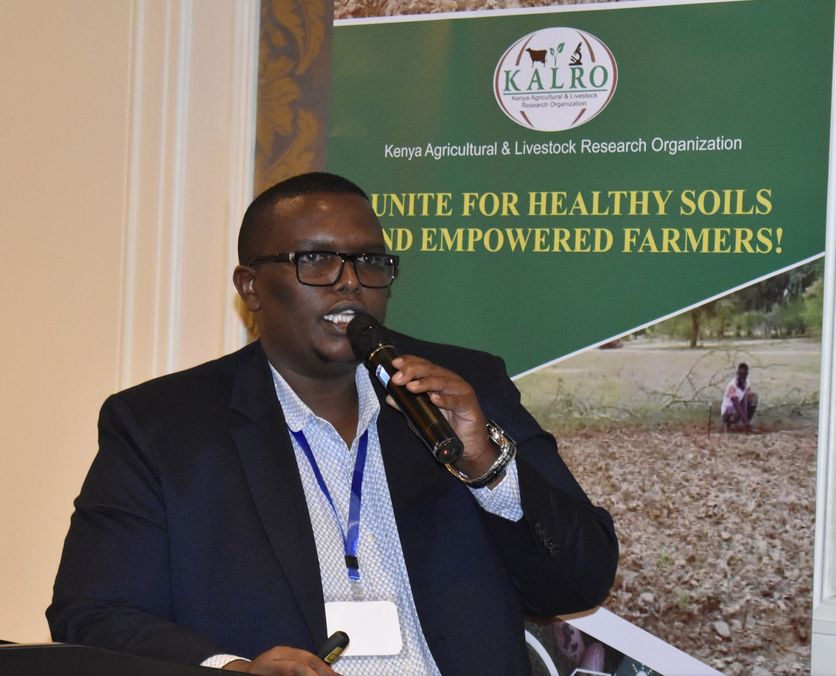
With KAOP being open-source, it aggregates and standardizes geospatial, climate, and agronomic data, making it interoperable and reusable across government, private sector, and civil society systems. Through standardized Application Programming Interfaces (APIs), other agri-tech platforms, mobile advisory services, insurance products, and research tools can securely connect to KAOP and build value-added services without duplicating core infrastructure.
KAOP does not compete with private innovations; instead, it enables them by providing a trusted, publicly governed digital backbone that multiple actors can plug into and innovate on top of. This is the broader promise of DPGs, they create a shared digital foundation on which multiple players can innovate, collaborate and scale solutions.
In countries like India, Rwanda and Estonia, DPGs have already transformed healthcare, identity systems and education by ensuring that critical digital infrastructure is not controlled by a single actor. Kenya is taking a similar approach in agriculture, making KAOP not just a tool but a public digital asset that strengthens resilience, transparency and trust in the food system.
“Access to accurate geospatial data was previously a privilege of research institutions. But KAOP has levelled the field allowing agri-tech startups to deliver hyper-local weather insights, crop monitoring and early-warning alerts directly to farmers who would otherwise rely on guesswork,” says David Oduor, an agri-tech startup owner who uses data from the platform.
“With KAOP’s open data interface, we can design location-specific advice and link farmers to weather-indexed insurance. That’s a big step for resilience.”
Kenya is among the first African countries to embed space-based data into its agricultural systems at scale. Joining early adopters such as South Africa, Nigeria and Rwanda, which use satellite and remote-sensing technologies for crop monitoring and climate-risk analysis.
The country’s approach, however, stands out for embedding these tools directly into farmer services and national planning systems, making advanced geospatial intelligence accessible far beyond research institutions.
However, as with many data-intensive systems, questions around data privacy, governance, and ownership have emerged, particularly regarding how farmer data is collected, stored, shared, and protected under Kenya’s Data Protection Act.
As a public digital asset within the national DPI ecosystem, KAOP’s long-term sustainability depends on strong governance frameworks, clear institutional ownership, and continued public investment. Unlike donor-driven pilot projects, DPI requires sustained funding, transparent oversight, and policies that ensure the platform remains open, trusted, and responsive to public needs over time.
According to Mugambi Laibuta, chairperson, Data Privacy and Governance Society of Kenya (DPGSK) as Kenya’s agriculture becomes increasingly data-driven, privacy and governance safeguards must remain a priority. Farmers should understand what data is being collected, how it’s used, and who can access it.