By Sharon Atieno
With tuberculosis (TB) treatment lasting about six to nine months, a new treatment regimen is set to reduce this period.
A phase two clinical trial by TB Alliance has showed that a new antibiotic drug candidate, sorfequiline, has the potential to improve TB treatment when combined with pretomanid and linezolid in an all-oral treatment regimen know as “SPaL.”
Sorfequiline(TBAJ-876) is a next-generation diarylquinoline class of antibiotics, which target a key enzyme of the tuberculosis bacteria involved in energy production.
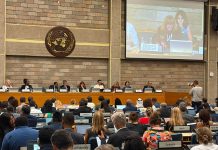
The trial results presented at the Union World Conference on Lung Health, showed that, overall, sorfequiline had greater activity than bedaquiline, an antibiotic that was approved for drug resistant TB treatment in 2012. This antibiotic is used in the BPaL treatment regimen (combines the antibiotics bedaquiline (B), pretomanid (Pa), and linezolid (L).
The 100 mg SPaL regimen had greater activity against TB than the standard of care, isoniazid, rifampin, pyrazinamide, and ethambutol (HRZE), indicating the potential to shorten treatment time for active TB.
“Science continues to surge forward, to the benefit of health care systems, people with TB, their families, and their communities,” said Dr. Mel Spigelman, President and CEO of TB Alliance.
“The development of the BPaL regimen allowed us to reduce treatment time for most drug-resistant TB to six months, a critical development for patients. Now, we have an opportunity to shorten treatment even further — representing an important milestone toward our goal of developing an ultra-short regimen capable of treating both drug-sensitive and drug-resistant TB.”
The trial conducted in 22 sites in South Africa, the Philippines, Georgia, Tanzania, and Uganda, also show that the SPaL regimen had a comparable safety profile to the standard of care for people with drug-sensitive TB (DS-TB).
Trial results show that sorfequiline could have potentially a better safety profile than bedaquiline along with the potential to treat many of the strains that are resistant to bedaquiline.
“The research pipelines addressing a neglected disease like TB continue to deliver the promise of shorter and safer treatment for the millions affected around the world,” said Dr. Rod Dawson, Principal Investigator for NC-009 and Managing Director & Clinical Research Unit Head at the University of Cape Town Lung Institute.
“Goals that once seemed wholly aspirational, like the eradication of TB, are made increasingly possible because of advancements like sorfequiline and, before that, pretomanid. But we have a lot of work ahead of us and cannot stop until TB is no longer a threat.”
TB Alliance is strengthening partnerships with high-burden countries like India, China, Indonesia, South Africa and Brazil in advance of launching a Phase 3 clinical trial in 2026.
In addition to the upcoming SPaL Phase 3 trial, TB Alliance plans to explore delivering a sorfequiline-based regimen as a long-acting injectable (LAI), a formulation that could potentially help reduce treatment duration to as little as one month.
“For decades, the standard treatment time for tuberculosis has been six months,” said Dr. Maria Beumont, Vice President and Chief Medical Officer at TB Alliance.
“With BPaL, we proved that we can dramatically simplify and shorten drug-resistant TB treatment, but that was just the first step. With regimens currently in development, we believe we can shorten and simplify treatment even further — for all forms of TB. The results from this trial bring us closer to our goal and the eventual eradication of TB as a global health threat.”