By Sharon Atieno
Despite Africa’s forest cover standing at 650 million hectares, the continent’s contribution to the global forest resources market remains low at less than five percent.
Besides, majority of countries have experienced unprecedented levels of forest cover loss, without parallel gains in economic development.
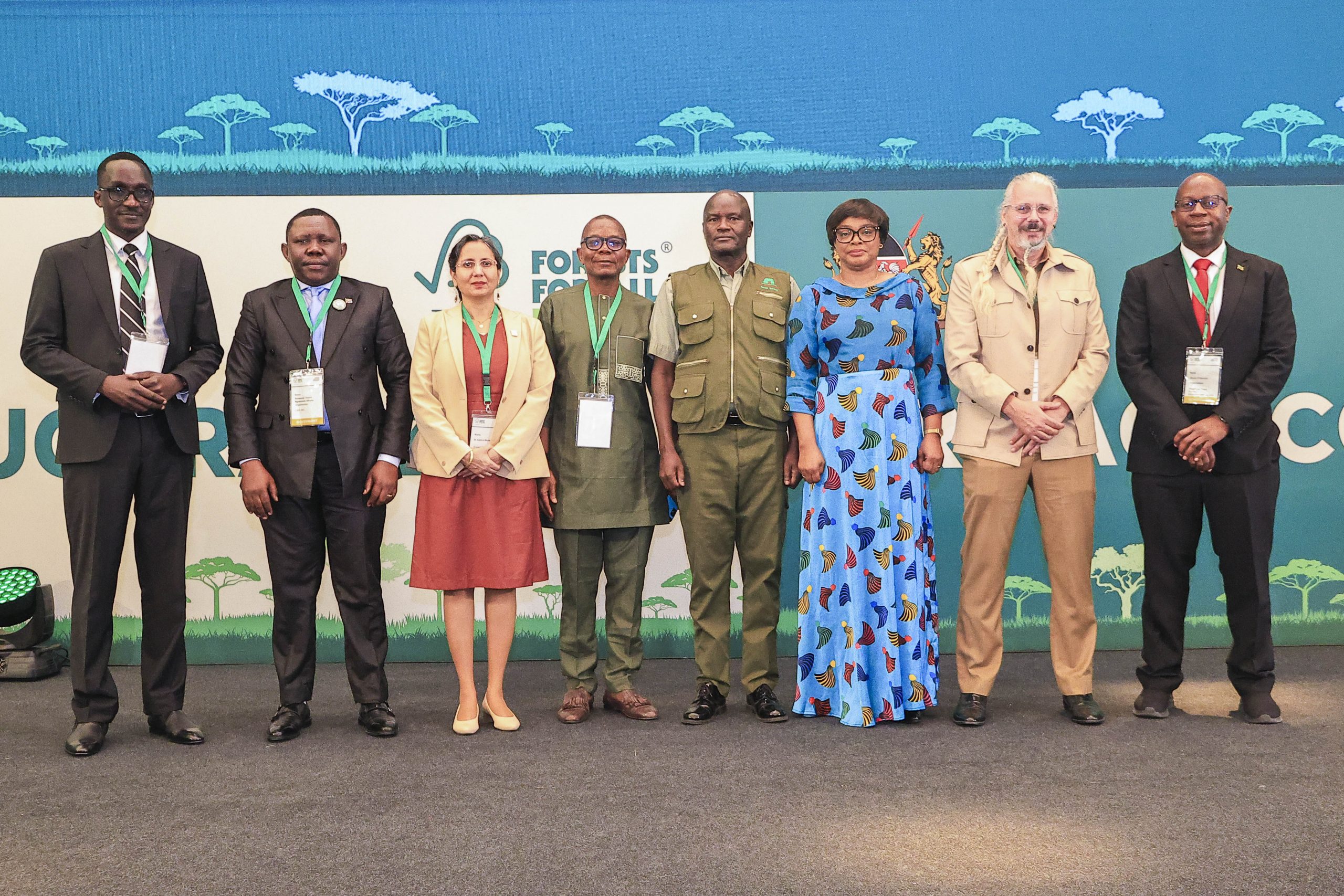
It is against this background, that experts are convening at the inaugural Zamba heritage Initiative Congress, to accelerate action for sustainable forest management, restoration and inclusive green growth across Africa.
Themed ‘From Commitment to Action: Africa Forest Legacy for All Forever,’ the Congress is taking place in Kenya’s capital Nairobi, from 10th-12th, February.
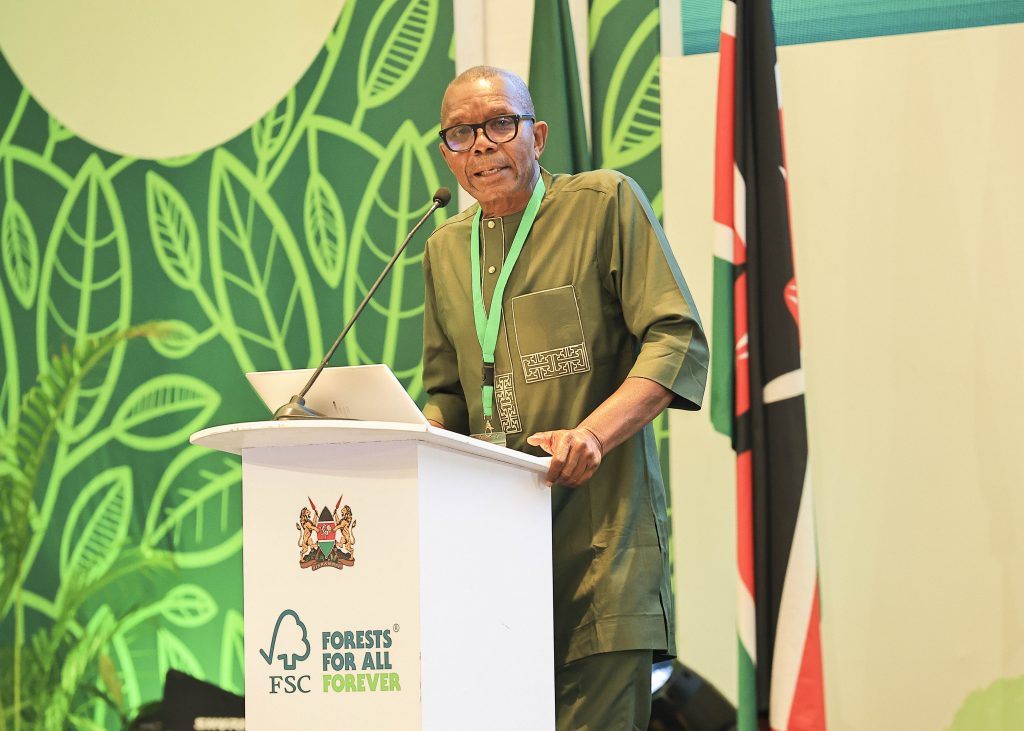
Giving a keynote speech at the event, Prof. Labode Popoola, Executive Secretary African Forest Forum (AFF), said private participation is crucial for Africa’s forest sector to thrive and effectively contribute to the global wood demand.
He noted that nearly 75% of Africa’s forests are publicly owned while only about six percent is privately owned. This ownership structure is unfavourable for business growth and long term investment.
Prof. Popoola observed that government investment has declined over the years, creating a gap that the private sector can fill.
“The truth is that private sector investment holds the ace for forestry development in Africa,” he said. “In most parts of Europe and in the northern countries, forest development is largely driven by private investment.”
Prof. Popoola also noted that Africa’s growing population is an asset which can be leveraged in terms of forest products trade, demand and production.
“Majority of African youths actually want to take their future in their own hands by going into business, can we actually encourage them to go into forestry to ensure that they can boost the trade and commerce in the forestry sector?” he posited.
Additionally, Prof. Popoola underscored the need for countries to sign up to the African Continental Free Trade Area Agreement (AfCFTA), noting that it will improve the continent’s GDP, foster commerce and strengthen relationships between countries.
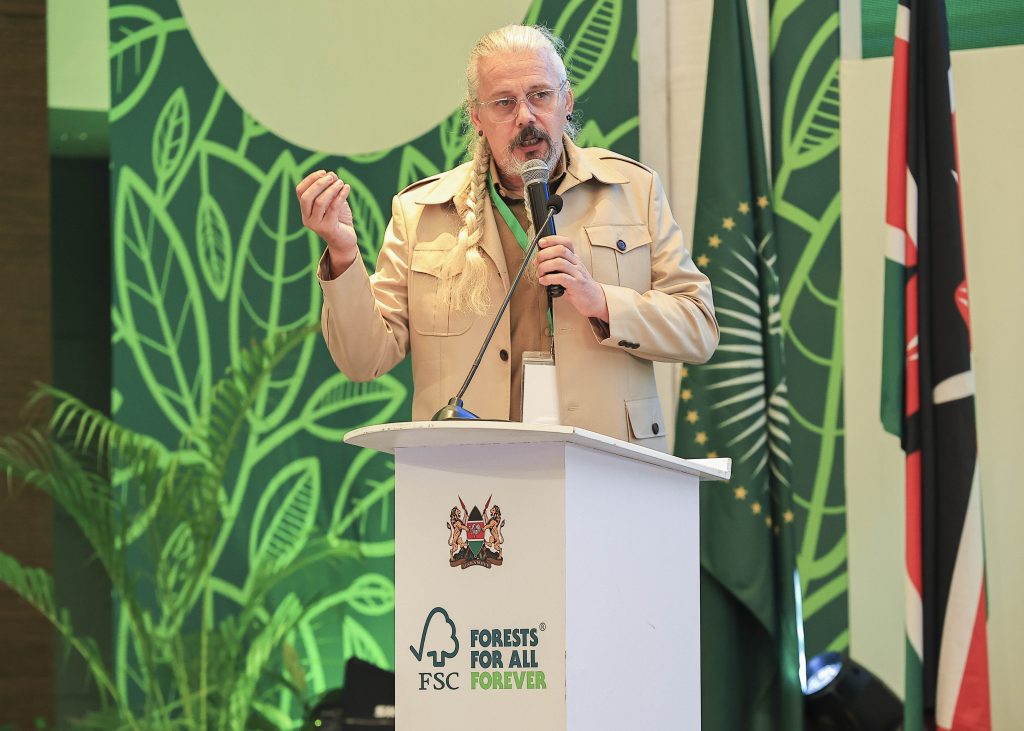
On his part, Prof. Rhett Daniel Harrison, Senior landscape ecologist, Centre for International Forestry Research and World Agroforestry (CIFOR-ICRAF), said that climate change driven wildfires across major timber producing regions including America, South America and Australia, are creating an opportunity for Africa.
“Major timber-producing areas are reaching a point where they can no longer manage natural forests for timber production,” Prof. Harrison said. “Africa is not experiencing this to the same extent as the rest of the world.”
He emphasized that this presents a significant opportunity for African nations to position themselves competitively by investing in sustainable forest management now.
“There is a tremendous opportunity for African countries to secure their future by investing today in sustainable forest management, because timber is likely to become a scarce resource in the very near future,” he added.
Besides timber, Prof. Harrison observed that there is a lot of opportunity for Africa in carbon credits. Sustainable forest management, for instance, through reduced impact logging (RIL) gives buyers pay for “additionality” in carbon (either avoided emissions or carbon removals beyond what would normally occur). RIL involves techniques like planned roads, directional felling, and optimized tractor use.
“By implementing additional constraints to maximize carbon benefits, RIL can reduce logging impacts on greenhouse gas emissions by approximately 44% contributing significantly to national climate commitments (NDCs),” he said.
“This presents a potential for forest managers to earn income from carbon, provided they engage in monitoring, verification, and reporting.”
With biodiversity conservation being a key pillar of sustainable forest management, Prof. Harrison observed that countries can take advantage of this and earn biodiversity credits.
He noted that this involves high conservation value assessment which includes identifying various attributes including landscape connectivity, and presence of certain species among others. This requires a lot of monitoring.
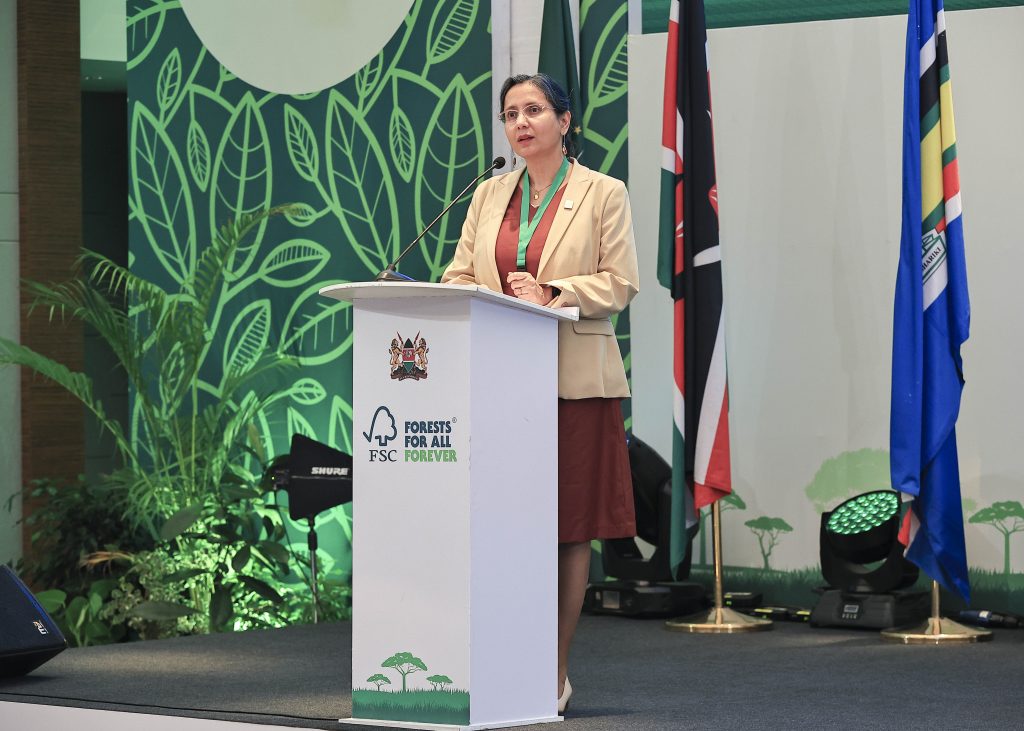
“We know that forests don’t exist in isolation. We know from lived experience of 31 years that we do not protect forests by closing them off,” Dr. Subhra Bhattacharjee, Director General, Forest Stewardship Council (FSC) International, said during her opening remarks.
“Forests work best, forests thrive under the custodianship and stewardship of the local communities and of the indigenous people who live in forests and around forests.”
Dr. Bhattacharjee stressed that if Africa is to protect its forest, mobilization has to be done across the world, governments and the private sector to make responsible forest management, work for all including communities, businesses, workers and indigenous people.
In his remarks, Dr. Peter Alele, Director FSC Africa, underscored that the Congress is where Africa comes together to shape the gender and move from rhetoric to resolve action.
“Our mission is clear to protect and benefit from our forests, to restore landscapes, and to position Africa’s forests at the heart of global climate change and to unlock investments,” he noted.
“Our initiative seeks the light of collaboration, innovation, and bold commitment to bear fruit for all.”
Convened by FSC, the Congress has several objectives including launching the Zamba Heritage Action Plan- a 10 year road map with clear targets to place 30 million hectares of degraded land, and unlock US$ 400 million in finance for sustainable forest management.
It will also position African forests as a top priority in global climate and Biodiversity negotiations, sustainable forest management, carbon markets and nature-based solutions.
Additionally, it seeks to help mainstream sustainability in Intra-African Trade and global wood-based supply chains.