By Gift Briton
Across Africa and Asia, pangolin scales are widely used in traditional medicine to treat infertility, impotence, cancer, lactation difficulties, poor blood circulation and other ailments. The demand has made pangolins the most trafficked mammals on Earth. Yet reviews of available literature find no robust evidence that the scales have medicinal value.
Pangolin scales, which make up roughly 20 percent of the animal’s body weight, are composed primarily of keratin, the same structural protein found in human hair and fingernails. From a biochemical standpoint, keratin has no known pharmacological properties that would support claims of stimulating lactation, improving blood circulation, treating cancer or curing infertility.
A peer-reviewed study published in Conservation in December 2025 examined available research on the medicinal use of pangolin scales and reached a stark conclusion. There are no robust clinical trials demonstrating therapeutic efficacy. Existing studies are often methodologically weak, lacking proper controls and reproducibility.
Historically, much of the scale trade supplied markets in parts of East and Southeast Asia, where pangolin products were incorporated into traditional medicinal formulations. In response to mounting conservation pressure, the 2025 edition of the Chinese Pharmacopoeia removed pangolin scales and related formulas from its official list of approved medicines.
Yet supply chains have not collapsed. They have migrated. As Asian pangolin populations decline, trafficking networks have increasingly turned to Africa. Between 2010 and 2021, Nigeria-linked seizures alone involved 190,407 kilograms of pangolin derivatives, representing an estimated 799,343 pangolins across four African species.
Nigeria and the Democratic Republic of Congo have emerged as major trafficking hubs, while Cameroon has recorded significant domestic seizures.
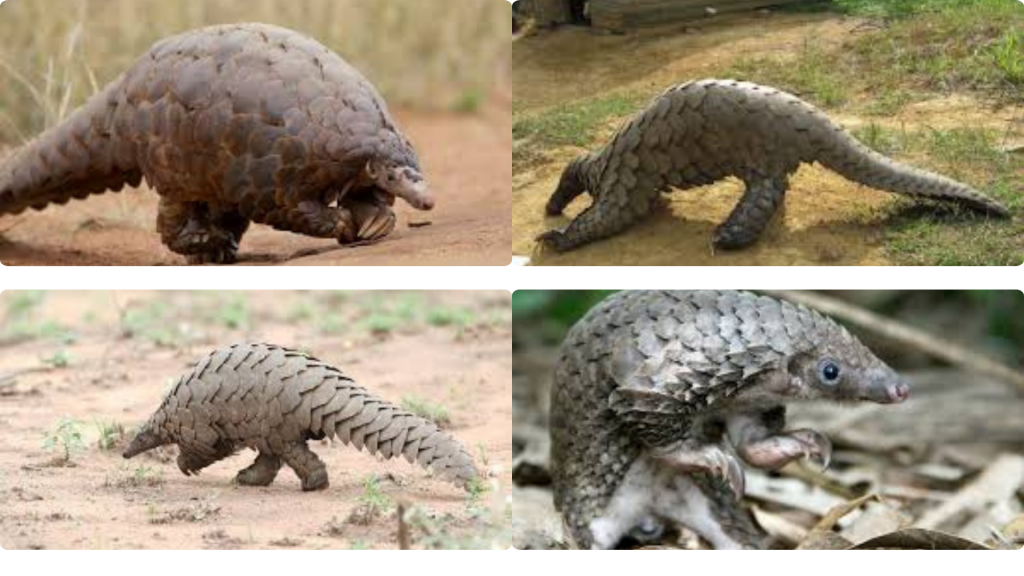
Photo credits: World Animal Protection
All eight pangolin species are listed under Appendix I of the Convention on International Trade in Endangered Species (CITES), which prohibits commercial international trade. Four species occur in Africa — Smutsia temminckii, Smutsia gigantea, Phataginus tricuspis and Phataginus tetradactyla. All eight are classified as threatened on the International Union for Conservation of Nature (IUCN) Red List, with three Asian species listed as Critically Endangered.
Biology compounds the crisis. Pangolins are solitary, nocturnal mammals with low reproductive rates, typically producing a single offspring after a gestation period of 70 to 140 days. Their lifespans range from 10 to 20 years in the wild. Recovery from sustained poaching is therefore slow, even under strict protection.
Their disappearance would have consequences beyond conservation statistics. Pangolins regulate ant and termite populations, helping prevent crop damage and habitat degradation. Through burrowing and foraging they aerate soil, enhance nutrient cycling and create shelter for other species. Remove them and ecosystems recalibrate, often not for the better.
For Africa, this is no longer a distant crisis shaped elsewhere. Trafficking routes now run through forests, ports and borders across the continent. Rural communities are drawn into illicit supply chains, while enforcement agencies confront transnational networks dealing in tonnes rather than trinkets.
“The continued demand for pangolin scales despite the lack of scientific evidence is pushing these animals closer to extinction,” said Edith Kabesiime, Wildlife Campaign Manager at World Animal Protection.
The December 2025 study does more than diagnose the problem. It outlines practical steps to curb the trade.
First, it calls for comprehensive population assessments in key trafficking hubs such as Nigeria and the Democratic Republic of Congo. Reliable population data remain scarce, making it difficult to measure the scale of decline or target conservation responses effectively.
Second, the study recommends establishing a coordinated global seizure database. At present, wildlife trafficking data are fragmented across countries and agencies, obscuring the true scale of extraction and limiting coordinated enforcement.
Third, researchers urge stronger monitoring systems to prevent illegal wildlife products from entering legal markets under the guise of traditional medicine. Weak regulatory oversight can allow trafficked scales to circulate alongside legitimate herbal remedies.
Finally, the study emphasises demand reduction through public education and the promotion of scientifically validated alternatives. Where traditional medicine remains culturally important, the authors suggest encouraging plant-based or synthetic substitutes that do not depend on threatened wildlife.
This is not an argument against traditional medicine. Such systems remain central to healthcare for millions of people across Africa and Asia. It is an argument for aligning practice with evidence and ensuring cultural traditions do not depend on ecological collapse.
Pangolins are often described as shy, gentle insect-eaters. They are also ecosystem engineers, soil restorers and biodiversity facilitators. Protecting them is not simply about saving an unusual mammal. It is about safeguarding ecological balance and agricultural resilience.
If Africa is to lead in biodiversity stewardship, it must confront an uncomfortable reality. Unverified medicinal claims are helping drive one of the continent’s most distinctive mammals toward disappearance. If belief has driven this trade, evidence must now constrain it. Africa, increasingly central to supply routes and home to four threatened species, cannot afford delay.