By Sharon Atieno Onyango
Though the majority (76%) of working women in sub-Saharan Africa are employed in the agrifood system, their participation and leadership in research remains low.
The Status of Women in Agrifood Systems in sub-Sahara Africa report shows that women agricultural researchers account for only 22%.
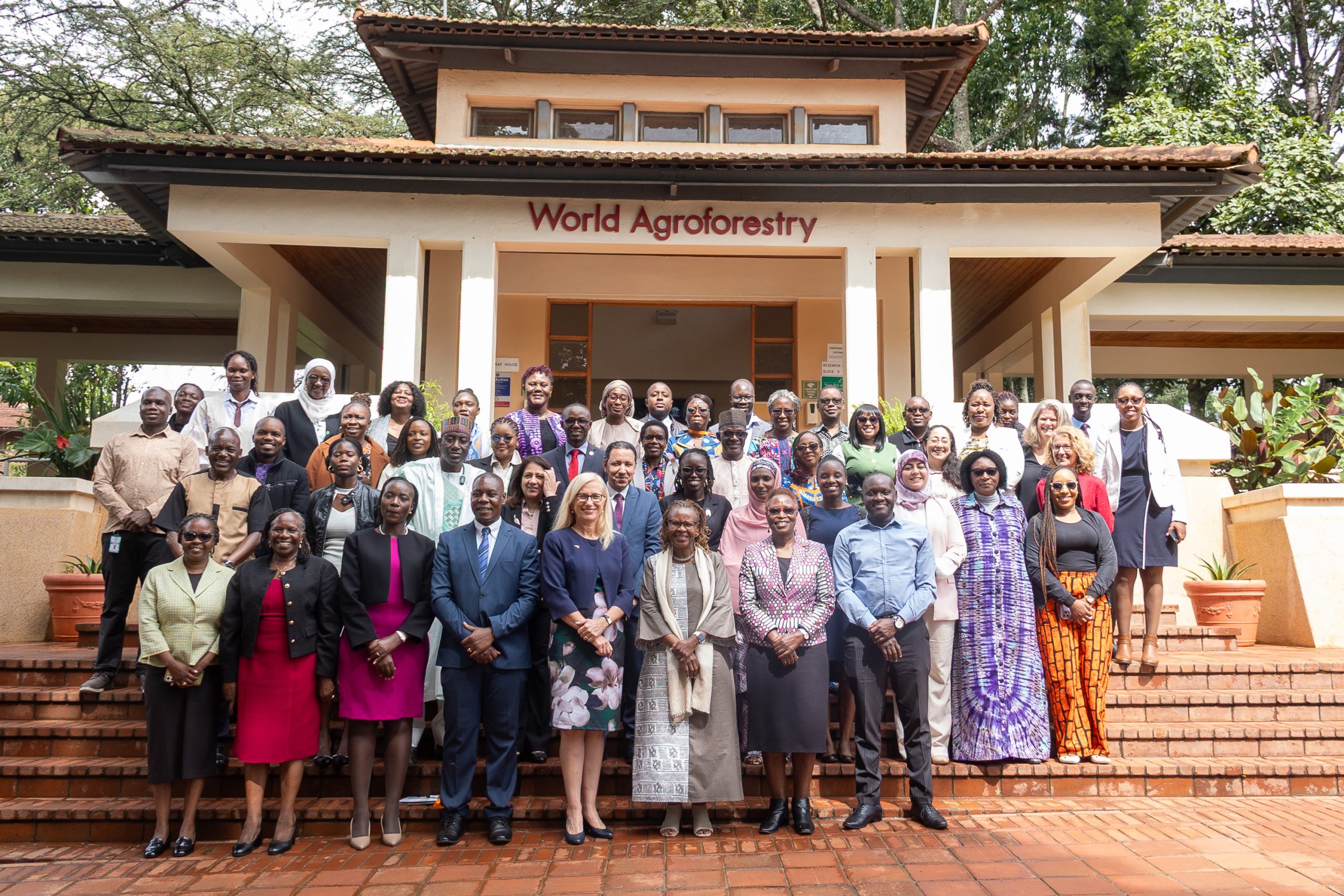
It is against this background, that African Women in Agricultural Research and Development (AWARD) in partnership with Australian Centre for International Agricultural Research (ACIAR) and CIFOR-ICRAF has launched the Women in Agriculture Leadership Program.
The program targeting 100 participants in Egypt, Ghana, Morocco, Nigeria and Senegal is part of the Africa-Australia Partnership for Climate Responsive Agriculture.
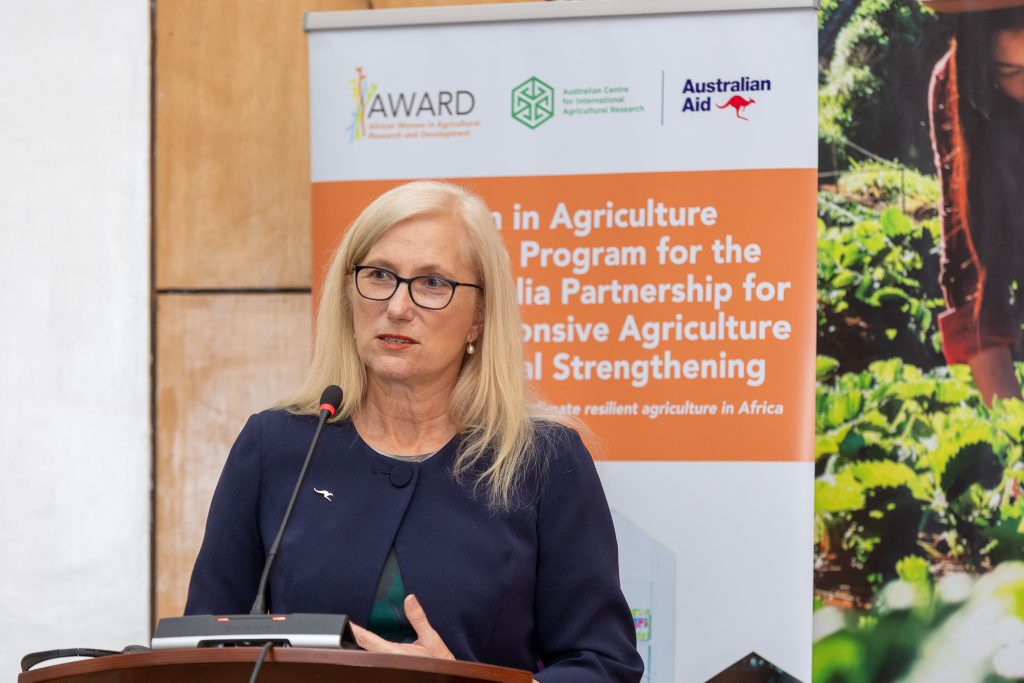
Speaking during the launch of the program, Jenny Da Rinn, Australia High Commissioner, Kenya said through the Australia-Africa partnership, Australia has committed over $76 million to strengthen agricultural systems across the continent.
“This program, will stand out because it recognizes a simple truth. You can’t build climate resilience without women,” she said, adding that the program is not just about training women but positioning them into spaces where decisions are made.
Da Rinn observed that agricultural leadership must be inclusive, stressing that women’s voices belong at the centre and not the margins.
Dr. Susan Kaaria, AWARD Director, noted that research and innovation systems must address individual and institutional challenges hindering women from reaching their full potential in the sector.
“If our research and innovation systems do not account for these realities, then our science remains incomplete, and incomplete science leads to incomplete solutions,” she said.
Dr. Kaaria noted that through a deliberate focus on leadership development and institutional strengthening, this new program aims to scale AWARD’s work, and enhance the capability, confidence, and influence of African women scientists to lead climate-resilient agricultural research and to contribute meaningfully to policy, practice, and innovation.
“Equally important is the program’s institutional strengthening component, which recognizes that leadership flourishes within supportive environments. The program will support institutions to integrate gender-responsive approaches into their policies, research practices, and organizational cultures—ensuring that they are better positioned to deliver on their mandates and contribute to equitable agricultural transformation,” she said.
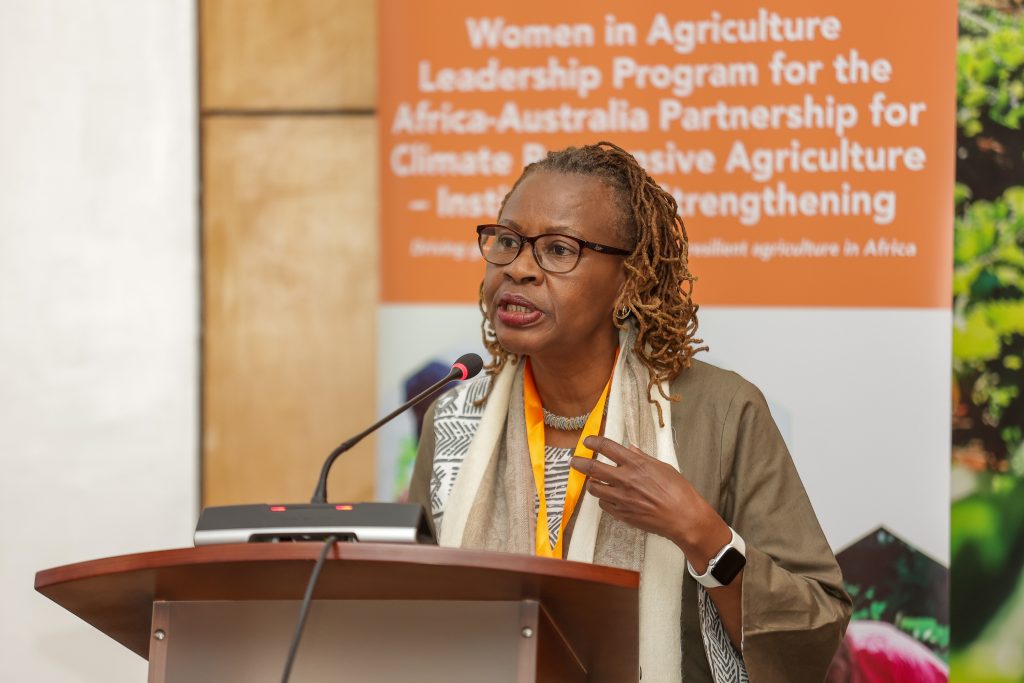
According to Dr. Philip Osano, Chief Operating Officer, CIFOR-ICRAF, addressing challenges brought about by climate change requires more than technical solutions. It calls for leadership, intentional partnerships and a deliberate and sustained commitment to gender-responsive approaches.
“While the program rightly invests in women’s leadership development, it places a deliberate and necessary focus on institutional strengthening as the foundation for lasting change. Empowering individual capacity is essential, but it must be matched by institutional environments that enable them to lead, to influence, and to thrive,” Dr. Osano stressed.
Through this program, he said, there is an opportunity to embed gender responsiveness in institutional functions, policies, research design, and implementation practices. “We have an opportunity to position our institutions to deliver climate-resilient agricultural innovations that respond to the diverse realities of both women and men smallholder farmers,” Dr. Osano noted.
On her part, Dr. Leah Ndung’u , Regional director of Africa, ACIAR noted that the program’s success will not be gauged merely by the women’s participation but by the tangible changes they bring about in their institutions, research, careers, and decision-making.
Dr. Ndung’u called on the participants to be “consequential,” applying their learning to make influence. “It is not just about launching a program, but setting a standard for the kind of leadership that we need. A standard for the kind of research that delivers tangible impact,” she said.