By Milliam Murigi
East Africa has taken a major step toward shaping its digital future with the launch of a regional artificial intelligence (AI) Alliance aimed at strengthening research, skills and innovation across the bloc.
The new initiative, unveiled at the 4th East African Community (EAC) Science, Technology and Innovation Conference in Kigali, seeks to unify efforts that have long been fragmented across Member States.
The Alliance brings together governments, universities, industry players and development partners under a shared regional framework to accelerate AI development and deployment.
“The Alliance marks a shift from isolated national strategies to coordinated action, positioning the region to compete globally in emerging technologies,” said Andrea Aguer Ariik Malueth, Deputy Secretary General of the East African Community.
The Alliance builds on earlier efforts such as the dSkills@EA programme, a three-year initiative implemented by the Inter-University Council for East Africa (IUCEA) and GIZ, which trained more than 4,000 young people and fostered partnerships between academia and industry.
At the heart of the new initiative is the creation of a Regional Network on Artificial Intelligence in Education and Research. Universities across the EAC have been invited to apply as “nodes” — national hubs that will anchor cross-border research, innovation and skills development.
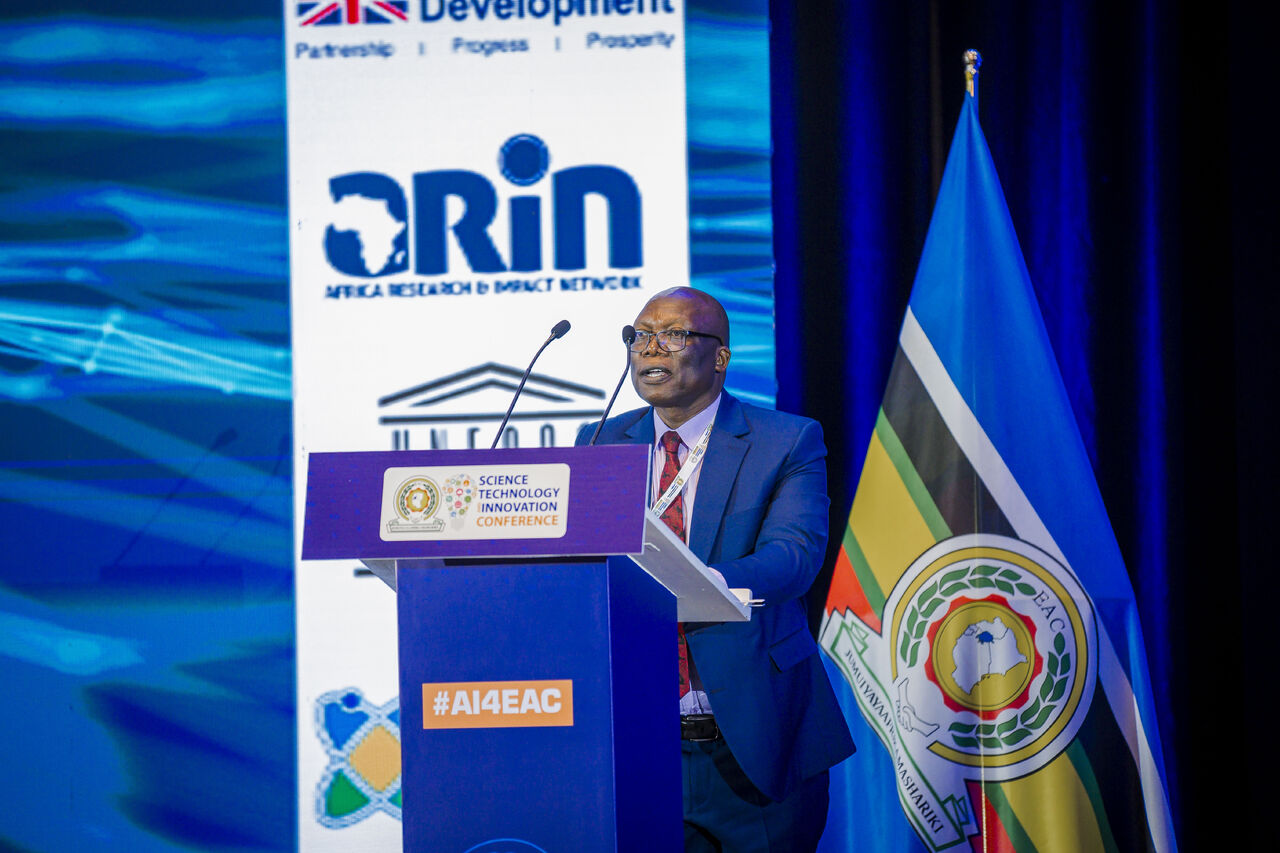
According to Prof. Idris Rai, Acting Executive Secretary of IUCEA, the network will play a critical role in unlocking AI’s potential.
“Artificial Intelligence offers a transformative opportunity to accelerate socio-economic development, strengthen public service delivery, and enhance regional competitiveness,” he said. “But this requires deliberate coordination and a shared vision.”
The network will focus on three main pillars: advancing collaborative AI research, integrating practical AI training into university curricula, and promoting inclusive and responsible AI policies. It is also expected to lay the groundwork for a future East African Centre of Excellence in AI.
The three-day conference, held under the theme “Harnessing Artificial Intelligence for a Resilient, Inclusive and Innovative East Africa,” attracted more than 450 delegates from the bloc’s eight partner states. It is the first time AI has taken centre stage at the biennial forum.
Experts at the conference stressed that technology alone will not solve the region’s challenges. Instead, they highlighted the importance of investing in human capital.
“AI is not a technology fix,” said Norman Schraepel of GIZ Rwanda. “It is about how we build the skills to use it to solve our problems.”
Participants pointed to gaps in translating research into real-world applications, calling for stronger links between universities and industry, as well as increased funding for innovation ecosystems.
The conference also hosted the inaugural Digital Leaders Forum, bringing together policymakers to refine a draft regional AI strategy and explore governance structures for coordinating AI development across the bloc. Discussions focused on aligning national policies, infrastructure investments and regulatory frameworks.
Young innovators were also in the spotlight through the AI4EAC Innovation Challenge, which attracted more than 3,800 students from 110 universities. Finalists showcased solutions in areas such as healthcare diagnostics, crop yield prediction, climate resilience and financial inclusion.
Organisers said the competition demonstrated that the region already has a growing pool of talent capable of building locally relevant AI solutions.