By Sharon Atieno
The Second Africa Climate Summit (ACS2) concluded with a clear call to position Africa as a driver of solutions and the next global climate economy.
Under a common agreement dubbed, the Addis Ababa Declaration, leaders stressed that the continent is not merely a victim of climate change but a resource-endowed and proactive force in developing innovative, sustainable, and inclusive solutions that reflect the continent’s unique strengths and aspirations.
They called for strengthened and sustained support to scale up the implementation of African-led climate initiatives such as the African Union Great Green Wall Initiative, the African Forest Landscape Restoration Initiative, and the Ethiopian Green Legacy Initiative.
The leaders asked Developed countries to scale up quality and accessible climate finance, particularly adaptation finance, delivered primarily in the form of grants and grant-equivalent terms in the context of implementing a New Collective Quantified Goal (NCQG) and the target of US$1.3 trillion per year by 2035.
They agreed that the NCQG must go beyond being framed solely as an “investment goal”. It should be both quantified and qualified in accordance with the Paris Agreement.
Developed countries were also called to honour their commitments and align financing with Africa’s priorities. They were also asked to endeavour to mobilize domestic resources and foster public-private partnerships, particularly in the implementation of Nationally Determined Contributions (NDCs) and National Adaptation Plans (NAPs) as well as the United Arab Emirates Framework for Global Climate Resilience, as established, under the
Global Goal on Adaptation.
Besides, they demanded urgent progress on coordinated debt pauses and cancellation, borrower solidarity, and rules-based debt resolution, which are essential tools for climate-resilient development and just transition.
Further, the leaders called for simplified climate finance access procedures that are responsive to Africa’s specific circumstances for African countries, including Least Developed Countries, and Small Island Developing States
Global partners were urged to scale up climate finance dedicated to nature, stressing that investment in Africa’s natural capital delivers multiple co-benefits for people, biodiversity, and prosperity. They underscored the need to foster collaborative research, education, innovation, capacity building, and knowledge exchange across borders and sectors.
The African leaders also demanded increased investment in ecosystem restoration and protection, guided by equity, relevant science, and traditional and indigenous knowledge.
With regards to carbon trade, they called for just and fair carbon trade mechanisms based on local context shaped through multilateralism. This should reflect common but differentiated responsibilities and Respective Capabilities. In this regard, they committed to take necessary action and forge cooperation to prevent the imposition of unilateral measures including carbon taxes that undermine continental agendas for regional integration, connectivity such as in aviation and shipping development and climate action.
Leaders further called for Africa’s share of global renewable energy investments to rise from a meagre 2% today to at least 20% by 2030, a shift that would finally reflect the continent’s potential as a renewable energy powerhouse.
The Summit pushed for the Green Minerals Strategy, a blueprint to ensure that cobalt, lithium, copper, and rare earths fuel not only global clean energy supply chains but also local beneficiation, job creation, and industrialisation.
Leaders pledged to establish dedicated financial mechanisms for addressing climate-related health threats, from deadly heatwaves to the spread of vector-borne diseases.
With regards to technology, Global partners were urged to support Africa’s investment in technological advancement while emphasizing that climate finance must prioritize technology that supports both adaptation and mitigation.
They also called for the establishment of technology incubators and hubs that enhance knowledge on the use of artificial intelligence to support children and youth to enhance their innovations for climate change solutions.
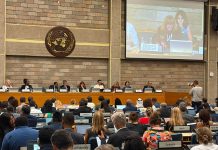
The Summit was hosted by the Federal Democratic Republic of Ethiopia in collaboration with the African Union under the theme: “Accelerating Global Climate Solutions: Financing for Africa’s Resilient and Green Development”.
Over 25,000 delegates, including heads of state and government, ministers, representatives of the civil society, development partners, private sectors, local community and indigenous peoples, farmers, youth, and academia, converged to deliberate and chart a way forward for their future and for posterity.