By Sharon Atieno Onyango
The language used in communicating climate change is crucial in how communities across Africa understand the phenomenon.
This formed part of the preliminary findings shared under the Action Research to enhance Effective Coverage of Climate Change Issues in Africa (ARECCCA) project.
ARECCCA is a three-year project undertaken by Media for Environment, Science, Health and Agriculture (MESHA) and supported by IDRC to enhance coverage of climate change and gender issues in eastern and southern Africa.
The findings which were collected over a one-year period are as a result of action research conducted in six African countries: Kenya, Tanzania, Rwanda, Botswana, Malawi and Zimbabwe.
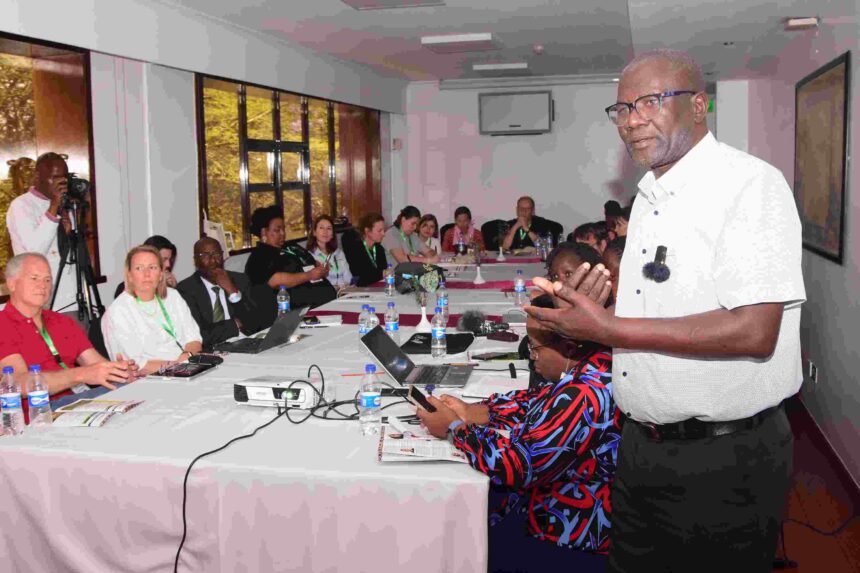
According to Dr. Osir Otteng, ARECCCA lead researcher, when climate change is discussed in languages that people are not conversant with, it becomes alien to them rather than an issue they can relate to.
“When climate change information is interpreted into local and indigenous languages, people are better able to understand it and connect it to their day-to-day lives,” he said.
Dr. Osir highlighted that there is a cultural context that gets lost when climate change messages are conveyed in languages other than the community’s own cultural languages.
He further explained that even basic concepts like biodiversity loss are difficult for communities to grasp when discussed in foreign languages, but when translated into local context and language, people can relate it to things they already observe, such as the disappearance of certain birds, plants, or fish in their environment.
“Focusing only on English leaves out a large segment of the population, and therefore the use of indigenous languages is critical to ensuring that climate change communication reaches and is understood by all members of the community,” he said.
Calling for communication justice, Dr. Osir said that if people are left out of climate conversations simply because they do not understand the language being used, then climate justice cannot be achieved.
Besides language which was covered under the theme of context, framing and language, the study also explored gender inclusion and vulnerability as well as stakeholder collaboration and information sharing as thematic areas.
Under gender inclusion and vulnerability, the project found that there is gender bias in media representation. Men dominate as experts and technical voices in climate change stories, while women, people with disabilities, and other marginalized groups are often shown in victim roles, reinforcing stereotypes that they are helpless.
“Climate change communication pays little attention to intersectionality, meaning factors like age, gender, economic status, poverty, disability, education, and geography are not adequately considered,” Dr. Osir said.
He observed that sensational and conflict-driven nature of media, the patriarchal environment and fear of government reprisal particularly in Zimbabwe and Tanzania are some of the reasons why women and vulnerable groups are left out.
Also, resource constraints in newsrooms that hinder move from event based to research-based journalism that embraces community involvement.
During calamities, it was found that journalists tend to attribute stories to government officials and advocacy groups rather than community members, which further sidelines the voices of the communities themselves.
Under stakeholder collaboration, the preliminary results show that stakeholders mainly operate in silos with limited interaction among communities, researchers, policymakers, and climate activists. Most governments are mainstreaming climate change through agencies, but collaboration among stakeholders remains limited.
“Media acts as the main bridge between science policy and public. Collaboration among scientists and journalists, policymakers, climate advocates, communities enhance the quality and impact of climate reporting,” Dr. Osir said.
The research found that communities are curious to learn more about climate change and its daily impacts, but their main sources of information are journalists and NGOs rather than scientists or policymakers.
“Some community members see journalists as sources of money, and that is understandable, because these are people that are resource constrained,” he said.
The research also found that climate-related information is in English and published in books. Transfer of knowledge from books and experts to local communities is limited.