By Milliam Murigi
Civil Society Organizations (CSOs) and faith-based actors have developed an advocacy guide to strengthen their engagement with energy policies and financing by the African Development Bank (AfDB).
The guide is part of broader efforts to advance a just energy transition across Africa, ensuring that energy investments are inclusive, equitable, and responsive to the needs of communities most affected by energy poverty.
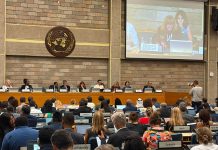
The guide, was unveiled during a two-day capacity development and validation forum held in Kenya’s capital, Nairobi. The meeting was organized by Christian Aid in partnership with the AfDB CSO Working Group and ACT Alliance.
“While CSOs have played a key role in shaping the Bank’s energy policies and investment processes, most national CSOs, faith based actors and local communities are yet to engage actively with the African Development Bank procedures due to limited understanding of the complex banks procedures and technical requirements which pose challenges for the stakeholders to participate fully in the formulation and implementation of the African government energy transition policy,” said Philip Galgalo, Christian Aid’s Partnership and Strategy Lead for East and Southern Africa during the meeting.
According to him, the newly developed practical guide seeks to address these barriers by equipping CSOs and faith actors with knowledge and tools to navigate AfDB procedures, engage in policy and investment discussions and monitor projects and hold institutions accountable.
It seeks to bridge the gap between high-level policy frameworks and grassroots participation, enabling civil society and faith actors to play a more active role in decision-making processes. The ultimate goal is to strengthen the ability of African-led organizations to influence energy investments and ensure they deliver equitable outcomes.
“Active participation of civil society is crucial to ensure that Africa’s energy transition remains equitable, inclusive, and responsive to the needs of communities, particularly those most affected by energy poverty and climate change,” he added.
According to Julius Mbatia Global Climate Justice Manager at ACT Alliance whose speech was read by Vincent Ondiek, ACT Alliance Senior Programme Officer, the guide focuses on demystifying complex energy financing frameworks and policy processes, particularly those linked to development finance institutions.
It provides step-by-step strategies for tracking investments, engaging policymakers and identifying opportunities to influence decisions. The guide is expected to serve as a roadmap for civil society and faith actors seeking to play a more active role in shaping Africa’s energy future, ensuring that development is both sustainable and equitable.
“The tool responds to a long-standing gap that has seen many civil society and faith actors excluded from meaningful participation in energy planning and investment decisions,” he said. “It is expected to serve as a roadmap for organizations seeking to play a more active role in shaping Africa’s energy future.”
AfDB has positioned itself as a key player in addressing this gap through its Light Up and Power Africa initiative, which aims to achieve universal electricity access and clean cooking solutions by 2033.
In partnership with the World Bank, the Bank also launched Mission 300 an ambitious plan to connect 300 million people to electricity by 2030 through a mix of public, private, and philanthropic financing. But as investments scale up, so do concerns about who influences where and how the money is spent.
“Achieving this ambitious target and positioning Africa market trajectory towards a just transition aligned with Pan African agreement, requires that CSOs, including faith actors, play an active role in holding Africa Development Bank accountable and ensuring the needs and aspirations for the local communities are addressed,” added Galgalo.
Africa holds some of the world’s greatest renewable energy potential, from abundant solar and wind resources to vast hydropower capacity. Yet close to 600 million people still lack access to electricity, representing about 80 percent of the global electricity deficit. This paradox underscores the importance of ensuring that energy investments are not only scaled up, but also distributed in a way that benefits underserved populations.